Study Reveals AI Bots Thriving in the Hotel Industry—But Do They Give You the Creeps?
If you’ve ever embarked on the journey of booking a hotel online, you might have encountered an AI chatbot that left you feeling uneasy. It’s not just your imagination—recent insights from the Texas A&M College of Agriculture and Life Sciences reveal that many users feel a sense of discomfort when interacting with these digital assistants. The findings indicate that a disconcerting AI experience can actually deter potential bookings.
Why Are Hotel Chatbots So Off-Putting?
Credit: Monkey Business Images/Shutterstock
A survey targeting 340 adults in the UK, who had utilized chatbots for hotel bookings, identified three significant reasons for this “creep factor”: inaccuracy, deceptive behavior, and intrusiveness. Among these, inaccuracy emerged as the leading cause of distress, eliciting a response from users that was over four times stronger compared to other concerns.
Imagine relying on a chatbot to provide you with accurate room rates, only to be met with incorrect quotes or vague cancellation policies. Such glitches don’t merely create frustration; they decrease users’ willingness to engage with the bot by nearly 38% and significantly increase the likelihood of postponing or abandoning the booking process altogether.
Moreover, researchers highlighted a phenomenon known as the “uncanny valley” effect. When a chatbot attempts to emulate human interaction but fails, it can provoke feelings of unease that dive deeper than mere disappointment. Lead researcher Babak Taheri articulated this sentiment perfectly: when a system designed to represent a human cannot follow through, it can trigger unsettling emotions in users.
A Simple Adjustments Hotels Are Overlooking
Credit: Google
The silver lining in this scenario is that researchers have discovered a straightforward solution that many hotels have yet to embrace. When a chatbot openly identifies itself as an AI, users tend to be more forgiving of its shortcomings. A simple introduction like, “Hi, I am your AI assistant,” can significantly ease user tension.
Beyond this, researchers advocate for making it more straightforward for users to connect with human agents when faced with complex inquiries. Additionally, investing in enhancing the AI’s capabilities can ensure that it handles basic tasks smoothly and efficiently.
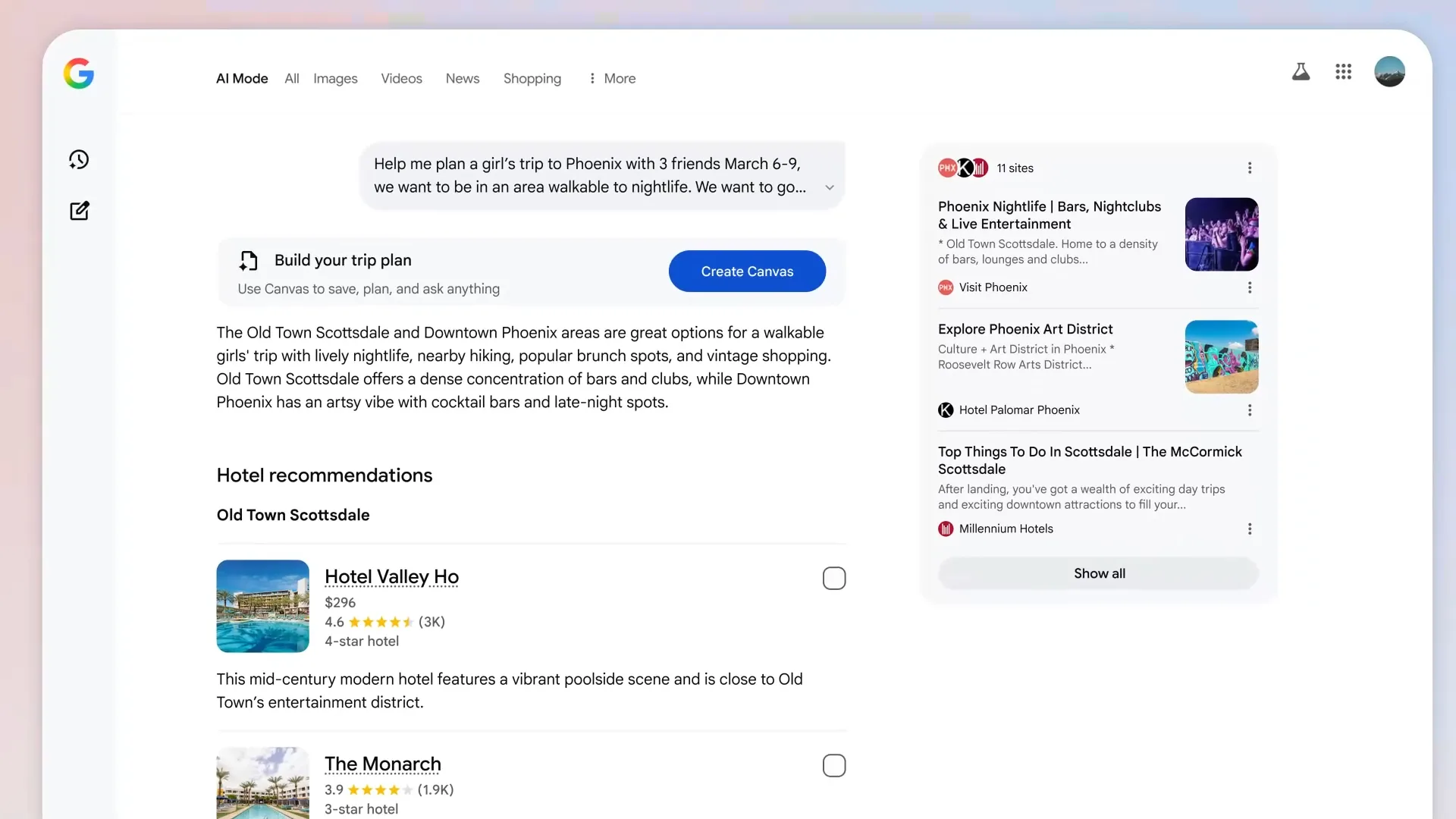
This revelation comes at an exciting time, as AI in travel booking is rapidly gaining traction. With innovations emerging from platforms like Google, which has recently integrated AI trip-planning features into its Search function, and Uber, which has introduced hotel booking through Expedia in its app, the future of travel could be transformed through better AI interactions.
Are you ready to embrace the potential of AI in your travel planning? Consider giving it a try—your next seamless getaway might just be a few clicks away. Dive into the world of AI-assisted travel, and who knows? You might find it to be exactly the smooth experience you’ve been seeking.