Revolutionizing Robotics: How Google’s New AI Enhances Balance, Dexterity, and Team Collaboration
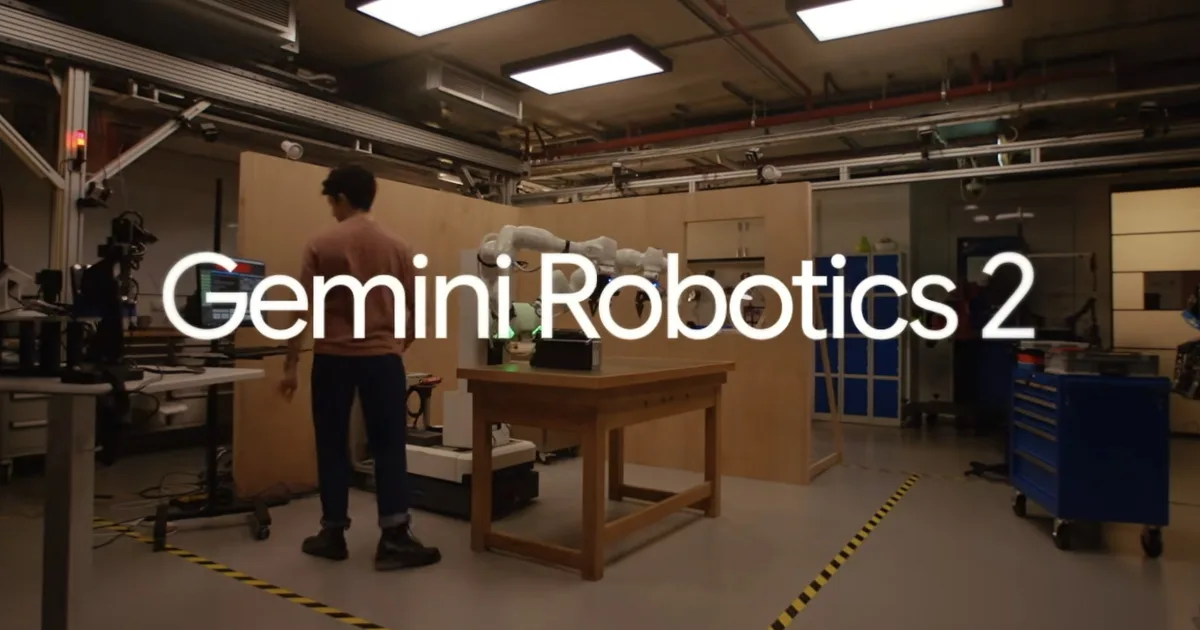
Google DeepMind has ushered in a new era of robotics, merging science fiction with reality in an incredibly thrilling way. With the unveiling of Gemini Robotics 2, this innovative AI system revolutionizes how robots think, move, and work collaboratively. Gone are the days of clunky, pre-programmed machines; these robotics are designed to adapt and learn, making them remarkably versatile problem-solvers in unpredictable situations.
Can Robots Finally Handle Whole-Body Tasks?
Traditionally, robotic models have only managed tasks involving their upper bodies, primarily functioning on tabletops. However, Gemini Robotics 2 takes a bold leap forward by controlling an entire humanoid form, from its feet to its fingertips. In an impressive demonstration, the Apollo 2 robot from Apptronik showcased its abilities by successfully picking up a watering can and placing it precisely in a bottom shelf bin.
Credit: Google DeepMind
This model exhibits a noticeable enhancement in dexterity. It can perform intricate tasks like tying knots, sealing zip-lock bags, or even unscrewing a bulb with its five-fingered robotic hand. For more straightforward tasks, it seamlessly uses its two-fingered grippers, proving its efficiency in packing and sorting.
Moreover, Google is launching the Gemini Robotics ER 2, an advanced reasoning model that functions as a project manager for these robots. This innovative model breaks down complex instructions, monitors progress on multi-minute tasks, and facilitates coordination among several robots. There’s even an on-device version for robots without internet access, which can adapt to a new robotic body in just a few hours using as few as 200 examples.
What Makes These Robots Safer to Work With?
Safety is a top priority in this latest development. Google has introduced a new benchmark known as ASIMOV-Agentic, which evaluates a robot’s capability to refuse dangerous actions and ask for human assistance when necessary. The Gemini Robotics ER 2 can also detect when someone is too close, ensuring it stops to maintain a safe distance. While the Gemini Robotics ER 2 is already operational on Google AI Studio, other models are currently being rolled out to select partners.
Google’s strides in robotics aren’t just about technical advancement; they’re about creating machines that elevate human productivity while ensuring safety and ease of use. This next-gen robotics is not just a futuristic dream—it’s quickly becoming an integral part of modern life.
As we stand on the brink of this technological revolution, imagine the possibilities that await us! Embrace this exciting era, and stay updated as these innovations unfold.
Ready to explore the future of robotics? Join the conversation and stay inspired!