AI Wins Literary Prize: A Wake-Up Call for Our Love of Books
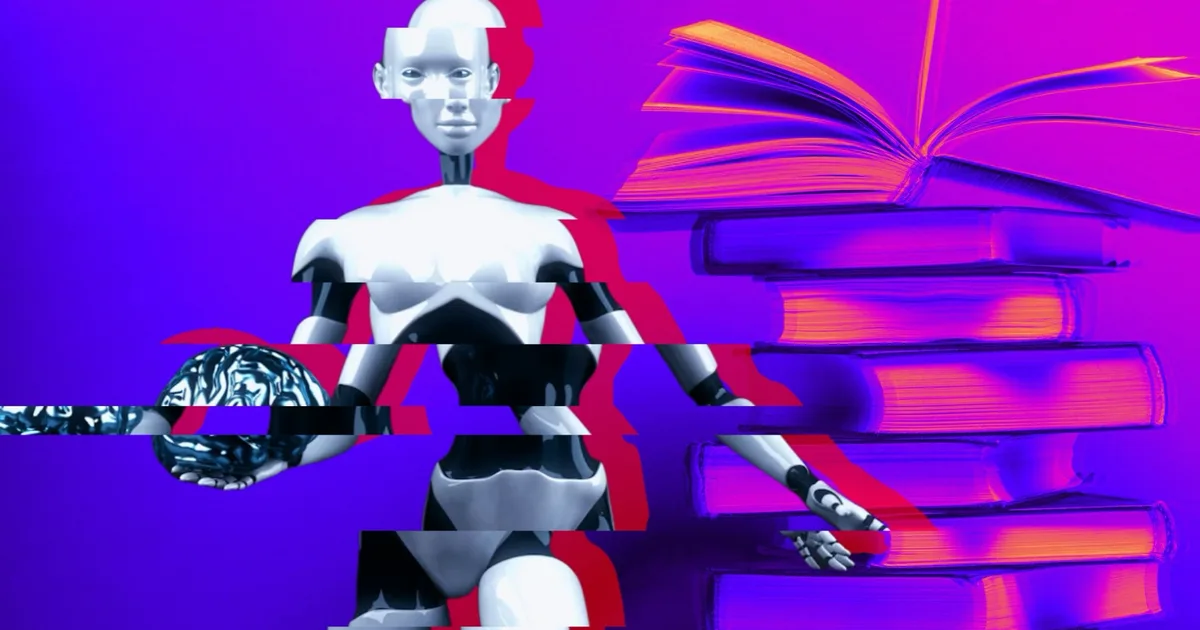
I had a hard time processing this news. As someone who has cherished stories from a young age, influenced by the literary giants like Arthur Conan Doyle, Terry Pratchett, and J.R.R. Tolkien, I found it bittersweet to hear that an AI-generated story recently snagged a prestigious writing award. It’s a surreal moment for lovers of literature, and as both a reader and an aspiring fiction writer, I felt a pang of disappointment that resonates deeply.
Unveiling the Winning Stories
The stir began when Granta unveiled the winners of the 2026 Commonwealth Short Story Prize. Almost immediately, eagle-eyed readers on X began to suspect something was amiss. Not one, but three of the five regional winners appeared to have been created, at least partly, using artificial intelligence.
Researcher Nabeel S. Qureshi was among the first to highlight this anomaly on X, pointing to what he labeled “textbook AI syntax.” His concerns were validated when the AI detection tool Pangram flagged one story as a product of 100% AI generation—a claim subsequently endorsed by WIRED.
In Qureshi’s words, “A ChatGPT-generated story has won a prestigious literary prize,” citing the repetitive sentence structures and other telltale signs of AI writing.
Pangram made headlines again when it identified “The Bastion’s Shadow” by Maltese writer John Edward DeMicoli as entirely AI-generated. Meanwhile, “Mehendi Nights” by Indian author Sharon Aruparayil was deemed partially AI-written. Only the contributions from Holly Ann Miller and Lisa-Anne Julien were confirmed as authentically human.
A Question of Authenticity
In light of this controversy, Razmi Farook, the Director-General of the Commonwealth Foundation, shed some light on the situation. He stated that they do not utilize AI detection tools to verify submissions, citing ethical concerns over artistic ownership and consent.
As a community of literary creators and readers, this raises significant questions about AI literacy among critics and publishers. Even Granta’s editorial team reportedly did not engage in the selection or editing of the finalist stories, leaving some to wonder about their vetting process. Although Granta did use the AI tool Claude to detect plagiarism, the inconclusive results led them to keep the flagged stories on their website without any further action.
While no AI detection tool is infallible, the entire scenario is both ironic and troubling. We find ourselves relying on AI tools to establish whether content is, in fact, AI-generated.
Rethinking Competition Integrity
I empathize with the judges and the foundation—they’re grappling with the challenges inherent in identifying AI-generated writing reliably. However, we can no longer afford to trust an honor system alone. Even prestigious institutions like Princeton University have had to abandon their honor code in light of new challenges.
I’m not against the use of AI writing tools; they can be useful for mundane tasks like managing emails or pulling insights from lengthy texts. However, when it comes to creative storytelling, clarity is crucial. Authors using AI for story creation should clearly label their work as AI-generated.
Photo by Markus Winkler on Unsplash
Using AI-generated stories in competition with authors who have wrestled with their creative doubts and poured their heart into their work feels profoundly disingenuous. This undermines the human experience that enriches traditional storytelling.
The act of creation provides the most unimaginable joy—it’s a sense of fulfillment when you finally put down that last period on your story. Competing against hastily assembled AI narratives reduces this sacred process to a mere commercial gamble. Those who engage in this practice should reconsider their place in any literary competition.
A Call for Authenticity and Reflection
Research consistently reveals that people are struggling to distinguish between human and AI-generated content. Blind tests indicate that we even prefer the latter in some scenarios. Yet, we must remain vigilant. As Sir Terry Pratchett wisely acknowledged in Hogfather, “Real stupidity beats artificial intelligence every time.”
Let’s embrace our shared creativity and resolve to uphold the values that make storytelling an enriching experience. We must safeguard the integrity of written word and strive for transparency in the evolving landscape of literature.
As we navigate this brave new world, my hope is for writers—human or otherwise—to remember the essence of storytelling: honesty, creativity, and the irreplaceable human touch. Together, let’s foster a literary community that values these timeless principles.
If you’re passionate about literature and want to stay informed on the evolving interface between human creativity and technology, consider joining our ongoing discussions. Let’s inspire each other amid this exciting—and sometimes bewildering—era for storytelling.