Why Nvidia’s Vera Chip is Jensen Huang’s $200 Billion Game-Changer You Can’t Afford to Miss
The latest developments at Nvidia, particularly regarding the Vera chip, have sparked intriguing conversations in the tech world. While the company’s earnings report typically steals the spotlight, there’s more to this story than just impressive numbers. With a remarkable Q1 revenue of $81.62 billion, Nvidia has confidently surpassed analyst predictions and provided a bold outlook for Q2, hinting at $91 billion in revenue. But it’s Nvidia’s ambitious plans for the Vera central processor that could truly reshape the landscape of AI technology.
Unlocking New Markets with Vera
In a recent conference call, CEO Jensen Huang revealed that the Vera chip positions Nvidia to tap into a staggering $200 billion market—one that extends beyond the already impressive $1 trillion forecast linked to the Blackwell and Rubin GPU lines. Huang anticipates Vera’s revenue will reach $20 billion by fiscal year-end, establishing it as a significant player in Nvidia’s portfolio.
This isn’t merely a supporting detail; it signifies a crucial second frontier for the company.
The Vera Chip and the Shift to Inference
The need for this second frontier emerges from a pressing reality: major players like Google, Amazon, and Microsoft are racing to build their own AI infrastructures. Collectively, these giants are projected to invest over $700 billion in AI technology this year, significantly up from around $400 billion just a few years ago. As they delve into custom silicon solutions to optimize their AI models, Nvidia recognizes the imperative to stay ahead of the competition.
The spotlight is shifting from merely training expansive models to efficiently serving them—cheaper and faster. While Nvidia maintains its dominance in model training, the arena of inference—the real-time generation of insights—presents new challenges with the emergence of competitors using custom chips.
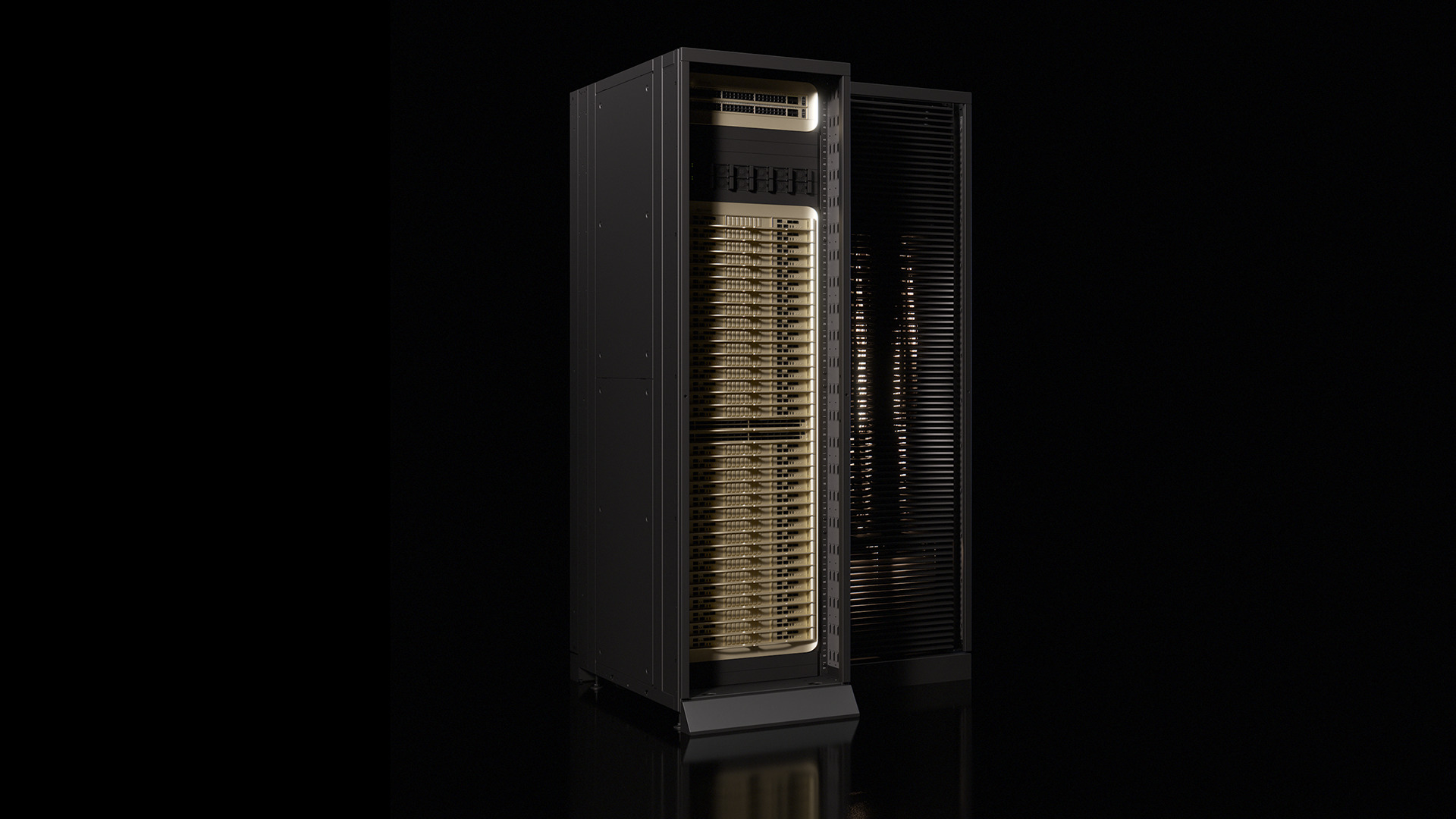
Nvidia’s answer to this evolving landscape is the Vera chip, developed partially through its collaboration with Groq, a startup focused on inference technology. This chip specifically addresses these new demands, and the complete Vera Rubin platform, which integrates Vera CPUs with Rubin GPUs, is set to debut later this year.
Navigating Supply Chain Challenges
Huang candidly acknowledged one significant hurdle: supply constraints. He forecasted that Nvidia would be production-limited throughout the Vera Rubin product lifecycle. This admission is particularly notable for a product touted as a growth engine. To mitigate potential supply disruptions, Nvidia is heavily investing in its supply chain, revealing a jump in supply commitments to $119 billion in the last quarter.
The company also announced an $80 billion share repurchase plan and increased its quarterly cash dividend from 1 cent to 25 cents per share—signals of robust financial health amidst supply concerns.
Investor Sentiments in Flux
Despite impressive earnings, Nvidia’s stock dipped 1.6% in after-hours trading, highlighting a cautious sentiment among investors. Analyst Jacob Bourne from eMarketer summed up the prevailing mood: while Nvidia continues to exceed forecasts, the critical question remains whether it can maintain momentum in its AI initiatives through 2027 and 2028, especially given the fierce competition in inference processing from industry titans.
Huang countered with promising insights, noting that the emerging segment of AI-specific cloud customers is now matching the spending of hyperscale providers and is growing even more rapidly quarter-over-quarter. “We should be growing faster than hyperscale capex,” he confidently stated.
The Vera chip lies at the heart of maintaining this growth trajectory, though the path ahead relies heavily on the cooperation of the supply chain.
Nvidia’s strategic moves concerning the Vera chip could redefine its role in the AI landscape. As the competition heats up, one thing’s clear: the game is evolving, and Nvidia aims to stay at the forefront.
Are you ready to explore the future of AI with us? Join the conversation and stay connected with the latest developments in technology and innovation!