The Impact of an AI Interviewer’s Appearance on Decision-Making Outcomes
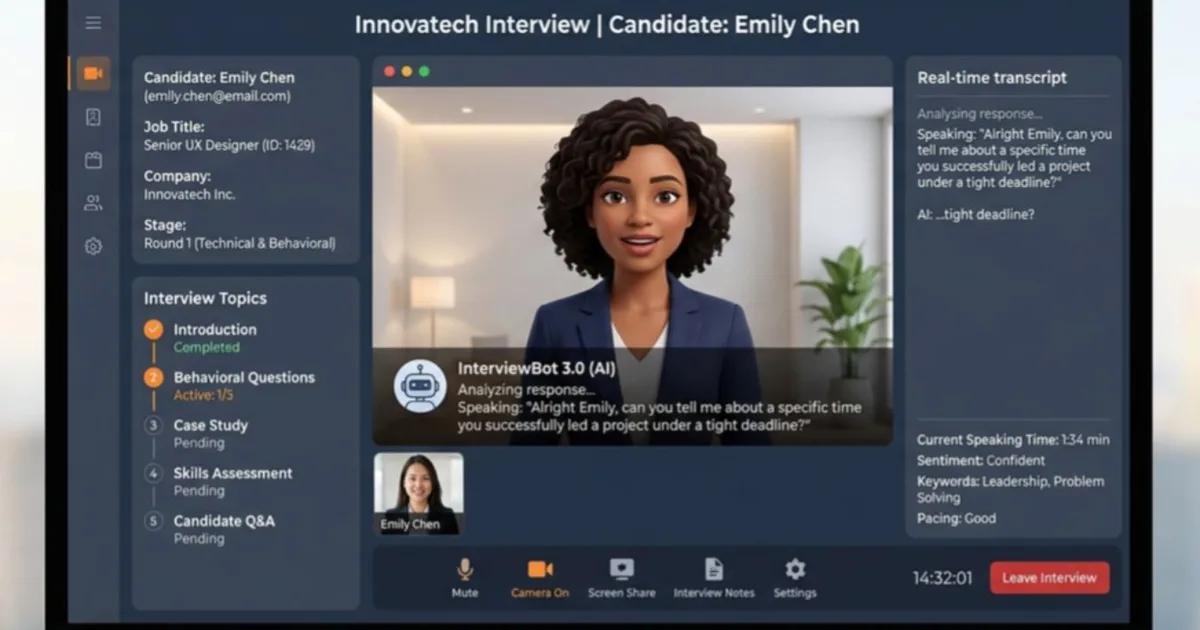
Researchers have uncovered some intriguing findings that highlight how race and gender matching can significantly affect an applicant’s perception of fairness in automated interviews. Even when all candidates experience the same rejection, the appearance of the AI avatar delivering the news can shape their feelings of bias. This discovery adds a layer of complexity to the landscape of AI in hiring, showing that technology may not be as impartial as it seems.
The Impact of AI Interviewers
An AI hiring system aims for impartiality, treating every applicant with the same level of scrutiny. However, the sense of fairness perceived by individuals can vary wildly based on the characteristics of the avatar leading the interview. A study involving about 220 participants revealed that applicants judged a virtual interview through the lens of the interviewer’s race and gender—even when they all faced the same outcome.
Participants engaged in a simulated interview for a fictional customer support position, using four distinct photorealistic AI avatars. Despite all individuals receiving a rejection, their perceptions of the process differed dramatically based on the interviewer’s presentation. This contradiction underscores a critical aspect of human interaction—applicants don’t just interact with algorithms; they engage with faces and voices that convey specific impressions.
Why Partial Matching Felt More Unfair
Interestingly, candidates who shared only one characteristic—either gender or skin color—with the AI avatar reported feeling that the process was less fair compared to those with complete or no matching traits.
HeyGen / Ka Hei Carrie Lau et al.
The study doesn’t definitively explain why this phenomenon occurs. However, it’s possible that a lack of full resemblance led to varying expectations about the interaction. This misalignment likely made the rejection feel distinctly personal. A familiar face doesn’t inherently translate to a neutral evaluation, highlighting the intricate emotional dynamics at play.
Changes in Perception After Rejection
Before the rejection was communicated, participants maintained high levels of trust in the AI, regardless of the avatar they encountered. Eye-tracking data revealed a fascinating trend: candidates tended to focus more intently on faces that differed from their own.
Yet, the landscape shifted dramatically once the news of rejection arrived. Candidates began expressing skepticism about the fairness of the process, with mismatched races leading many to conclude that bias informed their outcome. Although the automated decision remained unchanged, the identity of the avatar influenced each candidate’s interpretation of the experience.
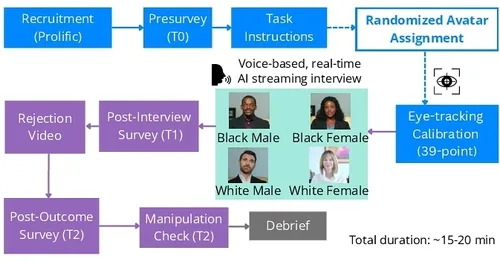
HeyGen / Ka Hei Carrie Lau et al.
This experiment, based on a fictitious job and standardized rejections, doesn’t conclusively prove that real hiring situations would yield similar results. However, it does vividly illustrate how perceptions of fairness can swiftly flip when an automated decision is deemed personal.
Recommendations for Organizations
For companies employing AI interviewers, it’s crucial to assess both the technology’s interface and the decision-making model behind it. Consistent scoring won’t mitigate the social implications candidates draw from an avatar’s appearance.
When conducting fairness testing, organizations should involve candidates from diverse demographic backgrounds and analyze how their reactions evolve before and after receiving unfavorable results. Moreover, exploring whether a less human-like interface eases concerns compared to a photorealistic avatar could prove beneficial. Often, the most effective option may be the design that establishes clear expectations rather than striving for an overly relatable appearance.
The insights gained from this research emphasize a responsibility to create a more equitable hiring experience. For organizations looking to refine their AI systems, understanding these perceptions can lead to better, more inclusive practices.
Are you ready to embrace the future of hiring with fairness at the forefront? Let’s challenge the norms and create a hiring process that feels just as good to candidates as it does efficient for companies. Together, we can reshape the landscape of recruitment for a better tomorrow!