How Toddler-Like Curiosity in Robots Accelerates Language Learning by 200%
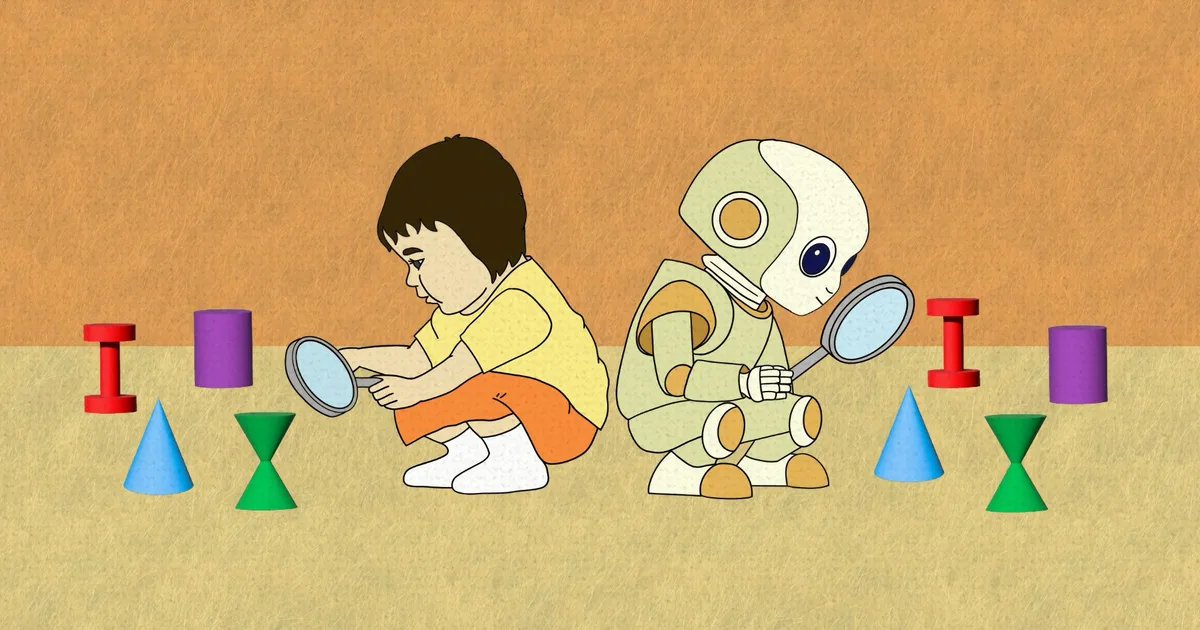
Scientists have long been fascinated by the rapid pace at which children acquire language skills. A groundbreaking study from the Okinawa Institute of Science and Technology (OIST) sheds light on one key factor driving this phenomenon: curiosity. By exploring this innate trait, researchers are uncovering fascinating insights into how both toddlers and machines can learn to communicate.
Innovative researchers created a virtual robot equipped with a brain-like neural network. They placed this robot in an engaging 3D environment brimming with vibrant shapes, colors, and simple commands, such as “push left magenta dumbbell.” In this simulated world, curiosity became a pivotal gameplay element, producing remarkable outcomes.
The Role of Curiosity in Learning Language
The experiments revealed a stunning advantage for curious robots over their indifferent counterparts. As detailed in the study published in Science Advances, the curious robots achieved a real understanding of language in roughly half the time required by their less inquisitive peers.
Source: Okinawa Institute of Science and Technology
The study’s lead author, Theodore Tinker, likened this experience to trying white chocolate for the first time—even when you’re a devoted fan of dark chocolate. Embracing that risk leads to a deeper knowledge of what chocolate encompasses.
As training progressed, curious robots exhibited playful behavior, knocking over objects and exploring actions beyond their initial programming. This spontaneous curiosity highlighted an unexpected aspect of their learning process.
Do Robots Mimic Toddler-like Mistakes?
Intriguingly, these robots demonstrated a pattern resembling how children navigate language acquisition. Initially, kids often get certain verb forms right, only to later misapply grammar rules and err with previously mastered verbs. Over time, they correct these mistakes. The robots replicated this “U-shaped” learning curve.
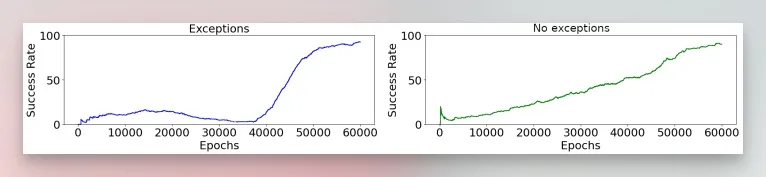
Source: Okinawa Institute of Science and Technology
This learning style starkly contrasts how modern chatbots operate. While large language models like ChatGPT rely on extensive datasets to predict the next word based on statistical likelihood, these robots embrace a more human-like learning process. They prioritize maintaining their existing beliefs, updating them only when confronted with new and surprising information.
Although these robots don’t grasp language as humans do, their experiences suggest that curiosity, paired with diverse interactions, is crucial for cracking the language code—just like toddlers do with seemingly limited resources.
Curious about how curiosity fuels learning not just for humans but for machines too? It’s a reminder of the beauty of exploration and the power of a question. Embrace your own curiosity, because you never know what you might discover.