Empowering Kids in the AI Era: The Importance of Engineering Mindsets
This piece is part of Trending Forward, a video and podcast series exploring the transformative impact of disruptive technology on our lives.
Imagine gifting your child the invaluable experience of overcoming obstacles. While it may sound a bit radical, allowing children to encounter failure can be one of the wisest moves for their growth. In our quest to shield them from frustration, we sometimes inhibit their ability to acquire crucial skills needed to thrive in an unpredictable world.
As artificial intelligence reshapes our workplace landscape, the importance of preparing our children for the future becomes even more pressing. During a recent Trending Forward conversation, I delved into how AI is not merely reshaping job titles but also redefining the skills we need. It’s not just about predicting which careers may fade away; it’s about equipping future generations for a labor market where the highly sought-after skills today may become obsolete in 20 years.
The New Landscape of Learning
Children today will step into a workforce that is still forming, often with careers that haven’t even been imagined yet. Reflecting on the rapid evolution of professions, two decades ago, becoming a YouTube creator was hardly on anyone’s radar. The focus should be less on identifying specific future jobs and more on nurturing human capabilities that transcend any particular role: curiosity, critical thinking, problem-solving, and resilience.
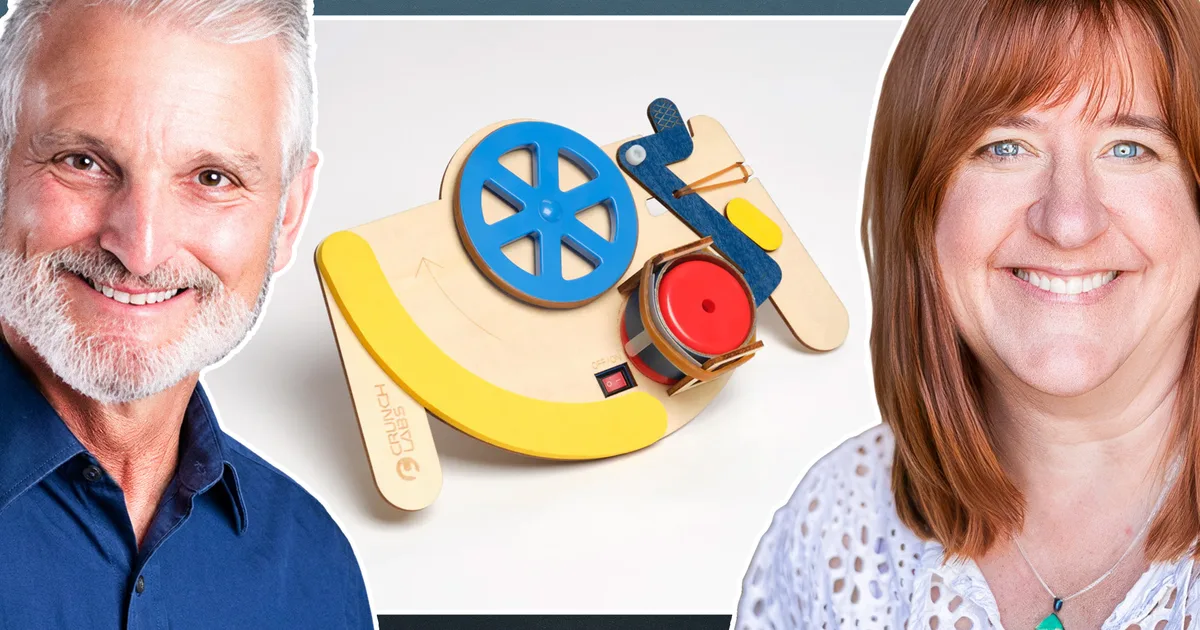
This insightful perspective emerged in my recent discussion with Rachele Harmuth, Chief Product Officer at CrunchLabs, a company born from the innovative spirit of former NASA engineer and YouTube sensation Mark Rober. I fondly recall purchasing a CrunchLabs Build Box for my granddaughter, where we spent countless hours piecing together creative projects. What stood out most were the moments not just of success but also of trial and error—those failures were as enriching as the completed projects.
The Shift in Educational Priorities
Traditionally, education emphasized information retention and skill mastery, such as dates, formulas, and languages. While this knowledge remains valuable, AI technology is quickly taking over tasks that used to require deep human expertise. This rapidly changing landscape poses a crucial question: How do we prepare children for situations with no straightforward solution?
While discussing the uncertain nature of future careers, Harmuth emphasized that simply pinpointing today’s trending technical skills isn’t the answer. By the time our children reach adulthood, the tech landscape will likely have transformed. The focus should, therefore, shift toward teaching them how to tackle unfamiliar challenges, embrace uncertainty, and persist through initial setbacks.
The mantra at CrunchLabs—“Think like an engineer”—captures this philosophy beautifully. It encourages children to approach problems methodically: define the goal, brainstorm solutions, test one, analyze the outcome, and adjust accordingly. This mindset isn’t about training future engineers; it’s about cultivating a problem-solving attitude applicable to any field.
Redefining Failure
As parents, it’s instinctive to rush in when our children face challenges. When we watch them struggle with tasks—whether it’s a difficult puzzle or a new skill—our immediate reaction may be to intervene. Though sometimes intervention is necessary, we must recognize that every obstacle removed also takes away a learning opportunity.
Harmuth likens this process to video gaming. Players know that success doesn’t come from a single attempt. You fail, respawn, adjust your strategy, and try again. In contrast, when kids face setbacks in physical tasks—like art or music—they might mistakenly conclude, “I just can’t do this.” The real issue lies in the narrative we attach to failure.
Mark Rober’s innovative projects and videos showcase stunning inventions, but the journey involves numerous failed prototypes and lessons learned. By showcasing these missteps, Rober turns engineering into an inviting endeavor for children.
CrunchLabs echoes this philosophy across various products—from Build Boxes that introduce physics concepts to older kids exploring robotics through Hack Packs. Their CrunchLabs Mysteries books transform storytelling into interactive STEM adventures, encouraging children to solve puzzles creatively. This approach illustrates that learning doesn’t have to be confined to just receiving information; it can also involve discovery through trial and error.
Building Resilience in Children
During our thought-provoking conversation, Harmuth shed light on resilience. Instead of viewing it as an inherent trait, she illustrated it as a skill that can be developed—like a muscle—through specific practices: problem-solving, perseverance, and adaptability.
Parents can nurture these skills without complicating childhood. Activities like mastering a skateboard trick, learning an instrument, writing stories, or experimenting in the kitchen foster similar cognitive growth as engineering tasks do. When faced with failure, children learn to analyze why it happened and determine the next steps.
Curiosity prompts them to explore new approaches, while creative confidence instills the belief that they can succeed. Resilience transforms the narrative from “I can’t do this” to “What should I try next?”
These habits will be crucial as AI continues to advance. Humans will always need the ability to ask the right questions, assess the validity of answers, and navigate situations where a clear solution isn’t readily available.
Equipping for the Unknown Future
It’s impossible to predict which jobs will thrive decades from now. In fact, many roles that today’s children may pursue are entirely uncharted territory. The concept of working for a YouTube creator was practically a fantasy just twenty years ago, yet now it’s a legitimate and desirable career path.
To prepare children for this uncertain future, we should prioritize teaching adaptable skills rather than focusing solely on specific career pathways. Qualities like curiosity, judgment, problem-solving, and resilience can empower them, whether they become engineers, artists, teachers, or some as-yet-undefined profession.
“Thinking like an engineer” serves as a powerful philosophy. This process—frame a problem, explore solutions, test, analyze, and adapt—transcends technical know-how. Children don’t need a deep understanding of engineering to gain the invaluable problem-solving skills this mindset offers.
Reflecting on the days spent building with my granddaughter, I recognize that the true joy came not just from the successful outcomes but from navigating the challenges together. It’s about learning to tackle setbacks just as much as achieving success.
As parents, our instinct often compels us to alleviate discomfort for our children. However, sometimes allowing them the space to wrestle with doubts can lead to far richer learning experiences.
In a world where technologies and job roles evolve at breakneck speed, preparing our children doesn’t mean teaching them every new gadget. Instead, it involves instilling confidence to face the unknown, developing resilience to withstand failures, and nurturing a curiosity that pushes them to keep exploring.
My conversation with Rachele Harmuth reaffirmed a valuable lesson: while we may not prepare our children for every challenge they will face, we can empower them to navigate obstacles more effectively. Even if they never become engineers, nurturing the mindset of one could be one of the most meaningful gifts we offer them.