Discover DeepSeek V4: Revolutionary Features Outperforming Gemini, ChatGPT, and Claude
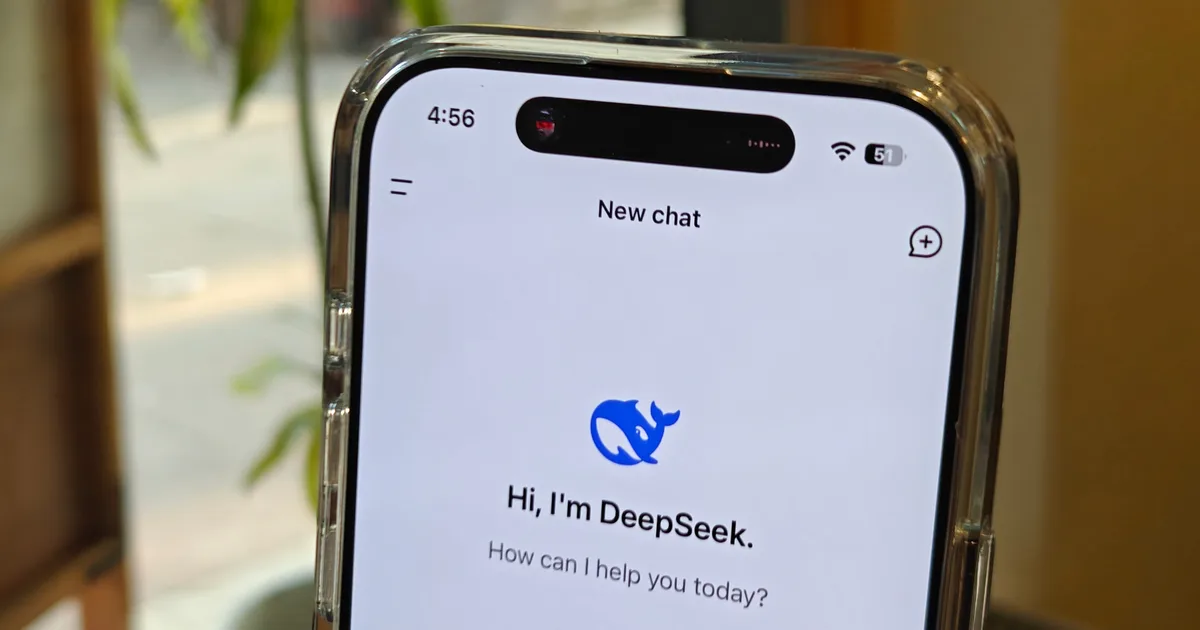
China’s DeepSeek has made a bold entrance into the competitive AI landscape, showcasing its groundbreaking new model that challenges the giants of Silicon Valley. With the release of the V4 preview, this Hangzhou-based company not only raises eyebrows but also sets a new benchmark for cost and performance in artificial intelligence.
DeepSeek introduces two innovative models: the V4-Pro and V4-Flash. While the V4-Pro boasts a staggering 1.6 trillion parameters, the V4-Flash is designed for efficiency, featuring 284 billion parameters. Both models are equipped with an impressive one-million-token context window, making them substantial players in the AI arena.
What Are the Key Offerings from DeepSeek?
The most compelling aspect of DeepSeek’s release is that both models are open-source. This allows developers and enthusiasts to download them from platforms like Hugging Face and operate them on local machines. However, harnessing the full power of V4-Pro requires significant VRAM capacity, so keep that in mind if you’re considering diving in.
A fascinating part of this announcement is how V4-Pro performs against other well-known AI models, such as Gemini, ChatGPT, and Claude. Remarkably, V4-Pro excels in coding, achieving a 3,206 rating on Codeforces, outperforming GPT-5.4’s 3,168 and Gemini 3.1’s 3,052. This positions it as the leading open model for competitive programming tasks.
In benchmarks like LiveCodeBench, V4-Pro scores 93.5, while Claude Opus 4.6 trails with 88.8 and Gemini reaches 91.7. It also excels in agentic tasks, hitting 51.8 on Toolathlon, besting Claude and Gemini.
Competitive Advantages of V4-Pro
DeepSeek’s V4-Pro distinguishes itself in several key areas:
- Codeforces Rating: 3,206
- LiveCodeBench Score: 93.5
- Toolathlon Pass Rate: 51.8
Here’s how it stacks up against the competition:
| Benchmark | DeepSeek V4-Pro | Claude Opus 4.6 | GPT-5.4 | Gemini 3.1 Pro |
|---|---|---|---|---|
| Codeforces (Rating) | 3,206 | 3,168 | 3,052 | |
| LiveCodeBench (Pass@1) | 93.5 | 88.8 | 91.7 | |
| Apex Shortlist (Pass@1) | 90.2 | 85.9 | 78.1 | 89.1 |
| Toolathlon (Pass@1) | 51.8 | 47.2 | 54.6 | 48.8 |
| Terminal Bench 2.0 (Acc) | 67.9 | 65.4 | 75.1 | 68.5 |
| MRCR 1M Long Context | 83.5 | 92.9 | 76.3 | |
| HMMT 2026 Math | 95.2 | 96.2 | 97.7 | 94.7 |
| IMOAnswerBench | 89.8 | 75.3 | 91.4 | 81.0 |
While DeepSeek boasts impressive stats, it does face challenges against competitors in specific areas. For example, Claude’s Opus 4.6 excels in long-context retrieval, scoring 92.9 on MRCR 1M compared to V4-Pro’s 83.5. Interestingly, GPT-5.4 still leads on Terminal Bench 2.0 with 75.1.
The Cost Advantage
What truly sets DeepSeek apart is its affordable pricing model. The V4-Pro is priced at $3.48 per million output tokens, a stark contrast to OpenAI’s $30 and Anthropic’s $25 for similar workloads. This pricing strategy is a game changer for developers aiming to build AI-powered applications without breaking the bank.
In conclusion, the emergence of DeepSeek’s V4 models not only signals a robust competition but also invites developers to explore more accessible, powerful AI solutions. Now’s the time to embrace innovation and consider how these advancements can elevate your projects.
If you’re curious about integrating these cutting-edge AI models into your endeavors or want to learn more about their capabilities, we invite you to explore the open-source options available now. Together, let’s push the boundaries of what’s possible in AI!