Unlocking the Future: How Motional and MIT AI Shape Self-Driving Car Decision-Making
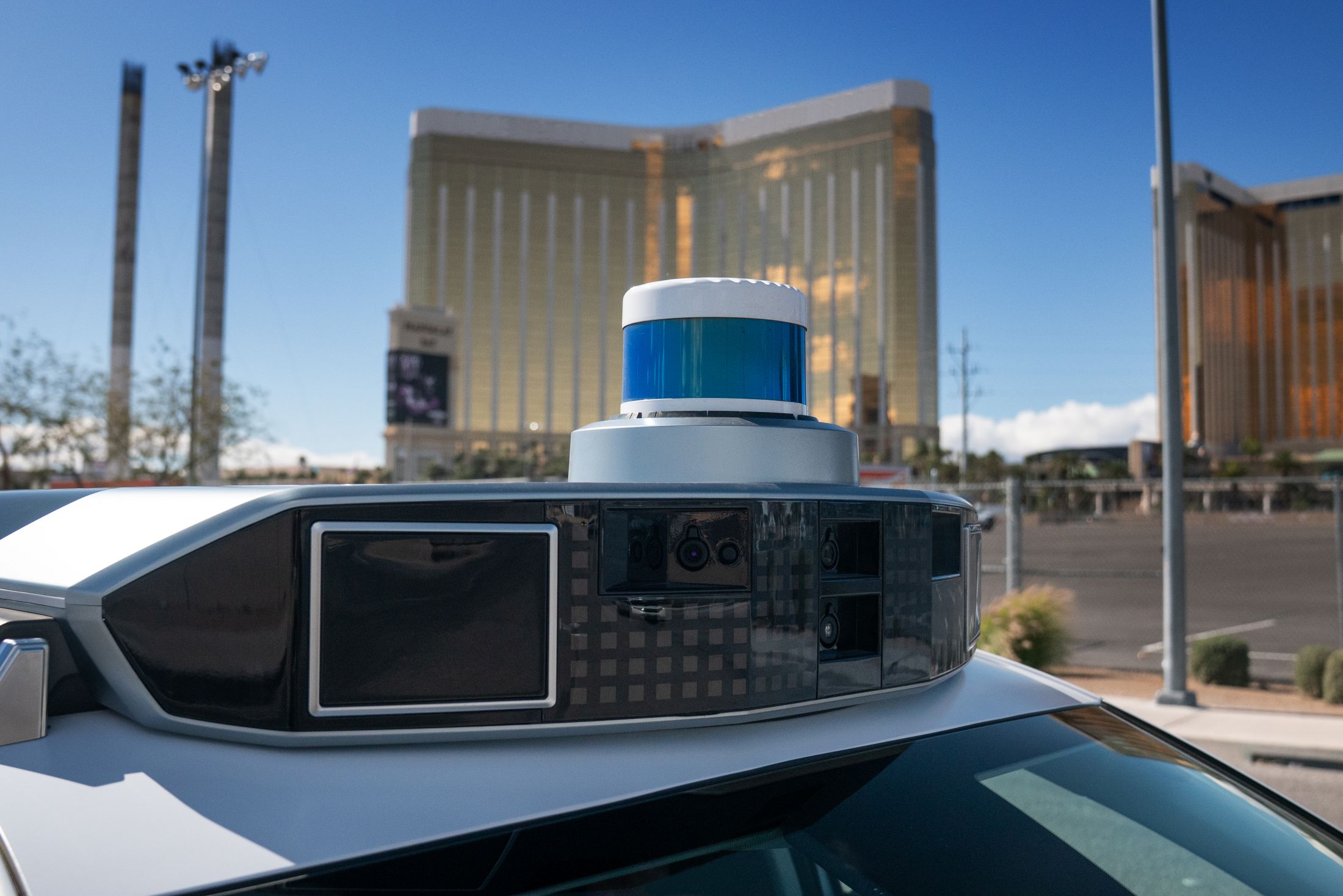
Motional and MIT researchers are stepping into the future, revolutionizing how self-driving cars communicate their decisions in real-time. This exciting development addresses a pivotal issue in autonomous vehicle AI—the "black-box" problem, where even the smartest algorithms leave us guessing about their thought processes.
In a groundbreaking piece published in Nature, a talented team from Motional, led by CEO Laura Major, teamed up with scholars from MIT’s Computer Science and Artificial Intelligence Laboratory. Their innovative approach, known as the Concept-Wrapper Network (CW-Net), bridges the gap between complex neural network operations and everyday human understanding.
The Problem with the "Black Box"
Imagine being in a self-driving car that suddenly brakes hard on a clear road, leaving you and your passengers baffled. Traditional self-driving systems rely heavily on neural networks trained on vast amounts of driving data. While these systems excel in many scenarios, they often do not reveal their reasoning, which is why experts refer to them as black boxes.
Decoding Neural Network Decisions
The CW-Net aims to change this. By transforming a self-driving car’s internal logic into comprehensible concepts—like “Approaching Stopped Vehicle” or “Close to Cyclist”—drivers get a clear picture of what influences their vehicle’s actions.
This is not a retrospective guess but a real-time reflection of the vehicle’s decision-making process. When an event occurs, such as sudden braking, the car can trace back its actions to specific, understandable triggers. Motional emphasizes that this method is "causally faithful," setting it apart from other approaches that may provide plausible-sounding explanations without grounded accuracy.
Laura Major highlights the importance of this interpretability, particularly when comparing it to traditional end-to-end deep learning models, which, while effective, often fall short of achieving the trust needed for full autonomy in urban environments.
Real-World Testing Around Las Vegas
Unlike much of the research into explainable AI, which is often confined to simulated environments, the Motional and MIT team took a bold step forward. They deployed CW-Net in real-world conditions with an experienced safety operator present, gathering data on both private test tracks and public roads around Las Vegas.
The team’s experimental deep-learning-based planning system showed promise but also some notable weaknesses that CW-Net could help identify. Two key incidents during testing illustrate how this system works.
-
In one case, the autonomous vehicle frequently stopped near a traffic cone, leading the operator to believe that the cone was the cause. After removing it, the vehicle stopped again. CW-Net revealed that the system was mistakenly “seeing” a stopped vehicle based on its training data, providing critical insight to the researchers.
- Another incident involved a cyclist. While the car stopped as expected, CW-Net uncovered that its decision was not based on the cyclist’s presence but rather on a safety backup system. This revelation prompted the safety operator to exercise more caution when encountering cyclists in the future.
Balancing Explainability with Performance
One concern in AI development is that adding layers of explainability can affect speed and efficacy. Motional acknowledges this risk but notes that, in benchmarking CW-Net against leading autonomous driving algorithms, the performance difference was minor—less than one percent.
These real-world examples underscore why understanding the vehicle’s behavior—whether it’s caused by a hallucinated object or robust safety protocols—can profoundly impact how a safety operator reacts. This transparency enhances the diagnostic capabilities of engineering teams, making them more proactive and precise.
As autonomous vehicle technology expands into new markets, the demand for transparency will only grow. Regulators are increasingly calling for insights into how these AI systems make decisions, and employers like Motional foresee tools like CW-Net becoming essential requirements.
A Broader Application
The implications of CW-Net extend beyond personal vehicles. Its potential applications stretch into areas like autonomous drones and even robotic surgery, where understanding a system’s capabilities and limitations is crucial for safety.
Curious to dive deeper into the world of physical AI? Explore these revolutionary advancements at the Physical AI Expo, taking place in Amsterdam, London, and North America.
The future of autonomous vehicles is not just about technology; it’s about building trust and understanding. Join us in this exciting journey towards intelligent systems that are transparent and reliable. Your next ride might just rely on it!