Unlocking Profit Potential: A Comprehensive Guide to AI-Driven Price Forecasting Tools in Currency Markets
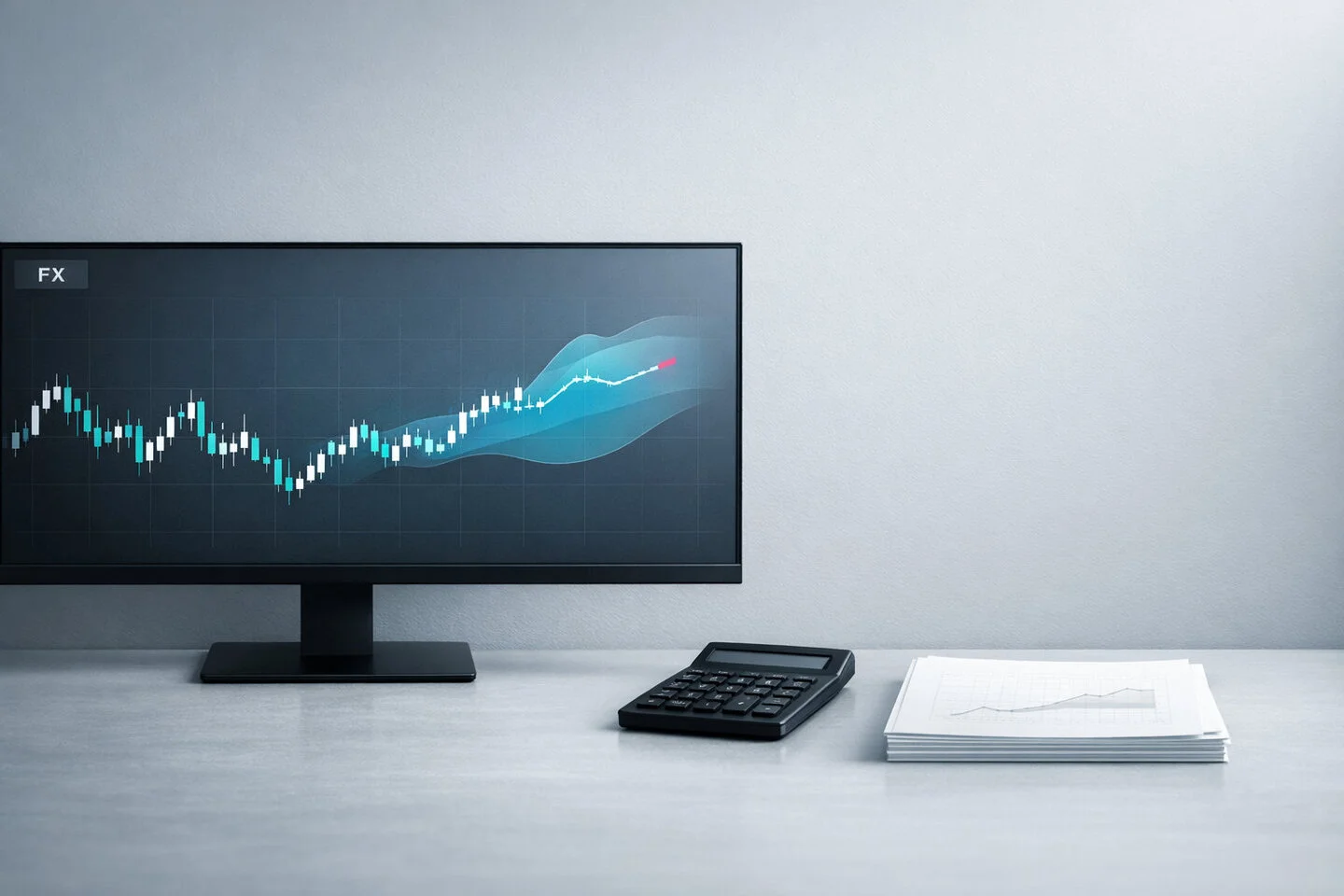
As the influence of artificial intelligence steadily rises in the realm of financial forecasting, concerns about the reliability of these innovative tools are also on the rise. For investors and traders, understanding whether the touted high accuracy of AI translates into tangible results during live market conditions has never been more critical. By delving into how these systems are evaluated, one can discern the significant differences between theoretical predictions and real-world performance.
In the world of forex trading, where the stakes are inherently high and slight fluctuations in exchange rates can lead to substantial gains or losses, the questions surrounding AI-powered forecasting tools become even more pressing. While these technologies promise remarkable capabilities, they also bring forth essential inquiries about what constitutes meaningful accuracy. For practitioners navigating this dynamic landscape, clarity on performance metrics is crucial for making informed decisions.
Scrutinizing Claims of Accuracy in Predictive Tools
Accuracy claims related to AI forecasting in currency markets often emerge from optimistically crafted scenarios, typically utilizing historical data or optimized backtests. It’s important to recognize that these controlled environments can dramatically differ from the volatility and unpredictability found in live trading. The real challenge lies in bridging the gap between impressive demonstration results and the practical responsiveness of models amid real-time market fluctuations. While technical accuracy metrics are frequently cited, their relevance to actual financial decision-making often remains unclear.
When assessing the accuracy of AI-driven price forecasting tools, it’s essential to define what "accuracy" truly signifies. For some, it may pertain to predicting the direction of currency shifts, while for others, the focus could be on the precise timing or magnitude of price changes. The intricate nature of the forex market, with its myriad variables and interdependencies, highlights why simplistic accuracy ratings rarely capture the complete picture. Professionals in the field often necessitate both statistical rigor and domain acumen to interpret these results meaningfully.
Understanding the Mechanics Behind AI Market Predictions
At their core, AI-driven price forecasting tools typically harness advanced machine learning models, particularly those fine-tuned for time series predictions. Technologies like recurrent neural networks, convolutional neural networks, or transformer models are designed to recognize sequential patterns within financial data. These tools digest a wide array of inputs, from historical pricing and trading volumes to macroeconomic indicators and even geopolitical events, including sentiment analysis derived from news outlets and social media.
There are various approaches to predictive modeling in this space. Some systems provide specific point predictions for future prices, while others deliver probabilistic forecasts that reflect the likelihood of different outcomes within assigned confidence intervals. This conceptual distinction significantly influences how users interpret and place trust in model outputs. While probabilistic methods may better accommodate market uncertainties, comprehending forecast accuracy and related notions requires further expertise, reinforcing the idea that headline accuracy figures alone are inadequate for evaluating a tool’s practical value.
Evaluating Model Performance with Robust Accuracy Metrics
Financial practitioners generally assess AI-powered price forecasting tools through a range of evaluation metrics that illuminate different aspects of prediction quality. Directional accuracy indicates whether forecasts accurately anticipate the upward or downward movement of currency pairs. Alternatively, metrics such as mean absolute error and root mean squared error focus on the magnitude of prediction errors. Calibration also plays a critical role, reflecting how closely predicted probabilities match real market events.
A meaningful evaluation process necessitates the establishment of benchmarks and rigorous out-of-sample testing. Models that perform well on historical data may not maintain their reliability in shifting markets. Overfitting, wherein models mistakenly interpret market noise as valuable signals, can render high-scoring tools ineffective once they are live. Furthermore, changes in market regimes and nonstationarity in forex can swiftly compromise predictive accuracy, underscoring the necessity for continuous monitoring and validation. Understanding both the strengths and limitations of these tools is vital for effective integration into trading strategies.
Navigating Real-World Frictions and Effective Risk Controls
When introducing AI-powered price forecasting tools into live trading strategies, various real-world frictions come into play. Challenges like latency—the lag between signal generation and execution—along with slippage and variations in execution quality, can undermine performance outcomes seen in backtesting scenarios. Additionally, concerns regarding data quality and the potential for look-ahead bias are ongoing hurdles, especially if datasets inadvertently incorporate future information that wasn’t available at the time of a decision.
Successful implementation demands a combination of quantitative insights and dedicated risk management. Relying exclusively on single-point forecasts can be limiting; therefore, integrating confidence intervals and scenario analyses can foster enhanced operational stability. Establishing position sizing rules and implementing drawdown controls paired with continuous stress testing, especially during volatile periods, can serve as effective safeguards against erroneous predictions. Ultimately, ongoing review and adaptability, grounded in a concrete understanding of model limitations and sustained with human oversight, are integral to the durable application of AI-powered price forecasting tools in the currency markets.
Embrace the power of AI in your trading strategies, but do so with caution and a keen eye on the data. For those ready to elevate their trading game, staying informed and adaptable is your best asset on this exciting journey.