Revolutionizing Wellness: Samsung’s AI Models Transform Wearable Biosignal Data Analysis
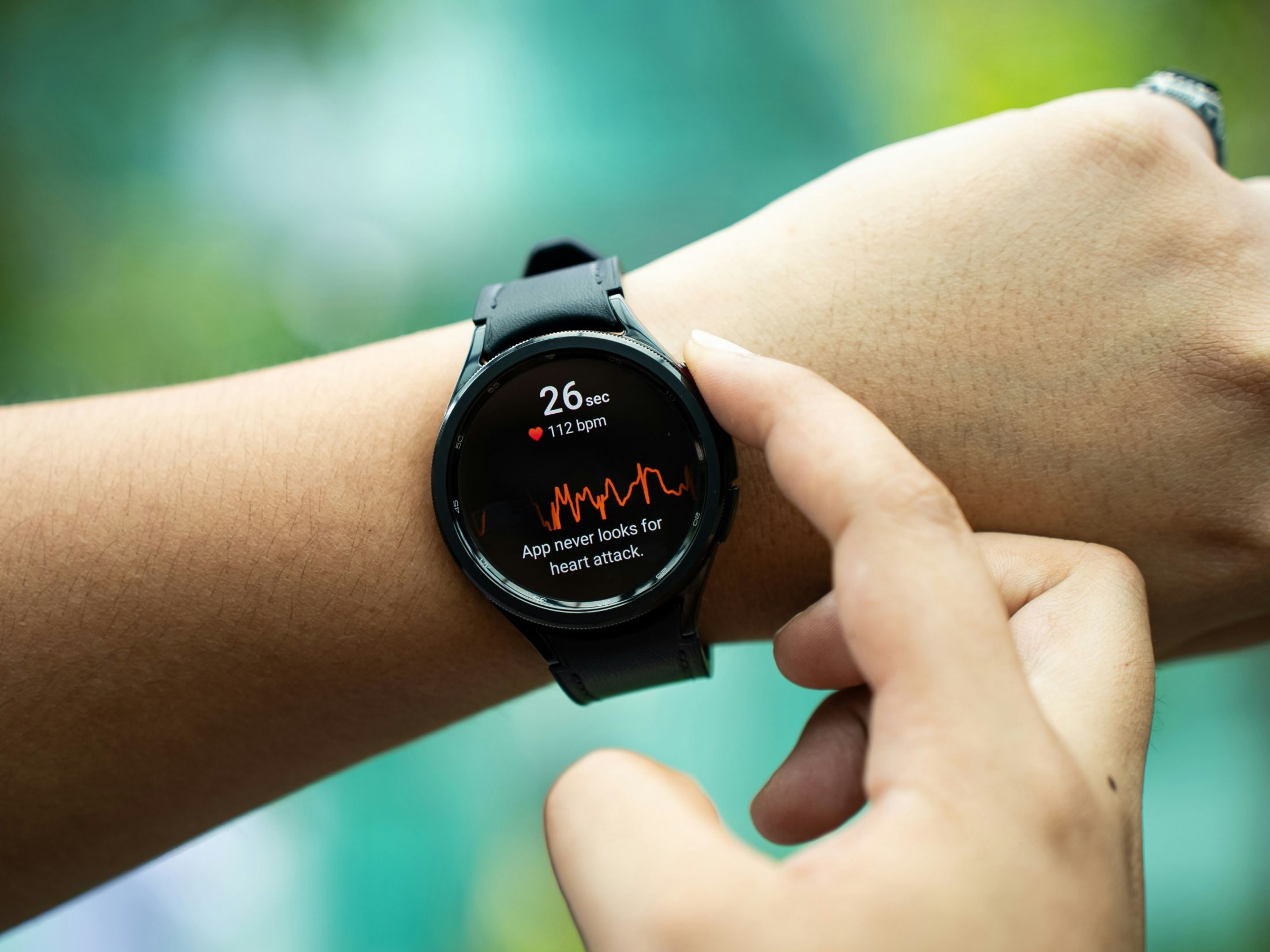
Samsung Research America’s Digital Health Team has unveiled groundbreaking advancements in AI foundation models designed to harness the power of wearable biosignals. These innovative models focus on critical health metrics captured by smartwatches, such as heart activity, sleep patterns, and physical movement, paving the way for a more connected and health-conscious future.
During the recent Health Forum at Galaxy Unpacked in July 2026, Samsung elaborated on its ambitious vision for Connected Care. The company envisions a future where healthcare is preventive, personalized, and interactive—an ecosystem supported by cutting-edge health technology and collaborations with healthcare providers. At the heart of this vision lies the aim to enhance consumer health experiences through robust research.
Samsung’s Health AI Foundation Model Research
Samsung’s health foundation model utilizes self-supervised learning to extract crucial features from unlabeled biosignal data. By pretraining on large health datasets, one model can adeptly handle a variety of downstream tasks, including biosignal analysis, biomarker development, and health issue prediction.
This research comprises two distinct models aimed at different aspects of health data analysis:
- xMAE (Physiology-Aware Masked Cross-Modal Reconstruction for Biosignal Representation Learning) explores the temporal relationships between diverse biosignals.
- HiMAE (Hierarchical Masked Autoencoder) focuses on uncovering health patterns across varied time scales within wearable time-series data.
Both models have garnered significant attention, with xMAE accepted at the International Conference on Machine Learning and HiMAE featured at the International Conference on Learning Representations. These developments highlight the importance of understanding physiological relationships and the temporal structures within biosignal data.
xMAE Links Continuous PPG Data to ECG Signals
Electrocardiograms (ECGs) provide a direct measurement of the heart’s electrical activity, allowing for analyses of heart rate, variability, and potential abnormalities like atrial fibrillation. However, traditional wearable ECG readings require active user participation.
In contrast, Photoplethysmography (PPG) passively captures blood flow changes through smartwatch sensors. Although closely related, these signals occur with a slight delay—similar to seeing lightning before hearing thunder.
xMAE ingeniously reconstructs masked portions of an ECG signal using PPG data, thereby facilitating continuous cardiovascular monitoring without the need for manual ECG measurements. This model was pretrained on an extensive dataset, encompassing approximately 9,400 hours of ECG and PPG data.
Subbu Venkatraman, the Head of the Digital Health Research Lab at Samsung Research America, emphasized the significance of this research, noting that biosignals are dynamic with unique time-varying properties. The main contribution here is the establishment of health foundation models that can effectively capture inter-signal relationships and their intrinsic temporal structures.
Impressively, xMAE outperformed existing biosignal models and multimodal learning approaches in 15 out of 19 evaluation tasks, including cardiovascular disease prediction and sleep stage classification. The learned features also show promise across different sensor devices and settings.
HiMAE Analyses Wearable Data Across Time Scales
Wearable data can convey a wealth of information over varying time frames. Short segments may signify rapid changes, such as heartbeats, while longer segments can reveal gradual patterns related to physical activity or sleep.
HiMAE skillfully employs multiple encoders to separately analyze short and long data segments. This design enables the model to identify the appropriate time scale necessary for specific health tasks, such as heart-rate analysis or sleep prediction.
This training method reconstructs masked portions of wearable data, allowing HiMAE to learn from biosignals even when labeled data is scarce. The model delivers a multifaceted approach, supporting tasks like classification, numerical prediction, and data generation—all through a single pretrained system.
Remarkably, HiMAE achieves this with a more compact model than its predecessors, capable of delivering results in less than one millisecond on a smartwatch’s central processing unit. This efficiency means that analyses occur directly on the device, eliminating the need for continuous cloud connectivity.
With foundation models trained on unlabelled physiological streams, Samsung has created an avenue for extracting diagnostic markers, conducting predictive health assessments, and generating actionable user guidance—all through accessible consumer devices.
As we look to the future of wearable health technology, the contributions from Samsung’s AI foundation models are poised to redefine our approach to health monitoring and wellness. This innovative leap not only signifies a technical achievement but also a commitment to enhancing the well-being of individuals through insightful health solutions.
Ready to embrace the future of health and wellness? Join the revolution in personalized care and unlock amazing possibilities today!