Revolutionizing Industry: How SAP and ANYbotics Propel the Adoption of Physical AI
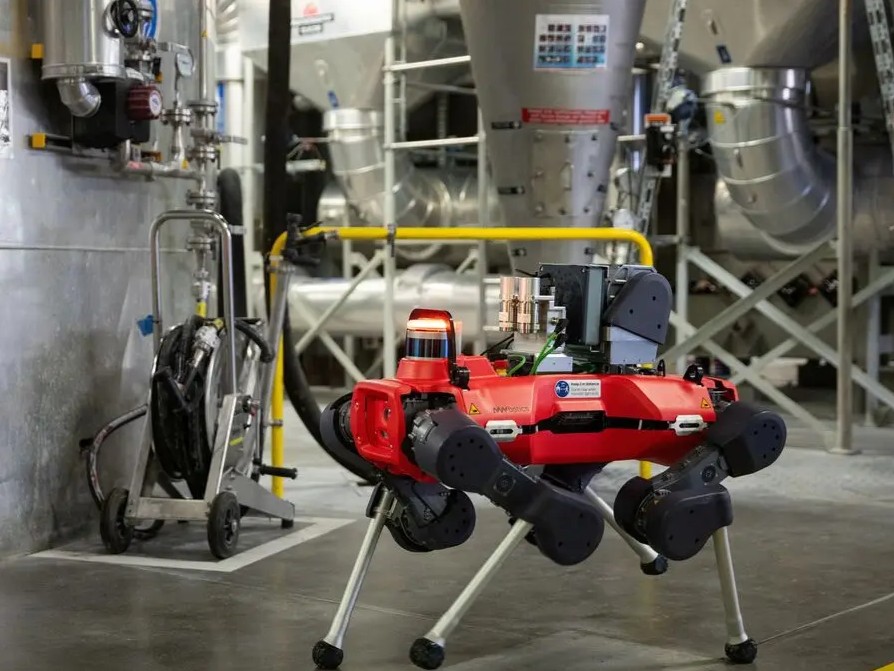
Heavy industry faces significant challenges in ensuring safety and efficiency within hazardous environments. With traditional inspections often costly and risky, innovative solutions are becoming essential. Enter the collaboration between Swiss robotics leader ANYbotics and SAP, a partnership aiming to redefine how inspections are conducted using cutting-edge autonomous technology.
Revolutionizing Inspections with Robotics
ANYbotics has developed four-legged robots designed to operate autonomously in environments that are challenging for human inspectors. By integrating these robots with SAP’s robust enterprise resource planning (ERP) software, companies can transform these machines into dynamic data-gathering nodes. This approach doesn’t merely treat robots as isolated tools but rather embraces them as integral components of a sophisticated Industrial Internet of Things (IIoT) ecosystem.
The Cost of Downtime
In industries like chemical manufacturing or oil extraction, equipment failures can lead to steep financial losses. Traditionally, human inspectors perform routine checks to identify potential issues. However, fatigue and the vastness of these facilities pose risks. On the other hand, autonomous robots can continuously traverse areas, equipped with thermal, acoustic, and visual sensors. When they detect an anomaly, such as an overheating pump, they instantly relay this information to SAP, generating a maintenance request without delay.
Eliminating the Delay in Reporting
In conventional settings, detecting a problem and officially logging it are often two disconnected processes. For instance, a worker might hear a strange noise in a compressor, jot it down, and later input it into a system. By the time action is taken, the damage may already be severe.
With the integration of ANYbotics and SAP, this lag is virtually eradicated. The robot’s onboard AI can process sounds or images in real-time. If an irregular motor frequency is detected, it doesn’t merely trigger an alert; it communicates directly with the SAP asset management module. This system quickly assesses spare parts availability, estimates downtime costs, and schedules necessary maintenance—all within moments.
Robust Data Management with Edge Computing
Implementing robotics in heavy industry isn’t without its challenges, particularly regarding infrastructure reliability. Many factories contend with poor internet connectivity due to concrete barriers and electromagnetic interference. To navigate this, employing edge computing proves essential. Instead of streaming extensive data to the cloud, robots process most information locally, sending only critical details back to SAP. This minimizes bandwidth needs while ensuring timely responses.
Many pioneering companies have opted to establish private 5G networks that enhance coverage where conventional Wi-Fi fails, simultaneously securing sensitive data from potential breaches.
Prioritizing Security
When deploying cameras-equipped robots, security concerns become paramount. Companies need to ensure that they employ zero-trust network protocols to continuously validate the robot’s identity and limit access to essential SAP modules. If a security breach occurs, the system is designed to sever the robot’s connection instantly, preventing further infiltration into the corporate network.
Streamlining Data Interpretation
The data produced as these robots navigate facilities can be overwhelming. Without proper management, maintenance teams risk being inundated with irrelevant alerts. A hyper-sensitive robot could flood the team with warnings, rendering the SAP dashboard ineffective.
To counter this, establishing middleware to interpret the robot’s telemetrics is crucial. This software acts as a filter, separating meaningful data from noise. Organizing the data also paves the way for future machine learning initiatives, which can harness historical information to predict potential failures.
Ensuring a Smooth Transition to Physical AI
Introducing robots into industrial environments can understandably evoke apprehension among the workforce. Often, employees fear that automation will lead to job losses. It is vital for management to clarify that this initiative aims at enhancing safety by removing personnel from hazardous tasks, allowing human engineers to focus on data analysis and repairs.
This transition requires comprehensive retraining. Workers will need to adapt from physically inspecting areas to engaging with SAP dashboards, managing automated maintenance requests, and collaborating closely with robotics. Cultivating this trust entails ensuring that workers know they can take manual control of robots if unforeseen circumstances arise.
Starting Small, Scaling Smart
When implementing these technologies, a phased approach is essential. Large-scale deployments should begin with small pilot programs targeted at specific areas with known hazards and robust internet coverage. Monitoring data flow in this controlled environment helps verify the accuracy of information between the robot and SAP.
Once the data pipeline proves reliable, businesses can incrementally introduce additional robots and link other systems, such as automated parts ordering. Continuous evaluation of network capacity and security measures will be crucial as more robots come online.
Conclusion
Ultimately, treating autonomous inspectors as extensions of a company’s data architecture can yield a wealth of insights into physical assets. However, successful implementation requires precision in infrastructure, data protocols, and human interaction. Embracing this advanced technology not only enhances operational efficiency but also paves the way for a safer workplace.
As you consider incorporating advanced robotics into your practices, remember that this isn’t just about technology—it’s about creating a more secure and productive environment for your team. Ready to explore the future of industrial inspections? Let’s take that step forward together!