Optimizing NVIDIA’s Supply Chain Allocation: How Palantir Foundry and cuOpt are Leading the Way
NVIDIA is revolutionizing its hardware supply chain management with innovative solutions that streamline operations across its global manufacturing network. By integrating cutting-edge technologies like Palantir Foundry and cuOpt, the company is creating a more efficient, automated process that enhances its ability to meet increasing demand for high-performance computing. This transformation not only accelerates delivery timelines but also ensures that complex hardware assembly is executed with precision.
Streamlining Supply Chain Decisions
One of the primary goals of NVIDIA’s new approach is to improve operational delivery from the moment a wafer is produced to the first availability of tokens. This timeline is divided into two key phases: time-to-rack, which tracks the transit from fab output to a fully assembled data center system, and time-to-token, which encompasses the critical aspects of power, cooling, networking, and software readiness.
Managing Component Flows
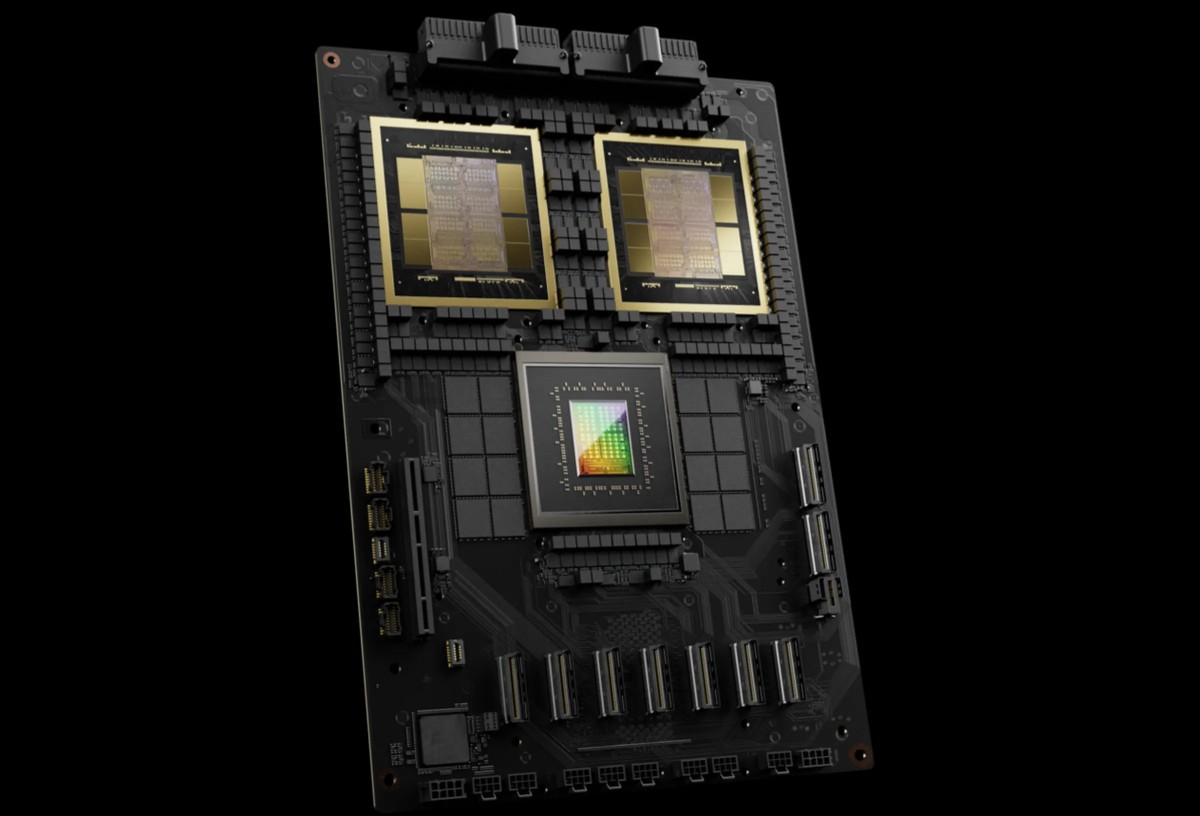
The hardware scaling challenges NVIDIA faces have intensified supply constraints significantly. For instance, a single NVIDIA Grace Blackwell NVL72 rack comprises 18 compute trays, each requiring two Grace CPUs, four Blackwell GPUs, and 32 HBM3e memory packages. These components are sourced from an extensive network of suppliers and OEMs.
The supply chain built for the upcoming Vera Rubin architecture is expected to be even more substantial, necessitating a meticulous orchestration of part deliveries. Assembly processes hinge on three primary channels: direct inventory, consignment stock, and external suppliers. Unfortunately, early shipments often encounter delays, significantly extending what NVIDIA terms the Time of Ownership. This metric tracks the duration from material receipt until the shipping of finished sub-assemblies.
To navigate these complexities, factory allocations are revisited weekly, taking into account part availability, throughput constraints, and fulfillment schedules.
Advanced Optimization with cuOpt
To overcome the challenges posed by these interdependencies, NVIDIA established the Digital Supply Chain Intelligence command center via Palantir Foundry. Foundry’s advanced Ontology models the crucial links between facilities, supplier commitments, component stocks, and production targets.
NVIDIA’s cuOpt, an open-source library designed for GPU-accelerated decision-making, directly interprets this operational data. By formulating the distribution of components as a mixed-integer linear program, it seeks to minimize the Time of Ownership, evaluating constraints at every level of the bill of materials.
In addition to generating weekly delivery schedules, cuOpt monitors active factory limits, aligning assembly capacities with the availability of raw memory.
Leveraging Qualitative Data with Nemotron
While mathematical optimization is valuable, it often overlooks the nuanced, unstructured variables that human planners encounter daily. To address this gap, NVIDIA turned to Nemotron 3.5 Lightning, an advanced model that incorporates qualitative operational records. This model boasts a whopping 30 billion parameters, providing a sophisticated framework for understanding the complexities of real-world supply chain dynamics.
The approach includes processing historical records through NeMo Anonymizer for sensitive data, NeMo Data Designer to balance training scenarios, and NeMo AutoModel for optimal parameter adaptation—all managed through Palantir Autopilot to ensure data integrity and model tracking.
Achievements and Future Directions
Recent evaluations demonstrate that the post-trained Nemotron 3.5 Lightning model achieved an impressive 86.7% decision accuracy. This is a significant improvement compared to its predecessors, with the larger Nemotron 3 Ultra model achieving just 55.5%.
- Post-trained Nemotron 3.5 Lightning:
- 86.7% decision accuracy
- 58.6% balanced accuracy
- 57.5% macro-F1 score
Fine-tuning these models on NVIDIA B200 GPUs was completed in mere minutes, showcasing the speed and efficiency of their engineering processes. Although future risk forecasting remains challenging, continuous updates to the Palantir Ontology ensure that operational choices and planner revisions are captured in real-time.
NVIDIA plans to leverage this dataset for reinforcement learning, refining its decision-making algorithms based on allocation precision and policy adherence while keeping production models insulated from unmonitored retraining.
The strides NVIDIA is making in the realm of supply chain automation are nothing short of remarkable. By harnessing the power of advanced data models and optimizing existing processes, they are setting the stage for a smarter, more responsive manufacturing future.
Are you ready to elevate your operations with similar cutting-edge technologies? Embrace innovation and step into the future of automated supply chain management with insights from leaders like NVIDIA. Let’s transform your processes together!