Lightelligence Soars 400%: Is AI’s Next Challenge the Optical Interconnect?
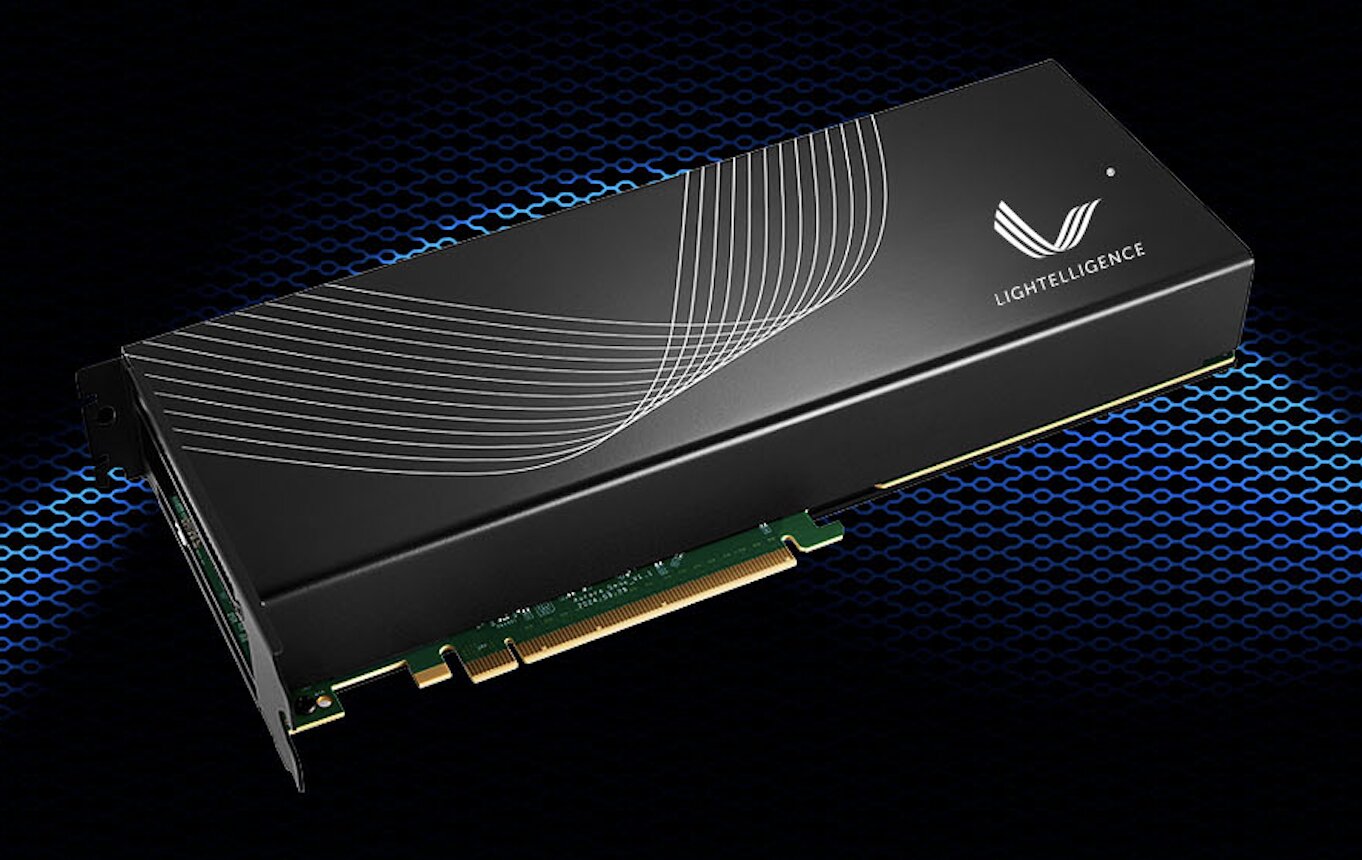
When a company boasting $15.5 million in annual revenue steps onto a stock exchange and quickly achieves a staggering $10 billion market capitalization, it certainly piques investors’ curiosity. What insights are driving this enthusiasm beyond the numbers? For Lightelligence, the innovative solution lies in optical interconnect technology and a growing concern over the limitations of traditional copper wiring in artificial intelligence (AI) applications.
As the first mainland Chinese photonics chipmaker to go public in Hong Kong, Lightelligence’s shares skyrocketed nearly 400% during their debut. Opening at HK$880—a significant leap from its initial offer price of HK$183.2—the company raised roughly HK$2.4 billion (around $310 million) in its IPO. Remarkably, retail interest soared, with the tranche oversubscribed nearly 5,785 times.
Understanding Optical Interconnect
To grasp the investors’ excitement, it’s crucial to comprehend the challenge that Lightelligence aims to tackle. Modern AI models, powering everything from language generation to image creation, rely on extensive chip clusters operating simultaneously. The efficiency of these systems hinges on the speed of data transfer between chips.
Traditionally, this data exchanges via copper electrical connections. However, as AI demands intensify, copper wiring presents significant bottlenecks: it generates heat, consumes considerable energy, and limits the data transmission over distance.
Optical interconnect technology offers a transformative alternative by substituting electrical signals with light. This approach boasts:
- Lower latency
- Higher bandwidth
- Enhanced energy efficiency
Imagine upgrading from a narrow road to a bustling motorway—light enables quicker, frictionless data transportation.
Lightelligence’s Business Model
Lightelligence operates in two primary areas: optical interconnect, linking devices within servers and across clusters, and optical computing, which processes information using photons instead of electrons.
The company’s standout product, LightSphere X, is heralded as the first distributed optical circuit-switching solution specifically designed for GPU supernode interconnections. According to the company, it can enhance model FLOPS utilization by over 50%, substantially lowering computing workload costs.
Market Position and Competitive Edge
Frost & Sullivan recognizes Lightelligence as the pioneer in commercial-scale optoelectronic hybrid computing—an impressive feat within a realm still filled with research entities and emerging startups. By March 2026, they had amassed 410 patents, with a significant portion applicable across its product segments.
In the competitive landscape of China’s optical interconnect market, Lightelligence secured the top position among independent revenue providers in 2025, commanding an impressive 88.3% market share within high-performance computing nodes. Notably, while Huawei holds a commanding 98.4% market share overall, Lightelligence stands as the largest independent supplier.
By the end of 2025, the company had connected with 44 commercial clients, supporting GPU clusters that operated with thousands of cards. Their respected IPO investor lineup featured names like Alibaba, GIC, Temasek, and BlackRock, bolstering their credibility in the market.
Financial Landscape
While Lightelligence’s growth trajectory is remarkable, it comes with complexity. The company reported revenues of RMB 38 million (~$5.6 million) in 2023, increasing to RMB 106 million (~$15.5 million) in 2025—a compound annual growth rate of 66.9%. However, the net losses have escalated more rapidly, reaching RMB 1.34 billion in 2025, and the asset-liability ratio sits at a staggering 473%.
Significantly, one customer contributes to 40.6% of its revenues, marking a concentration risk that could concern potential investors.
The founder, Yichen Shen, has a profound background that enhances the company’s allure. His 2017 publication in Nature Photonics detailed the potential of using light in deep learning computations—a pivotal moment in the domain of optoelectronic hybrid computing. The enterprise he established from this breakthrough is now poised for its next growth phase in the public sphere.
The global AI computing market is projected to expand at a remarkable 27% compound annual rate by 2031, leaving many to ponder if Lightelligence can scale its revenue to align with this growth while bridging the gap between its financial losses and ambitions.
Lightelligence’s stock debut presents an initial valuation, a calculated bet that intrigues investors worldwide.
Image Credit: Lightelligence
If you’re captivated by the potential of optical technology and its transformative power in the AI landscape, why not explore more about how Lightelligence might shape the future of computing? Join us on this journey of innovation and discovery!