How Microsoft’s Majorana 2 Quantum Chip Showcases the Future of Agentic AI in Research and Development
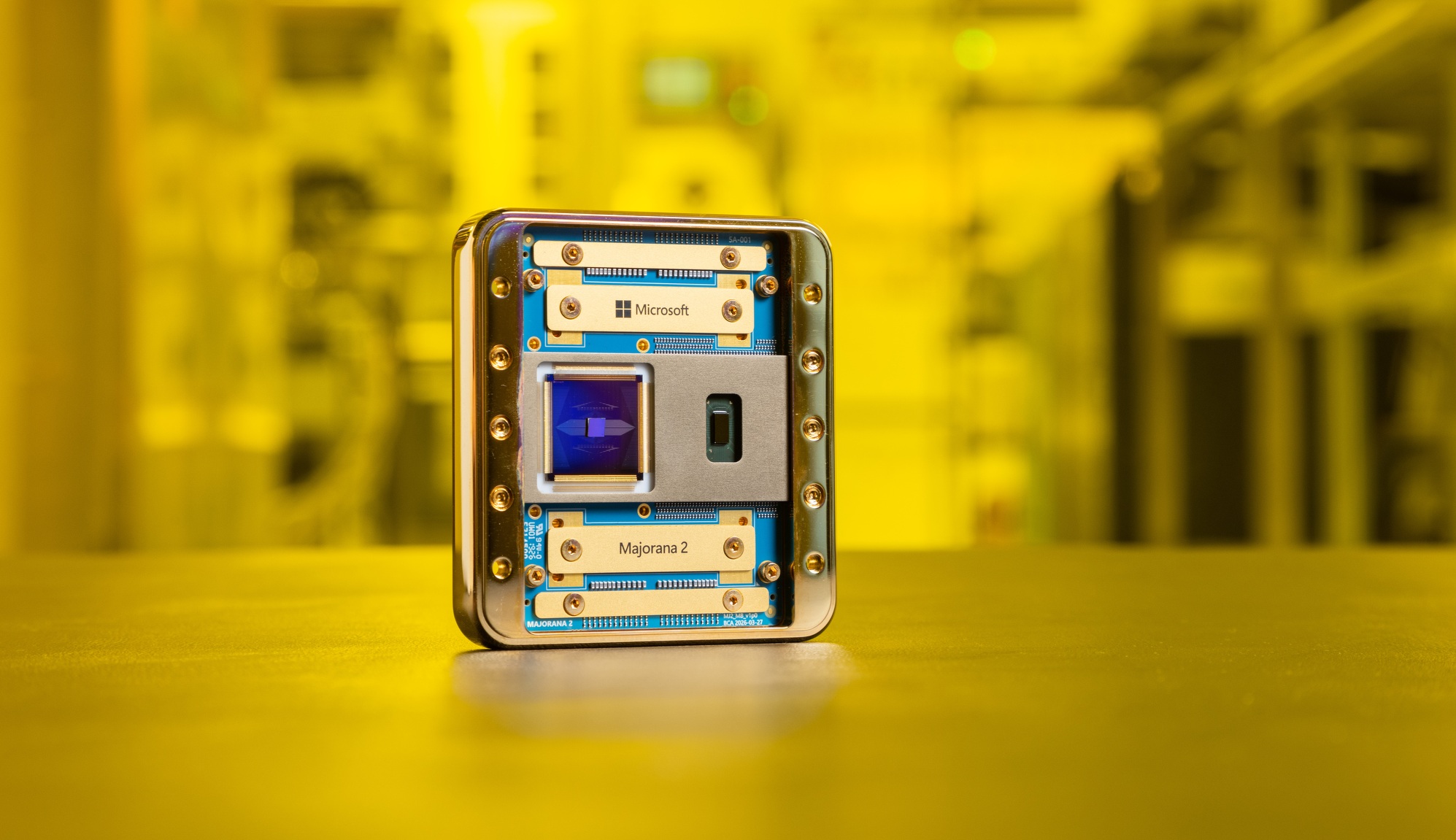
Microsoft has recently unveiled its Majorana 2 quantum chip, marking a significant leap in quantum computing technology. This innovative chip boasts qubits that are 1,000 times more reliable than their first-generation counterparts and has a mean qubit lifetime of 20 seconds—a stark contrast to the microseconds typical in current models. With a goal to achieve a commercially scalable quantum computer by 2029, this development is not just about numbers; it’s about the Microsoft Discovery agentic AI that supports it. This platform could prove to be the most transformative aspect of this announcement.
In simpler terms, many existing quantum chips struggle to maintain their delicate computational state for even a moment. In contrast, Majorana 2 can hold its state for up to a minute, reminiscent of a smartphone battery lasting nearly three years on just one charge instead of dying within a day.
The Role of Microsoft Discovery Agentic AI
The common narrative suggests that AI was responsible for designing this chip, but the truth is both more nuanced and fascinating. The pivotal decision to shift from aluminum to lead as the superconducting material—responsible for the impressive reliability—stemmed from years of traditional materials research. This wasn’t merely an AI suggestion but rather an insight gained through extensive prior studies.
However, Microsoft Discovery’s AI played a crucial role in areas surrounding that decision. It efficiently managed fabrication workflows, automated lengthy measurement processes, and analyzed nearly two decades of research data to highlight correlations that would otherwise be impossible for a human researcher to grasp.
“As you run AI agents on this data, they’re able to synthesize and make correlations that we as humans cannot see because no single individual has that much perspective in such vast data,” explains Zulfi Alam, corporate vice president for quantum at Microsoft. “Through simulations, you can pinpoint probable targets, allowing you to experiment more efficiently.”
Tackling the Measurement Challenge
One of the most tangible victories mentioned by the team relates to qubit measurement. This is the process of identifying quantum states by determining the even or odd number of billions of electrons on a semiconductor wire. Performing this task manually can take weeks, and earlier attempts at automation fell short.
However, built on the capabilities of Microsoft Discovery, the team has created detailed three-dimensional maps of qubit conditions. "Using agentic AI to automate the measurements was a game changer," says Alam. The AI agents can handle simultaneous adjustments to hundreds of voltage parameters, something human researchers cannot do due to their linear approach.
Microsoft Discovery’s General Availability
The foundational platform that has supported these breakthroughs is now accessible to enterprise customers. Microsoft Discovery combines specialized AI agents tailored for scientific research with a Research and Reasoning Discovery Engine, all coupled with robust security and governance features. Additionally, a free Microsoft Discovery app that can be used locally with a GitHub Copilot account is currently in an early preview.
The revised timeline for quantum advancements has been pushed from 2033 to 2029, thanks to the progress evidenced by Majorana 2. Although this acceleration is promising, it’s important to note that quantum roadmaps have a history of optimistic expectations. The 1,000x reliability figure specifically compares improvements over Majorana 1’s qubits, rather than a direct benchmark against competitors like IBM or Google, which utilize fundamentally different architectures.
As Nayak succinctly puts it: “Where are we relative to last year? We’re 1,000 times better.”
In a world where technology continually evolves, the strides made by Microsoft’s quantum research are remarkable. As we witness these groundbreaking advancements, it’s essential to remain engaged and informed about what’s next in the realm of quantum computing. Embrace this journey with us, and let’s explore the incredible possibilities that await. Your curiosity drives innovation, and together, we can shape the future!