Cadence Strengthens AI and Robotics Collaborations with Nvidia and Google Cloud
Cadence Design Systems has recently made waves at its CadenceLIVE event by unveiling two pivotal AI collaborations aimed at revolutionizing design processes in technology. By deepening their partnership with Nvidia and introducing innovative integrations with Google Cloud, Cadence is setting a new standard for sophisticated simulation and design techniques. This initiative not only enhances the power of AI but also streamlines practices in semiconductor modeling and robotic system development.
Strengthening AI with Nvidia
Cadence’s partnership with Nvidia is centered around merging AI with physics-based simulation and enhanced computing capabilities, particularly in the realm of robotic systems and system-level design. This collaboration emphasizes the development of advanced models suitable for semiconductors and large-scale AI infrastructure.
Focus on Real-World Applications
The collaborative effort aims to refine modeling and deployment processes by using Nvidia’s technologies alongside Cadence’s multi-physics simulation tools. The integration operates within Nvidia’s CUDA-X libraries and Omniverse-based simulation environments, providing engineers with realistic depictions of thermal and mechanical interactions. This synergy allows for better planning and analysis of how diverse systems perform under real-world conditions:
- Comprehensive Simulation: Extend beyond chip design to networking and power systems.
- Predictive Analysis: Engineers can simulate system behavior before actual deployment.
- Holistic Understanding: Improved performances require a thorough comprehension of compute, networking, and power interactions.
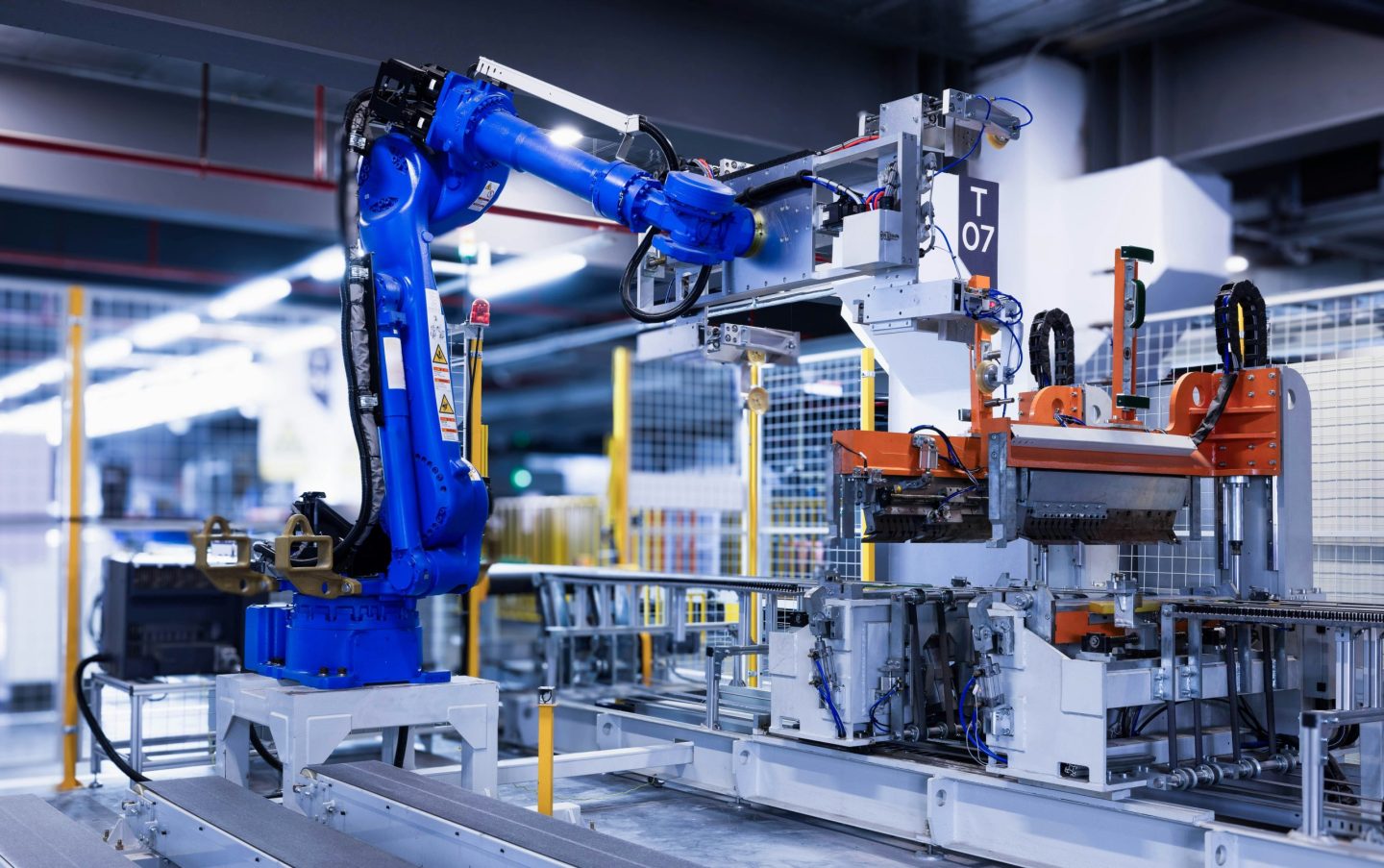
Additionally, Cadence’s advanced physics engines will bolster robotics development by interlinking with Nvidia’s AI models designed for training intelligent robotic systems in virtual settings. As Nvidia CEO Jensen Huang pointedly mentioned, “We’re working with you in the board on robotic systems,” underscoring the commitment to innovation.
Benefits of Simulation Training
Utilizing simulation to train robots minimizes the dependency on real-world data collection. By generating datasets from physics-based models, rather than relying on existing physical systems, the accuracy of training outcomes can significantly improve:
- Enhanced Model Accuracy: As noted by Cadence CEO Anirudh Devgan, “The more accurate the generated training data is, the better the model will be.”
- Improved Efficiency: Industrial robotics firms are already leveraging Nvidia’s Isaac simulation frameworks and Omniverse digital twin tools to conduct extensive testing of robotic systems virtually, ensuring smooth commissioning processes prior to deployment.
Cloud-Powered Chip Design Automation
In another exciting advancement, Cadence unveiled a groundbreaking AI agent that automates complex chip design tasks, particularly concerning physical layout processes. This development builds upon a prior agent geared towards front-end chip design, facilitating a seamless translation of circuit designs into silicon implementations.
Integration with Google Cloud
The new AI agent will be accessible through Google Cloud, merging Cadence’s electronic design automation prowess with Google’s Gemini models. This integration enhances automated design and verification workflows while freeing teams from reliance on on-premise infrastructure.
- AI Super Agent: Cadence’s ChipStack platform utilizes model-based reasoning to synchronize tasks across varied design stages, allowing systems to interpret design parameters and perform tasks automatically.
- Significant Productivity Boosts: Early deployments have witnessed up to a remarkable tenfold increase in efficiency during design and verification phases.
Devgan remarks, “We help build AI systems, and then those AI systems can help improve the design process,” showcasing the intertwined future of AI in design methodologies.
Advancements in Quantum AI
In a noteworthy tangent, Nvidia has introduced a suite of open-source quantum AI models under the name NVIDIA Ising. Named after a mathematical framework that describes interactions in physical systems, these models enhance quantum processor calibration and bolster quantum error correction.
Quantum Computing Transformation
The Ising models promise significant performance improvements, achieving up to 2.5 times faster speeds and three times higher accuracy in error correction decoding processes. Huang emphasized the role of AI in making quantum computing practical, stating, “With Ising, AI becomes the control plane – the operating system of quantum machines.”
As the future of AI and computing converges, innovations like those from Cadence and Nvidia pave the way for remarkable advancements in both robotics and chip design.
Cadence and Nvidia are on the brink of transforming our technological landscape, not just through collaboration, but by enhancing the very foundations of how we design and deploy systems. If you’re excited about the potential of AI in shape-shifting technology and design, now is the perfect time to explore these advancements further. Let’s embrace this journey together!