Bristol Myers Squibb Acquires Nvidia’s AI Technology to Revolutionize Drug Discovery
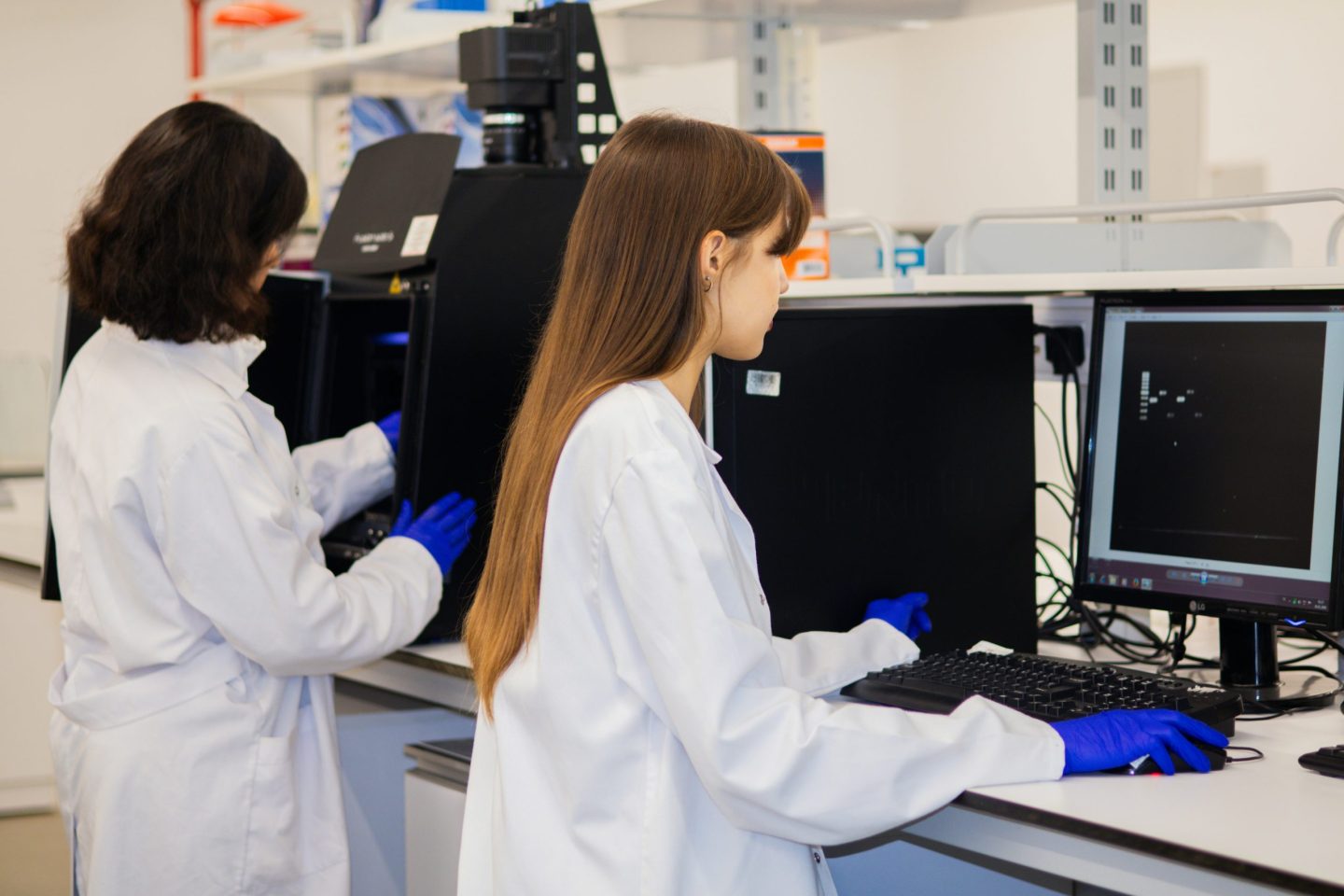
Bristol Myers Squibb (BMS) is taking a significant step forward in the realm of drug discovery by acquiring an Nvidia DGX SuperPOD built on the cutting-edge Vera Rubin architecture. This upgrade not only positions BMS as a market leader in the life sciences field but also signifies a leap into a new era of artificial intelligence (AI) application within pharmaceutical research.
With advancements in technology at the forefront, this new acquisition demonstrates BMS’s commitment to innovating its operations and enhancing computational power. The integration of AI capabilities is set to significantly expedite drug discovery processes and lead to groundbreaking treatments.
Expanding Computing Capacity
The newly acquired system consists of eight DGX Vera Rubin NVL72 systems, a powerful cluster that unites state-of-the-art Nvidia Vera central processing units alongside Rubin graphics processing units. This upgrade will enable BMS to facilitate advanced training of proprietary models while executing real-time predictions across a myriad of research programs.
- The infrastructure is designed to support extensive projects involving compounds, proteins, and various scientific data.
- Although financial details remain undisclosed, this purchase adds to BMS’s existing Nvidia infrastructure, amplifying their capabilities significantly.
BMS has utilized its previous DGX SuperPOD for about three years and is now set to create a unified computing environment that will be accessible from its research sites worldwide. This integration aims to break down barriers, offering more scientists direct access to compute resources.
Greg Meyers, Chief Digital and Technology Officer at BMS, emphasizes the rising demand for computational resources, driven by the need for larger AI models. Erin Davis, Vice President of Research Business Insights and Technology, notes that the existing infrastructure has been running at capacity, particularly due to high demands stemming from large-scale predictions related to complex molecules and developing internal models.
Applying AI in Drug Discovery
BMS has integrated AI into nearly all aspects of its small-molecule initiatives and a significant number of large-molecule programs. The application of AI facilitates crucial steps such as target identification, lead optimization, and internal model development.
The impact is profound, with AI-enabled target identification slashing manual research time by several weeks. With this enhanced capacity, BMS aims to evaluate a greater number of potential drug candidates in the early developmental stages. As Robert Plenge, Chief Research Officer, says, “Maybe before we could do 10 and now we can do dozens,” indicating a substantial increase in productivity.
Computational screening allows researchers to vet compounds before selecting a select few for further synthesis and testing. Utilizing the method dubbed “Predict First”, BMS leverages model-generated predictions to eliminate unsuitable candidates early in the process.
Payal Sheth, Senior Vice President of Therapeutic Discovery Sciences, highlights the utility of these predictions: “We use them to prioritize the synthesis of molecules with multi-parameter optimization,” she explains. This approach ensures that lab experiments focus on the most promising molecules, enhancing the success rates of ongoing projects.
Moreover, this innovative use of AI has expanded BMS’s library of CELMoD compounds, engineered to selectively degrade harmful cancer-promoting proteins, promising new treatment pathways for blood cancers and other diseases.
Connecting Research Sites
To further enhance efficiency, BMS is introducing user-friendly tools aimed at reducing the complexity involved in initiating complex computational tasks. Researchers will soon be able to commence prediction requests using straightforward, natural-language commands.
Managed through Nvidia Mission Control, the facility enables seamless cluster provisioning, infrastructure monitoring, and workload management. This connected environment fosters a culture of collaboration, allowing teams to access and utilize data and model outputs generated from different research sites.
For instance, datasets gathered from a program in Lawrenceville, New Jersey, can be effectively utilized by teams based in San Diego. Sheth emphasizes, “The compute infrastructure is what connects all our scientists together and institutionalizes our learnings,” reinforcing the importance of collaboration in scientific discovery.
The two SuperPODs will share a common data environment, providing different teams direct access to diverse datasets and model outputs. This collaborative approach enhances the overall efficiency of drug development, as BMS can allocate the new computing capacity across various applications ranging from small and large-molecule design to digital-twin technologies.
BMS aims to ensure higher productivity with enhanced computing efficiency, as the Vera Rubin system promises up to ten times the performance per megawatt compared to its predecessor. Meyers succinctly notes the financial reality: “Electricity is not getting cheaper.”
While a specific deployment date remains unannounced, the potential for BMS to revolutionize the pharmaceutical landscape through AI advancements is unmistakable.
As this thrilling chapter unfolds, those passionate about scientific innovation will undoubtedly feel the ripple effects of BMS’s commitment to marrying technology with medicine—a true inspiration for the future of health and healing.
Ready to explore the transformative power of AI in drug discovery? Join us in this journey of innovation and inspiration and witness how technology is shaping the future of medicine!