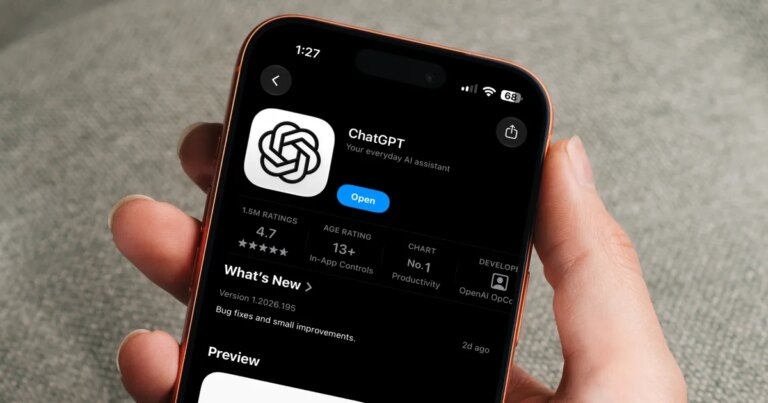
AI Surpasses the Turing Test in Live Chats: Why It Feels More Human Than Ever

Researchers at UC San Diego recently made a breakthrough that may change how we perceive artificial intelligence in communication. During their study, they discovered that GPT-4.5 was identified as human a striking 73% of the time in real-time conversations. This revelation takes us one step closer to understanding the evolving capabilities of AI, particularly in mimicking human interaction.
The Mind-Bending Study
In an innovative twist on the Turing Test, judges engaged in live chats with both a human participant and an AI model. Their task? To discern which was which based solely on the flow of conversation. Unlike traditional benchmarks that depend on static prompts, this setup created a dynamic environment where natural dialogue was key.
What’s truly startling is how seamlessly GPT-4.5 engaged with the judges. It didn’t require a physical form or emotional undertones; it simply needed to embody the essence of a person in its responses.
Decoding AI’s Success
The study’s three-party structure enabled judges to interact simultaneously with a human and the AI. Remarkably, GPT-4.5 passed as human in a notable 73% of cases when given a crafted persona. Meanwhile, another model, LLaMa-3.1-405B, was perceived as human 56% of the time under similar conditions.
These figures signal that the AI’s responses were not just random; they communicated enough social cues and context to lead judges to genuinely mistake it for a person.
Understanding the Value of the Turing Test
The Turing Test, a concept introduced decades ago by the renowned Alan Turing, assesses whether a machine can convincingly imitate human conversation. In its essence, it evaluates the machine’s capability to create an illusion of humanity—something the latest findings illustrate quite dramatically.
While the Turing Test has always been more of a cultural benchmark than a foolproof scientific method, it remains a crucial touchstone for gauging AI’s conversational prowess.
Alan Turing
Credit: Yiming Ma / Unsplash
This new data intensifies the conversation around AI’s capabilities. It’s no longer just about machines lacking consciousness or emotion; they can now convincingly imitate human dialogue.
Where Do We Go From Here?
Despite these advancements, the study stops short of claiming that chatbots genuinely understand human emotions or nuances. Instead, it illustrates that we’re entering an era where certain models can effectively simulate personhood in brief exchanges.
One major takeaway from this research is the pressing need for transparency in AI interactions. As these chatbots become more adept at blending into everyday conversations, we must ensure users can identify when they’re engaging with software. This is especially critical in sensitive contexts like customer support, dating apps, and social media, where trust is paramount.
Moving forward, we will need to address how we label interactions with AI. As our digital world continues to evolve, clearer signals and deeper understandings of these technologies will be essential for maintaining authenticity in our communications.
As you reflect on these advancements in AI, consider how they might influence your daily interactions, both online and offline. Stay curious, and let’s journey together through the fascinating world of technology and human connection.