Unlocking the Secrets: How AI Search Engines Function and Transform Your Online Experience

AI search engines are transforming the way we discover information online, elevating our experiences to new levels of personalization and relevance. Unlike conventional search methods, these systems harness advanced technologies such as natural language processing and machine learning to understand user intent and context. Curious about how these intelligent engines function? Let’s embark on a journey through the innovative world of AI search technologies and explore their implications for our digital interactions.
How Do AI Search Engines Work?
At their core, AI search engines utilize artificial intelligence to interpret user queries with an understanding that goes beyond mere keyword matching. By employing machine learning and natural language processing (NLP), these systems can discern the meaning behind our searches, enabling them to deliver highly relevant and contextual results.
The Evolution from Traditional Search
Historically, traditional search engines encountered several limitations that necessitated significant improvements:
-
Lack of Contextual Understanding: They often struggled with language nuances and failed to recognize synonyms or related concepts.
-
One-Size-Fits-All Results: Search outcomes tended to be generic, lacking personalization.
-
Outdated Information: The rapidly shifting online landscape rendered many results stale quickly.
- Fragmented Data Sources: Users often had to navigate multiple sites for coherent information.
AI search technology addresses these limitations by comprehending user intent and analyzing varied data types to present tailored results.
The Mechanics Behind AI Search
AI has revolutionized every aspect of the search experience, especially in content indexing. Modern AI systems intelligently select which pages to crawl based on their value, freshness, and user engagement.
Natural Language Processing in Action
Natural Language Processing is pivotal for understanding user queries within AI search engines. This technology transforms unstructured text into structured data, allowing for:
-
Query Simplification: Methods like stemming reduce words to their root forms.
-
Stop Word Removal: Eliminating common words enhances search efficiency.
- Intent Classification: Accurately identifying whether the user seeks information, wants to make a purchase, or is looking for local services.
For example, a search for “iPhone 8” could mean various things, whether the user is looking for specifications, reviews, or purchase options. AI can predict this intent with remarkable accuracy.
Advanced Models Like BERT and MUM
Google’s BERT (Bidirectional Encoder Representations from Transformers) has revolutionized search technology by evaluating the interplay of words in context. It has become integral in processing nearly every English query. Further advancements came with MUM (Multitask Unified Model), a powerful system capable of comprehending multiple languages and formats simultaneously.
Semantic Search Technologies
Another key element of AI search engines involves vector embeddings, which convert words into numerical sequences that encapsulate meaning. This allows these systems to identify relationships between concepts and provide nuanced results. For instance, searching for “best Italian restaurant in NYC” could yield related suggestions like “top-rated pasta places in Manhattan,” even if the exact keywords do not match.
Essential Components of AI-Driven Search
To function efficiently, AI search engines rely on three core components that synergistically enhance their capabilities:
Large Language Models (LLMs)
LLMs are at the heart of AI search engines, addressing complex queries and detecting language patterns to provide relevant responses.
Vector Databases
These databases manage vector embeddings, ensuring quick searches across vast datasets while optimizing storage for AI needs.
Search APIs and Frontend Integration
APIs bridge backend functionalities to user interfaces, enabling seamless query processing and the delivery of results in an intuitive format.
Popular AI Search Engines and Their Unique Features
The landscape of AI search engines is rapidly evolving, featuring several platforms, each with distinctive offerings:
Perplexity
This engine presents complete responses with source citations and remembers conversation context for natural follow-up questions.
Google AI Overview Mode
Users can toggle between traditional and AI search outcomes, breaking complex questions into manageable parts for comprehensive answers.
Claude
Claude specializes in contextual awareness, providing clear and detailed responses for complex queries.
ChatGPT
OpenAI’s ChatGPT offers conversational responses with real-time web data, making it a robust tool for both casual and professional searches.
Chatsonic
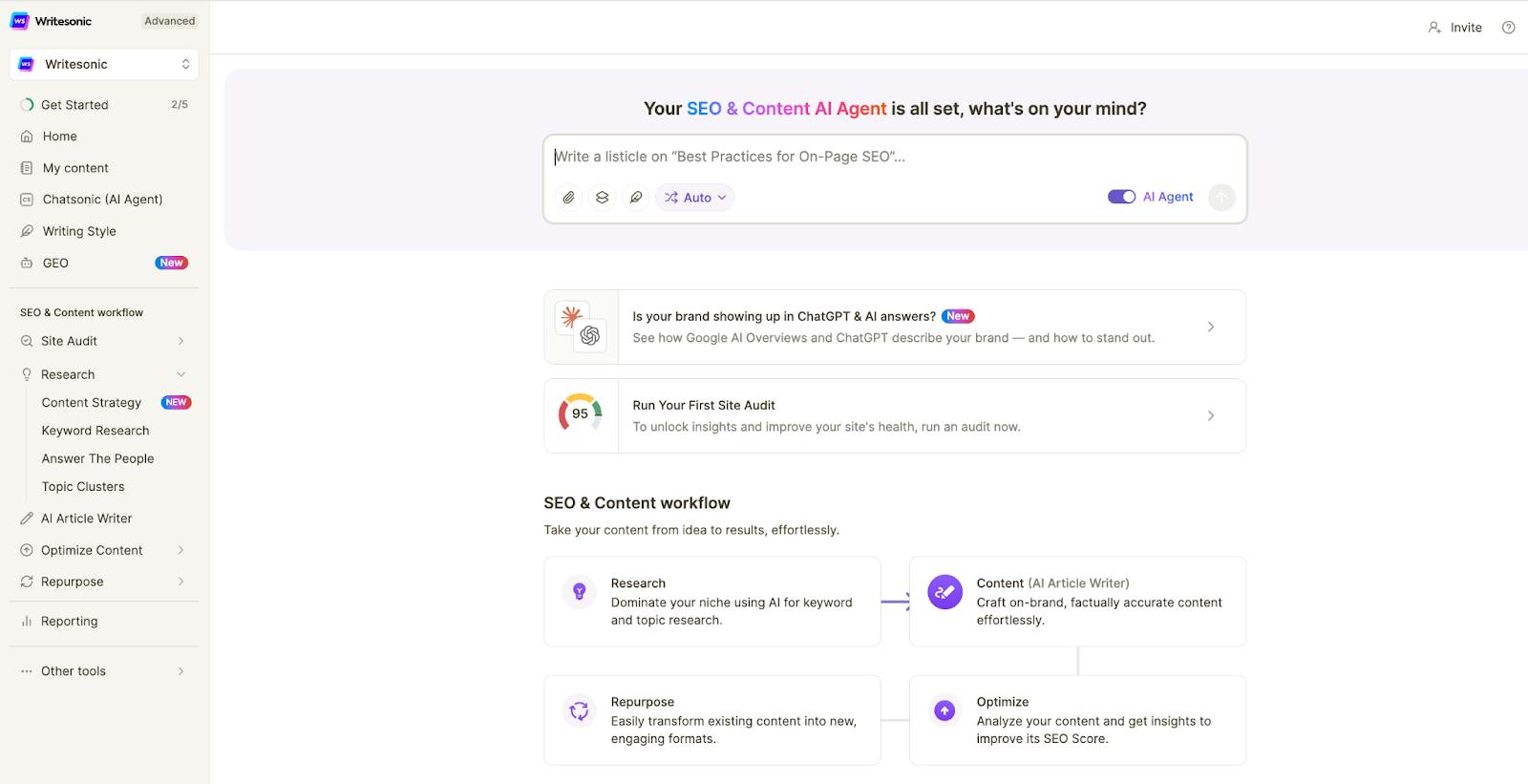
Writesonic’s Chatsonic merges conversational capabilities with live data access, making it essential for marketers and content creators to generate SEO-optimized content.
The Future of AI Search: Trends and Considerations
As AI search technology progresses, several critical trends are emerging:
Generative Engine Optimization (GEO)
This approach shifts from traditional SEO to optimizing content specifically for AI-driven searches, prioritizing clarity and structure over mere keyword placement.
Voice and Visual Search
With the increasing popularity of voice assistants, users are moving towards conversational queries, while visual searches are also gaining traction, enabling users to find information quickly through images.
Conclusion
The advent of AI search engines is not merely a technological advancement; it’s a profound shift in how we interact with information. These intelligent systems don’t just make searching easier; they redefine our relationship with knowledge. As we embrace this revolution, ethical considerations around accuracy and privacy will become paramount. The future of searching is here, and it promises to reshape how we discover, understand, and trust information.
So, as you engage with the world of AI search, consider how these innovations can enhance your own digital experience. Embrace the change and explore the possibilities that await you in this exciting new landscape!