Unlocking ROI: How ABB’s Physical AI Simulation Revolutionizes Factory Automation
A new era is dawning in manufacturing, where technology and innovation intersect to create efficient, intelligent systems. The recent collaboration between ABB and NVIDIA exemplifies this shift, pushing the boundaries of factory automation through advanced AI simulations. For beauty-conscious brands and sophisticated enterprises, this partnership holds the promise of not just increased ROI, but a revolutionary approach to overcoming production challenges.
Bridging the Gap Between Digital and Physical
The collaboration aims to eliminate the persistent divide between digital training models and the realities of the factory floor. Historically, manufacturers have encountered hurdles in implementing intelligent robotics that work consistently outside of controlled tests. The discrepancies in lighting, material behaviors, and part variations can derail even the best-laid plans.
Overcoming Historical Friction
In the past, this friction has compelled engineering teams to resort to physical prototypes, leading to delayed product launches and inflated costs. Recognizing this, ABB Robotics and NVIDIA have joined forces to bring a game-changing solution to manufacturing facilities.
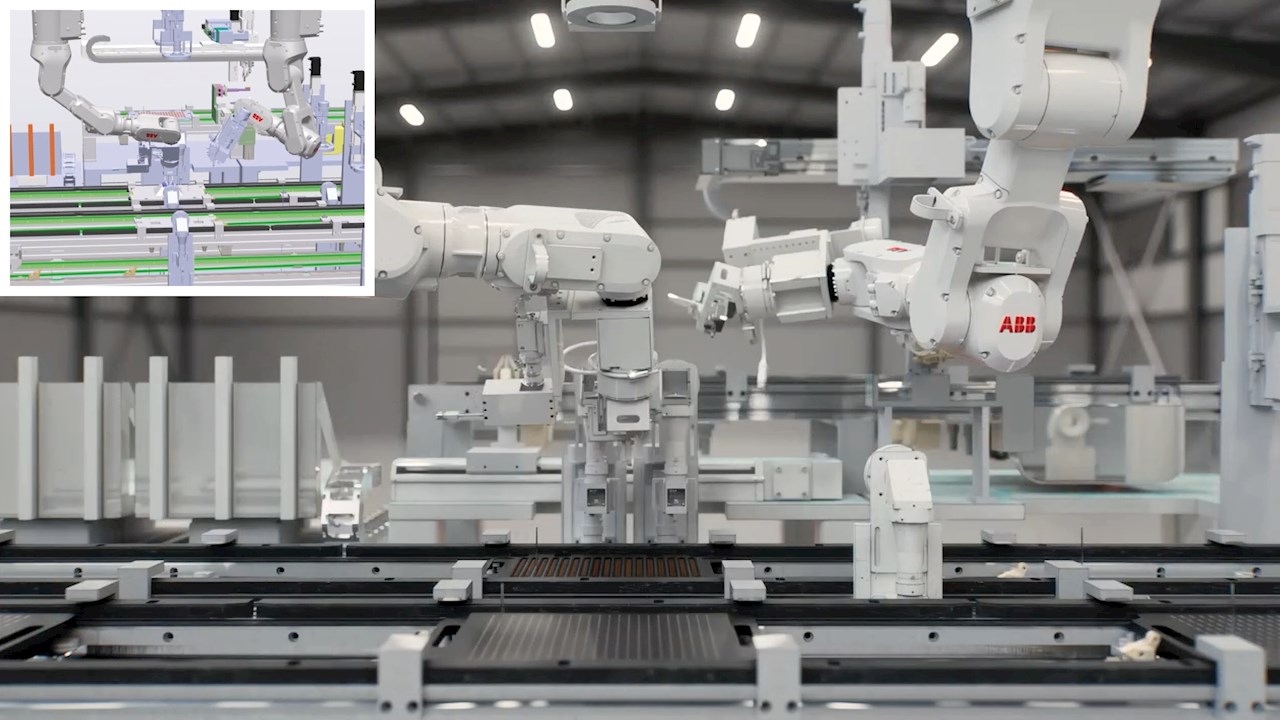
Scheduled for release in the latter half of 2026, RobotStudio HyperReality is generating buzz among global customers. By incorporating NVIDIA’s Omniverse libraries into its existing RobotStudio software, ABB enables physical simulations that accurately reflect real-world conditions.
- This integration can cut deployment costs by up to 40%.
- It can also speed up time to market by as much as 50%.
To fully harness these benefits, production leaders need to focus on designing, testing, and validating automation cells before any hardware installation occurs.
The Power of Digital Testing
The system allows engineers to export a fully parameterized station—covering robots, sensors, lighting, kinematics, and parts—as a USD file directly into the Omniverse environment. Once there, a virtual controller operates using the same firmware as the physical machine, achieving an impressive 99% behavioral match between digital and physical realms.
Instead of manually programming movements, engineers can leverage computer vision models that learn from synthetic images curated within this software. When paired with Absolute Accuracy technology, this method drastically reduces positioning errors from 8-15 mm to a mere 0.5 mm, ensuring unparalleled precision for industrial applications.
As Marc Segura, President of ABB Robotics, states, “This integration represents a crucial milestone in bridging technology’s long-standing ‘sim-to-real’ gap, enabling the deployment of physical AI with industrial-grade precision for genuine customer applications.”
Validating Automation Before Implementation
Early adopters are already seeing the rewards of these capabilities on active production lines. For example, Foxconn is using this software to streamline consumer device assembly—an intricate task complicated by frequent product changes and delicate components. By creating synthetic data for virtual training, they are achieving remarkable accuracy while significantly slashing setup times and eliminating the need for costly physical tests.
Similarly, the California-based automation provider, Workr, is integrating its WorkrCore platform with ABB hardware, trained through the Omniverse. They plan to demonstrate their systems at the upcoming NVIDIA GTC 2026 event, showcasing the ability to onboard new parts in mere minutes without requiring specialized programming expertise.
Deepu Talla, VP of Robotics and Edge AI at NVIDIA, emphasizes the necessity for high-fidelity simulations in the industrial sector. He notes that integrating NVIDIA Omniverse libraries into RobotStudio significantly accelerates how thousands of manufacturers can bring complex products to market.
Expanding the Hardware Ecosystem
The integration does not stop there. ABB is also exploring the integration of NVIDIA’s Jetson edge platform into its Omnicore controllers. This move could facilitate real-time inference across existing robotic systems, enhancing operational efficiency even further.
By adopting a digital-first simulation approach, manufacturers can reduce setup and commissioning times by up to 80%. As we transition from software-driven AI to hardware applications, it will be essential for companies to prepare their data pipelines and upskill their teams in handling synthetic data. This proactive mindset will be the defining factor for maintaining a competitive edge in the manufacturing landscape.
In conclusion, embracing these advanced solutions is not just a trend—it’s a transformation. For beauty-savvy businesses that prioritize efficiency and innovation, now is the perfect time to consider integrating these cutting-edge technologies into your operations. Take the leap and witness the remarkable capabilities that intelligent automation can bring to your manufacturing journey.