Ultimate Guide to Enjoying the Geminid Meteor Shower: December Skywatching Tips You Can’t Miss
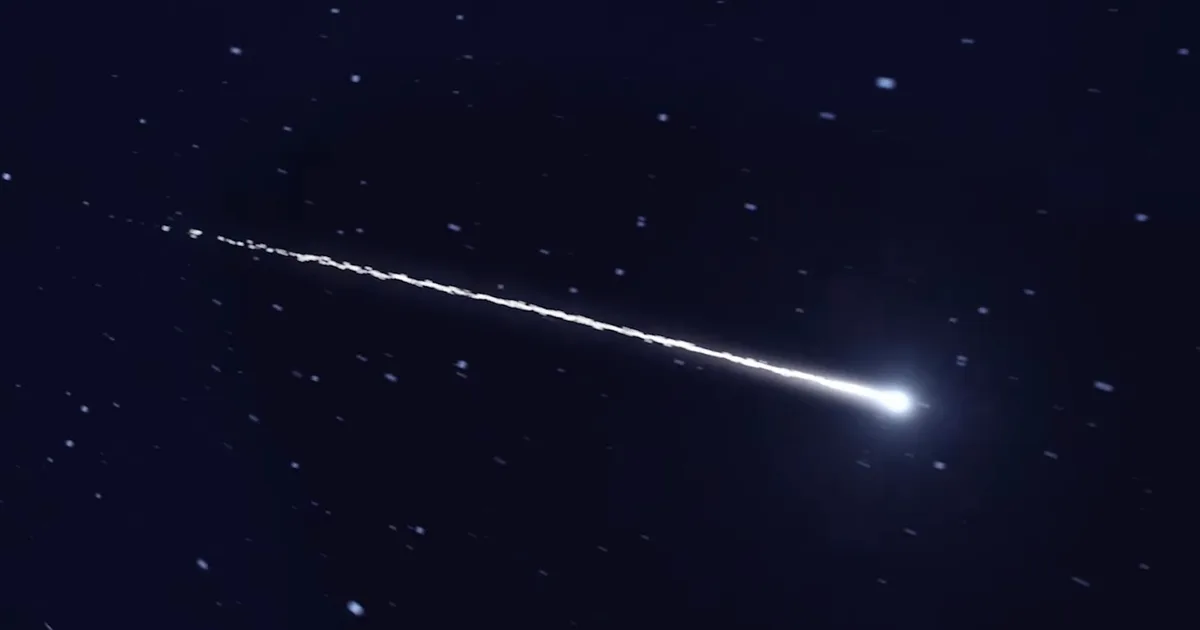
The meteor shower will peak toward the middle of the month.
December invites skywatchers and dreamers alike to gaze at the night sky, where captivating celestial events await. From a brilliant comet to a dazzling meteor shower and a stunning conjunction of the moon and Jupiter, the month is brimming with wonders that tell a story far beyond our earthly experience.
Comet 3I/ATLAS
For stargazers equipped with a telescope boasting an aperture of at least 30 centimeters, December offers a unique opportunity to witness Comet 3I/ATLAS. This remarkable comet is the third object from beyond our solar system to be spotted within its bounds, stirring considerable excitement in both scientific and casual circles.
On December 19, look towards the eastern to northeastern sky in the early pre-dawn hours. You will find the comet illuminating the space just beneath Regulus, the dazzling star that anchors the constellation Leo.
If you’re near a local observatory, this is a fantastic time to join community skywatching events, providing a perfect chance to experience this phenomenon firsthand.
Rest assured, Comet 3I/ATLAS poses no threat to Earth. NASA informs us that even at its closest approach on December 19, the comet will be around 170 million miles away, a distance more than 700 times that between Earth and the moon.
Geminid Meteor Shower
Mark your calendars for the evenings of December 13 and 14, when the Geminid meteor shower will reach its vibrant peak. Known for its spectacular array of bright, colorful meteors, this shower is composed of debris trailing from the asteroid 3200 Phaethon.
To fully enjoy this celestial display, direct your gaze towards the eastern sky. The bright planet Jupiter will serve as a helpful guide for your viewing. Under optimal conditions—away from city lights—you might have the chance to witness up to 120 Geminid meteors each hour. It’s a viewing experience that combines beauty with a touch of cosmic magic.
The Moon and Jupiter
Another highlight occurs on the evening of December 7, when the moon will draw close to Jupiter in a visually stunning conjunction. This picturesque scene is one you can appreciate effortlessly with the naked eye.
NASA describes a conjunction, explaining, “During this event, planets and moons appear close together from our perspective, even though they exist at vast distances apart.” While it may seem like the moon and Jupiter are side by side, in reality, they are separated by hundreds of millions of miles in the vast expanse of space.
As December unfolds, embrace the beauty and wonder of the night sky. Each of these celestial events offers a moment of connection with the universe, reminding us of the mysteries that lie beyond. So gather your loved ones, bundle up, and let the enchantment of the cosmos inspire you this month.
Ready to embark on your astronomical adventure? Grab your telescope, and don’t miss out on the chance to explore the cosmos like never before!