Sam Altman Predicts OpenAI Will Employ a ‘Legitimate AI Researcher’ by 2028
OpenAI is on a remarkable journey, reshaping the future of artificial intelligence and its potential applications. As deep learning systems make unprecedented strides, the company is eyeing ambitious targets for its AI models. By exploring innovative technologies, OpenAI aims to deliver solutions that not only enhance productivity but also redefine the boundaries of what AI can achieve.
A Bold New Direction for OpenAI
This transformative vision coincides with OpenAI’s recent shift to a public benefit corporation. By moving away from its non-profit origins, the organization is poised to unlock new avenues for funding and innovation. This strategic pivot frees OpenAI from certain constraints, enabling it to pursue groundbreaking research and development with renewed agility.
The Vision of an Autonomous AI Researcher
During a recent livestream, CEO Sam Altman shared insights alongside chief scientist Jakub Pachocki, who explained the concept of an AI researcher — a system designed to run comprehensive research projects independently. This innovative AI won’t merely assist human researchers; it aims to take on complex issues autonomously, harnessing the power of deep learning to push the frontiers of knowledge.
Pachocki offered a thought-provoking perspective, suggesting that superintelligence could be less than a decade away. This level of intelligence would enable AI systems to outperform humans in critical tasks, changing the way we approach problem-solving across various disciplines.
Driving Innovation Through Enhanced Capabilities
To bring this vision to fruition, OpenAI is focusing on two primary strategies: fostering algorithmic advancements and significantly increasing “test time compute.” This refers to the duration models allocate to process complex problems. Currently, AI can analyze tasks with a roughly five-hour time frame and already competes closely with top human participants in prestigious contests like the International Mathematical Olympiad.
Pachocki emphasized the potential of extending this “thinking” window, which could mean allocating extensive computational resources, especially for major scientific breakthroughs. The willingness to dedicate entire data centers to single projects could revolutionize our approach to challenges in fields such as medicine and technology.
A Commitment to Responsible AI Development
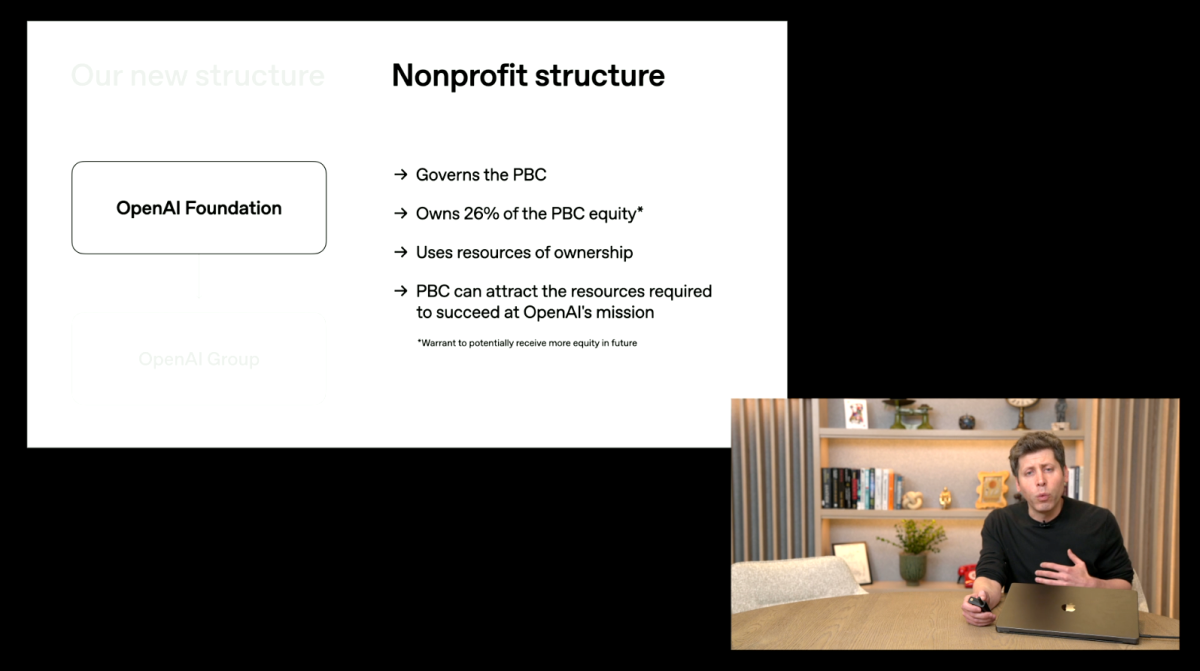
As OpenAI embarks on this ambitious path, maintaining a responsible approach to AI development remains at the forefront. The newly formed structure allows the non-profit OpenAI Foundation to own 26% of the for-profit entity and continue guiding the research agenda. Committed to leveraging AI for profound social good, this foundation will oversee initiatives aimed at tackling diseases and enhancing the safety of AI systems.
Altman explained that the capacity to raise additional funds through the for-profit arm will support the extensive infrastructure needed to achieve these advancements. The commitment of resources is staggering: OpenAI has pledged to develop 30 gigawatts of infrastructure, amounting to a $1.4 trillion financial investment, over the coming years.
As we observe OpenAI’s evolution, the potential benefits of AI—when aligned with ethical practices—seem boundless. OpenAI is not just creating technology; it is shaping the future of human interaction with AI, paving the way for innovations that fulfill our highest aspirations.
Join the Journey of Innovation
Are you excited about the future of AI? At Malibu Elixir, we believe in harnessing technology’s power to enhance our lives. Stay informed about these advancements and discover how they can elevate your beauty and wellness journey. Embrace the future with us!