Nvidia Unveils Game-Changing Rubin Chip Architecture for Next-Gen Performance
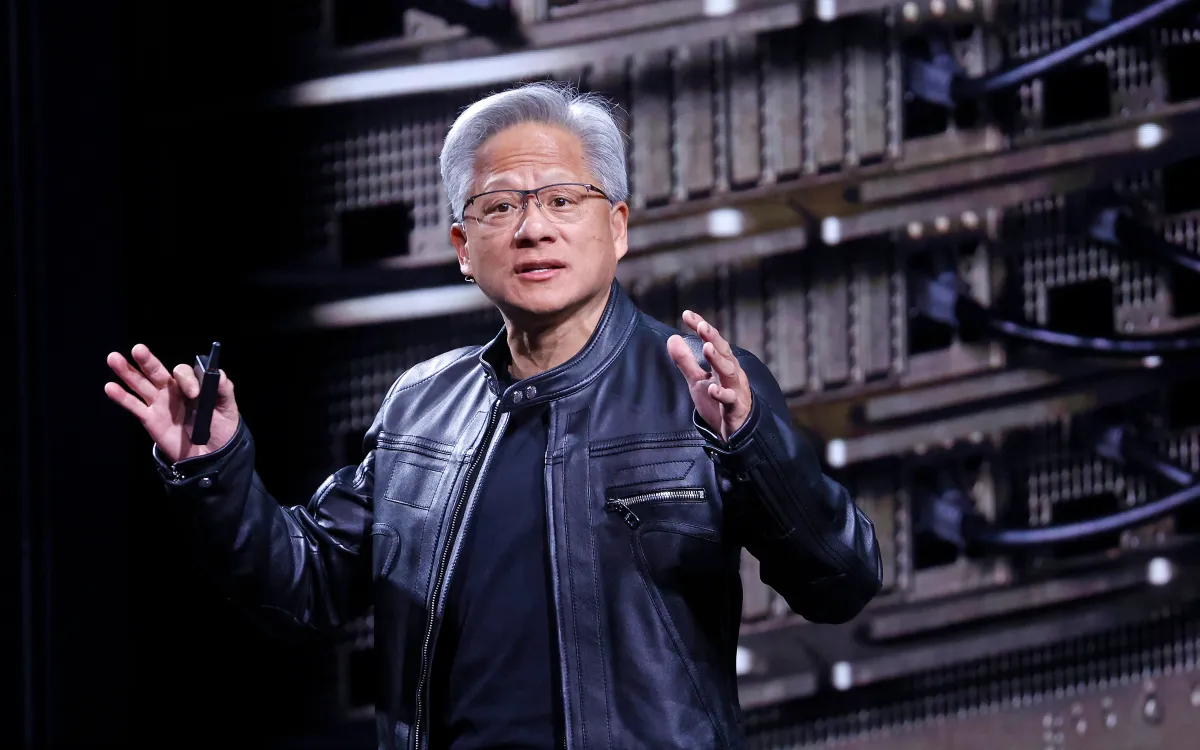
Today’s tech landscape is a thrilling arena of innovation, and Nvidia is taking center stage with a groundbreaking announcement at the Consumer Electronics Show. CEO Jensen Huang has unveiled the company’s latest Rubin computing architecture, touted as a significant leap forward in AI hardware. As we delve into this exciting development, you’ll discover how this cutting-edge architecture is set to revolutionize the realm of artificial intelligence.
Introducing the Rubin Architecture
In his address, Huang emphasized the escalating demands for AI computation, stating, “Vera Rubin is designed to address this fundamental challenge that we have: The amount of computation necessary for AI is skyrocketing.” With Rubin now in full production, tech enthusiasts have much to look forward to.
Originally introduced in 2024, the Rubin architecture marks a pivotal evolution in Nvidia’s hardware journey. This new framework is set to replace the previously established Blackwell architecture, which has already succeeded Hopper and Lovelace architectures.
Expanding Cloud Capabilities
Major cloud providers have eagerly anticipated the arrival of Rubin chips, with strategic partnerships leading the way. Nvidia’s collaborations with industry giants such as Anthropic, OpenAI, and Amazon Web Services highlight the architecture’s significance. Additionally, it will power advanced infrastructures like HPE’s Blue Lion supercomputer and the forthcoming Doudna supercomputer at Lawrence Berkeley National Lab.
Architecture and Components
Named after the esteemed astronomer Vera Florence Cooper Rubin, this innovative architecture comprises six interconnected chips, with the Rubin GPU taking the lead. The design not only elevates GPU performance but also tackles issues related to bottlenecks in storage and connectivity through enhancements in Bluefield and NVLink systems. Furthermore, the introduction of a Vera CPU fosters improved agentic reasoning capabilities.
Enhanced Storage Solutions
Dion Harris, Nvidia’s senior director of AI infrastructure solutions, elaborated on the architecture’s storage upgrades. “As you start to enable new types of workflows, like agentic AI or long-term tasks, that puts a lot of stress and requirements on your KV cache,” he explained. This new storage tier, designed to connect externally to the compute device, allows for smarter and more efficient scaling of the storage pool.
Performance Metrics
The advancements in speed and power efficiency associated with the Rubin architecture are noteworthy. Nvidia’s benchmarks reveal that it operates 3.5 times faster than its predecessor, Blackwell, for model-training tasks and an impressive five times faster for inference tasks, achieving speeds of up to 50 petaflops. Moreover, Rubin supports eight times more inference compute per watt, a key achievement in today’s energy-conscious world.
Industry Implications
The unveiling of this architecture comes amidst fierce competition in the AI infrastructure realm. AI labs and cloud providers are rapidly vying for access to Nvidia chips and the requisite power facilities. Huang predicts that $3 trillion to $4 trillion will be invested in AI infrastructure over the next five years, underscoring the pressing need for robust solutions like Rubin.
As we continue to navigate the dynamic world of technology, it’s clear that innovations like Nvidia’s Rubin architecture are not just impressive feats but vital steps forward in AI development.
If you’re excited about what this means for the future of AI and want to stay informed on the latest technological advancements, join the conversation and let’s explore these innovations together!