Exploring Huawei’s Shanghai Acoustics Lab: The Fusion of Automotive Sound Engineering and Scientific Innovation
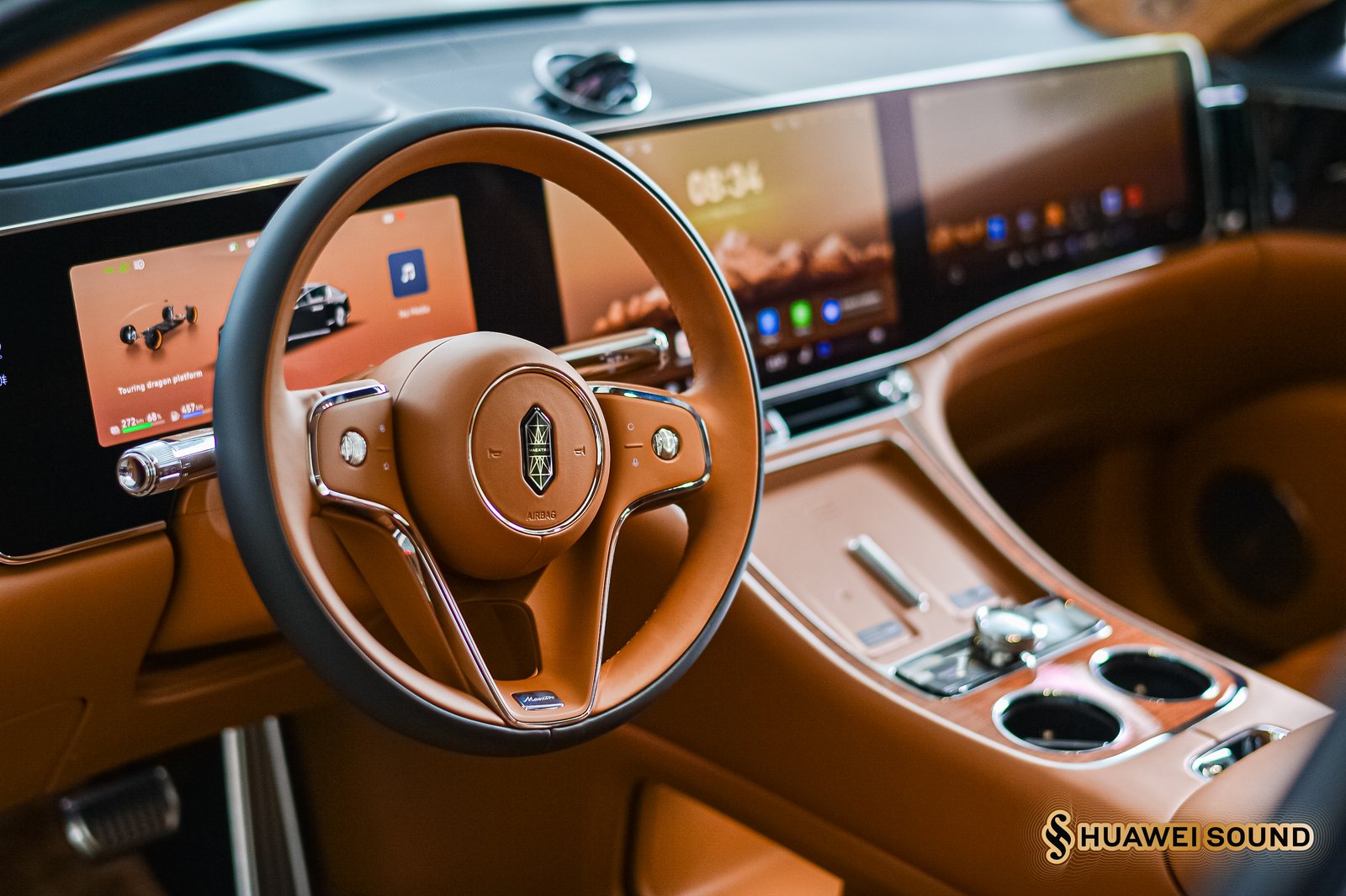
Walking into Huawei’s Shanghai Acoustics R&D Centre, I anticipated a standard facility tour. Instead, I was greeted by a sophisticated automotive sound engineering operation that is definitively reshaping the landscape of in-car audio systems. This transformation reflects a concerted effort to blend innovative technology with an artistic ear, providing a unique listening experience that transcends the ordinary.
Exploring Huawei’s Acoustic Innovation
Since ramping up audio research in 2012, Huawei has created a facility that boasts three dedicated testing environments. These include:
- A fully anechoic chamber (4.8m x 4m x 4m)
- A larger semi-anechoic room (14m x 12m x 5m) featuring a reflective floor
- A dedicated listening room designed in a 9.1.6 configuration
Photography was restricted to protect proprietary technology, but the specifications speak volumes about Huawei’s commitment to audio excellence.
Tackling the Challenges of In-Car Audio
Leading this innovative journey is Goller, a seasoned expert with experience at prestigious brands like Gamut Audio and Bang & Olufsen. He oversees what Huawei refers to as master-tuning methodology. This approach starts with objective acoustic measurements but heavily leans on psychoacoustic principles to perfectly voice the audio.
In a session held within the listening room, Goller articulated Huawei’s mission: to recreate recordings just as the artists envisioned them. This ambition requires a harmonious blend of scientific measurements and artistic tuning, alongside specially designed hardware.
The technical process begins with rigorous measurements, focusing on:
- Frequency response curves
- Phase relationships
- Timing behavior
- Distortion characteristics
These benchmarks establish the performance limits, which are then fine-tuned through extensive subjective listening sessions. This dual approach aims to account for acoustic challenges such as cabin asymmetry and unwanted reflections while preserving the integrity of the original source material.
The HUAWEI SOUND ULTIMATE Series
The fruit of this meticulous research is the HUAWEI SOUND ULTIMATE Series, showcased in the luxurious Maextro S800 electric sedan. This audio system is a powerhouse, featuring:
- 43 speakers
- Dual amplifiers
- A jaw-dropping total power output of 2,920 watts
What sets this series apart is Huawei’s industry-first seat-specific 4D immersive surround sound technology. This incorporates rear 4D exciters that synchronize with music and visual content, delivering an awe-inspiring feedback sensation.
The system’s hardware innovations are far from generic. A key feature is the Tangential Force Woofer, which shifts traditional woofer design by 90 degrees, lowering panel resonance while enhancing bass response. Additionally, a patented dual-diaphragm subwoofer optimizes cabin volume, circumventing conventional enclosure problems.
The Power of Crystal Star-Ring Diffuser
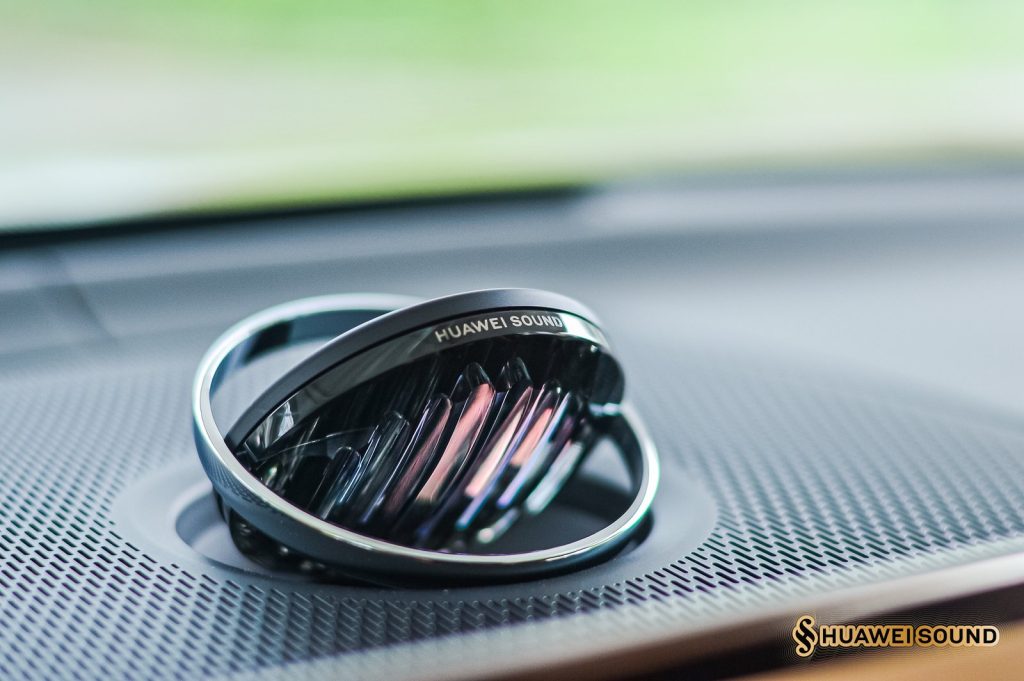
Another remarkable element is the Crystal Star-Ring Diffuser. This innovative component automatically elevates upon entry, coordinating with light-sensitive ambient effects for a synchronized visual and auditory experience. Huawei touts a 30% improvement in sound uniformity over previous generations.
The spatial audio system incorporates 10 overhead channels and adaptive sound-field control, supplemented by a proprietary audio tracking model for enhanced clarity and positioning. Remarkably, it fuses with HarmonyOS, enabling what Huawei terms sound-to-light technology—a feature where AI-driven ambient lighting adjusts in real time to the music.
Independent Sound Zones
One of the standout features is the independent sound-zone technology. Each headrest hosts four drivers, allowing for an unmatched auditory experience. This setup, paired with Huawei’s sound-field algorithms, can actively counteract audio spillage between rows.
Huawei claims up to 30dB of isolation between front and rear seats and 99% energy separation. During demonstrations, we witnessed front passengers enjoying classical music while rear passengers engaged with a blockbuster film—remarkably without crossover noise. However, the true effectiveness of these features will need validation across diverse content types and volume levels.
Moreover, the system integrates road-noise cancellation through an omnidimensional model, employing low-latency, multi-channel amplification. Enhanced isolation materials further minimize background noise, establishing a serene atmosphere akin to a library.
A Major Investment in the Future
Huawei’s commitment to innovation is backed by substantial financial investment. The company allocated CNY 179.7 billion (around £20 billion / €23.4 billion) in R&D for 2024, constituting 20.8% of total revenue. With more than 113,000 employees in R&D, approximately CNY 60 billion is directed toward fundamental scientific research.
This significant expenditure frames Huawei’s ambitions in automotive sound engineering. Currently, the company collaborates with over twenty automakers, providing solutions across various domains, from driver assistance to cockpit acoustics.
Implications for the Market
Traditionally, the automotive sound engineering space has been dominated by established European brands. Huawei’s strategic efforts—comprising specialized testing environments, recruitment of seasoned experts, and bold financial backing—pose a serious challenge to the status quo.
The core question isn’t merely whether Huawei can deliver impressive technology; it’s whether such sophistication can be scaled for wider production across numerous vehicle platforms without compromising affordability.
Goller’s ambition is to achieve optimal reproduction of recordings to bridge the gap between listener experience and artistic intention. However, automotive sound engineering has historically struggled with such aspirations due to environmental constraints.
A Conclusive Assessment
After experiencing both the cutting-edge laboratory and the in-vehicle system, it is evident that Huawei has established a robust program. This blend of methodical measurement and subjective refinement should resonate well in the high-end audio market, albeit adapted for automotive needs.
Ultimately, market success will hinge on factors beyond mere acoustic performance: scalability, integration with diverse automakers, and whether consumers are willing to invest in such advanced features and unique sound experiences.
Huawei has laid the groundwork; as these systems transition from high-profile showcases to mainstream automotive offerings, their true impact will be revealed.
Discover the future of in-car audio—experience the difference that exceptional sound can make. Join us on this journey toward acoustic perfection!