Envisioning the Future: Key Features of an AI-Ready Classroom
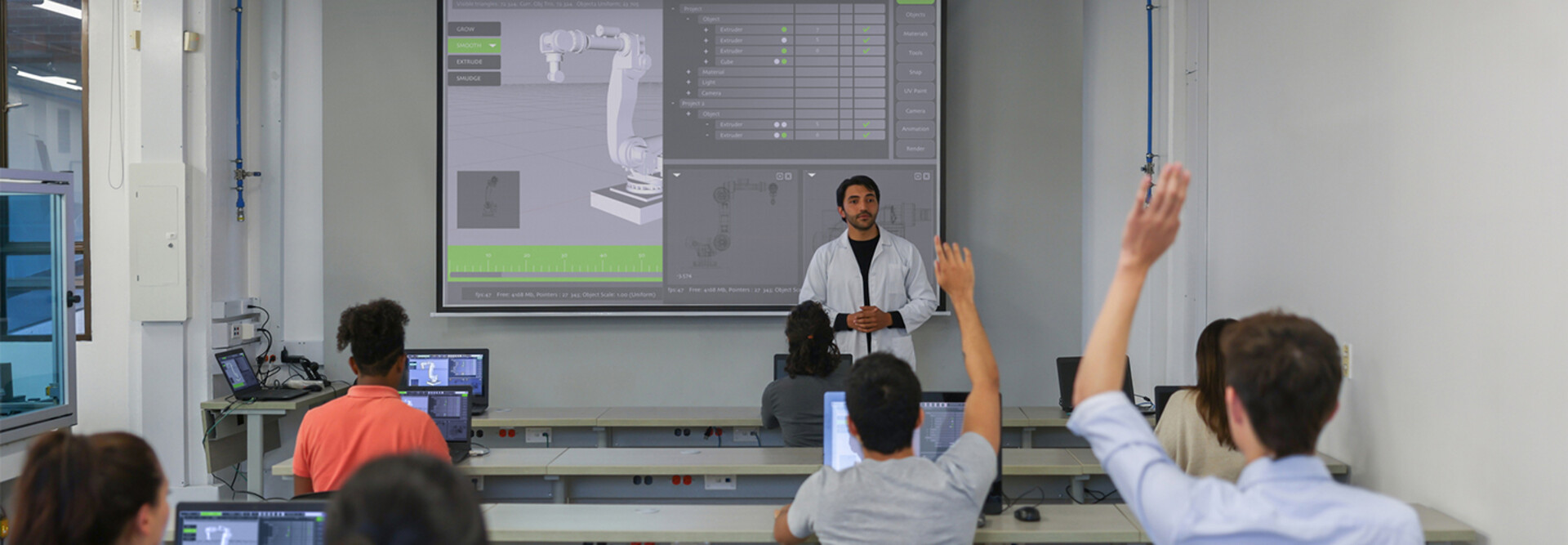
When envisioning an AI-ready classroom, it’s easy to conjure up futuristic imagery: rooms filled with AI tutors, instant transcription services, and smart analytics tools at the fingertips of educators. However, Micah Shippee, director of education at Samsung and a former history teacher, provides a more grounded perspective. He emphasizes that the true role of AI in education is not as a replacement for teachers but as a supportive ally—an essential co-teacher enhancing the learning experience.
Rethinking Learning Spaces
Understanding AI’s role in the classroom requires us to shift the narrative from fear and novelty to practicality. An AI-ready classroom is fundamentally about fostering teaching methods that integrate AI-driven tools, which can serve as resources for summaries, study aids, and interactive learning experiences. This approach helps educators reevaluate how modern learning environments can promote student engagement while enabling faculty to refine their teaching techniques.
Transforming AI from Adversary to Ally in the Classroom
Unfortunately, many institutions view AI as a potential threat, leading to outdated modernization approaches. Shippee warns against the prevailing focus on plagiarism and compromised integrity within academia. This mindset can constrict the potential benefits AI brings. Instead, institutions should embrace AI as a powerful tool that can enhance educational practices rather than diminish them.
For instance, if an educator excels in creating dynamic lectures, AI can extend the reach and impact of that content. A recorded session can morph into a podcast-style resource, allowing students to revisit challenging topics when necessary. The goal isn’t to change effective teaching methods but to enhance existing practices with lasting benefits.
Essential Steps to Prepare for AI-Enhanced Learning
Shippee highlights that the quality of classroom experiences is paramount. To effectively integrate AI, the focus should be on visual and audio enhancements that amplify teaching.
- Clear Visualization: Using large, vibrant screens to display instructional content enhances understanding.
- Effective Modeling: Demonstrating concepts, like the Pythagorean Theorem, can take on a new dimension. For example, utilizing Google’s features to draw problems and walk students through solutions visually engages learners in a more dynamic way.
- Quality Audio Capture: A high-quality microphone is crucial for recording sessions. Clear audio ensures valuable materials like summaries or study aids are both reliable and useful.
Budget Considerations for AI Adoption
For institutions with limited budgets, Shippee advises prioritizing existing products that seamlessly integrate AI functionalities without necessitating large-scale investments. For instance, Samsung’s interactive displays can capture lectures, devise structured summaries, and even create immediate quizzes to assess comprehension—all without a cumbersome implementation process.
The objective should be to embed AI capabilities within everyday workflows. Just like today’s laptops come with built-in browsers, future classrooms should incorporate AI naturally.
The Future of AI in Education: Support Not Subversion
At the core of Shippee’s vision lies the vital role of critical thinking. Education extends beyond mere information dissemination; it aims to equip students with the skills to analyze, challenge, and synthesize knowledge. As AI technology becomes more sophisticated, its utility could reinforce educational methodologies rather than undermine them.
When AI can generate essays or provide concise solutions effortlessly, the emphasis in education must pivot toward understanding the processes behind the results.
Conclusion: Embracing AI with Intention
Historically, new tools like calculators were met with skepticism regarding their impact on foundational skills. However, educators later recognized that calculators enhance conceptual understanding rather than degrade it.
As Shippee articulates, “We can’t thwart the prevalence of these tools; they’re too convenient.” The focus should now be on teaching students to critically evaluate AI-generated information. Encouraging inquiry into accuracy, potential biases, and gaps in knowledge is essential in nurturing sophisticated thinkers for the future.
For educators and students alike, embracing the potential of an AI-enhanced classroom can pave the way for a richer, more interactive learning experience. Are you ready to explore the incredible possibilities of AI in your teaching journey? Let’s embrace the future together!