DeepSeek R1 Explained: The Ultimate Guide to the Cutting-Edge AI Model

In the ever-evolving world of artificial intelligence, the emergence of **DeepSeek R1** has sparked significant intrigue among tech enthusiasts and industry leaders alike. This innovative AI model promises to rival established giants like OpenAI and Nvidia, captivating a sophisticated audience keen on the latest trends in technology. As it climbs the charts as one of the most downloaded apps on both Apple’s App Store and Google Play, understanding its intricacies is essential for anyone navigating the AI landscape.
So, what exactly is **DeepSeek R1** and what makes it stand out in today’s fast-paced tech environment? In this detailed exploration, we will uncover its unique features, capabilities, and potential applications across various industries.
What is DeepSeek?
DeepSeek
Founded in China in 2023 by **Liang Wenfeng**, DeepSeek is a relatively young but ambitious AI company. Despite its brief history, it has already garnered attention with multiple versions of its AI models released throughout the year. The company strives to establish itself in a competitive arena dominated by established players like OpenAI and Nvidia.
Notably, DeepSeek’s two flagship models, **DeepSeek R1** and **DeepSeek V3**, have drawn considerable acclaim for achieving impressive accuracy at lower costs, setting the stage for their rise in the tech community.
What is DeepSeek R1?
**DeepSeek R1** is a sophisticated AI model design based on reinforcement learning, primarily focused on logical and reasoning tasks. This innovative model deconstructs complex problems into manageable steps, making it both functional and user-friendly with a conversational chat interface.
 DeepSeek R1
Released on **January 20, 2025**, DeepSeek R1 is accessible via web, iOS, and Android platforms. The model is cataloged in Azure AI Foundry and GitHub, making it widely available to interested developers. A second version, **DeepSeek R1 Zero**, has shown remarkable accuracy for mathematical tasks but has yet to be released for public use.
The enthusiasm surrounding DeepSeek R1 has attracted attention not only from tech enthusiasts but also from influential figures like venture capitalist **Marc Andreessen**, who described it as AI’s “Sputnik moment.”
How Does DeepSeek R1 Work? Understanding Its Architecture
At the core of DeepSeek R1’s technology lies the **Mixture of Experts (MoE)** framework. This architecture enhances parameter activation during inference, activating only a subset of its impressive 671 billion parameters for a single query. This innovative approach improves responsiveness and conserves resources, elevating the model’s overall efficiency.
Mixture of Experts (MoE) Framework
The MoE architecture uniquely combines shared experts, offering general capabilities, with specialized experts tailored for specific tasks. Here’s how DeepSeek R1 excels:
- Selective Parameter Activation: The model only activates 37 billion parameters at a time, streamlining its operations and enhancing speed.
- Resource Optimization: By toggling between experts, DeepSeek R1 maximizes performance while keeping computational expenses low.
- Dynamic Expert Selection: A specialized gating mechanism dynamically chooses which experts to activate based on the input, allowing for flexibility across diverse tasks.
- Load Balancing: Implementing a Load Balancing Loss ensures fair utilization of experts across various inputs, promoting stability and robust performance.
Despite the competition, **DeepSeek R1** has managed to carve a niche for itself among the global AI community. But what truly sets it apart? Let’s explore the unique characteristics that have everyone talking.
Why is Everyone Talking About DeepSeek R1? Unveiling Its Impact
The excitement around DeepSeek R1 transcends mere buzz. Let’s delve into the groundbreaking capabilities that have captivated the AI community:
Cost-Effectiveness
DeepSeek claims to have trained the R1 model for just **$5.6 million**. This figure stands in stark contrast to competitors’ figures, like **OpenAI**, which reportedly spent **$5 billion** last year alone. Lower training costs across the board mean **sustainability** and **ethics** in AI development.
While users may not see a direct impact from training costs, the implications for resource conservation are significant. A cost-efficient training process means less energy consumption, thereby contributing to more sustainable AI practices—a hopeful step forward.
Accuracy and Performance
Despite limited financial backing, DeepSeek R1 has demonstrated the ability to rival more established models like **OpenAI’s GPT-4** and **Google’s Gemini**. For example, benchmark testing shows that R1 holds its own in logical inference, multilingual comprehension, and real-world reasoning.
Accuracy is paramount. Consider asking an AI, “What is 2+2?” If it answers 5, its utility is compromised. Many experts anticipated a sacrifice in effectiveness due to lower training costs, but R1’s metrics tell a different story—balancing quality with cost-effectiveness.
Transparency in Training Data
Alongside R1’s launch, DeepSeek shared research papers detailing their training methodologies, including failures and limitations encountered during development—a rarity in an often secretive industry. This transparency lays a solid foundation for trust and collaboration among researchers and developers alike.
DeepSeek R1 Key Features: What Makes DeepSeek R1 Stand Out?
Let’s highlight some of the exceptional features that set DeepSeek R1 apart from other AI models:
Conversational Intelligence
Powered by advanced machine learning and natural language processing, **DeepSeek R1** excels in understanding and responding to user commands in human language. Core functionalities include answering queries, document scanning, and providing multilingual support.
Complex Problem Solving
R1 is particularly skilled in tackling challenging logical reasoning tasks, making it suitable for industries requiring meticulous analytical reasoning, such as legal tech and financial services.
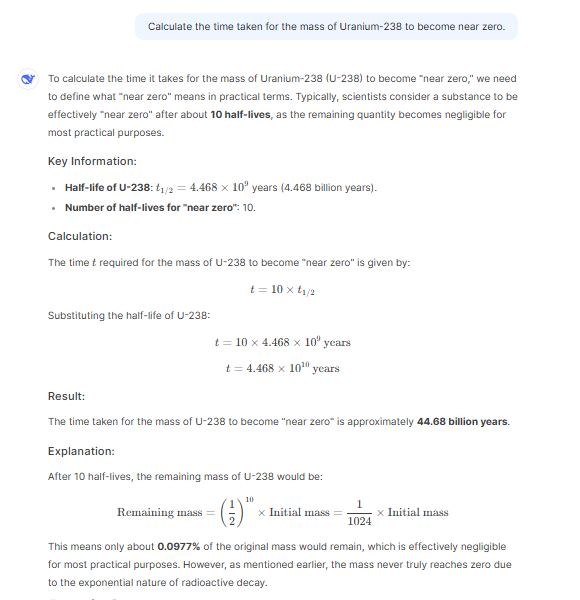 R1 can solve complex problems
Open-Source Accessibility
DeepSeek R1 stands as an **open-source** model, allowing developers to harness its capabilities for their apps and tools. This approach fosters customization, transparency, and community-driven enhancements.
High Accuracy for Complex Tasks
R1’s robust accuracy sets a high standard, often aligning with leading models such as GPT-4. With its problem-solving prowess, it becomes an indispensable tool for specialized applications.
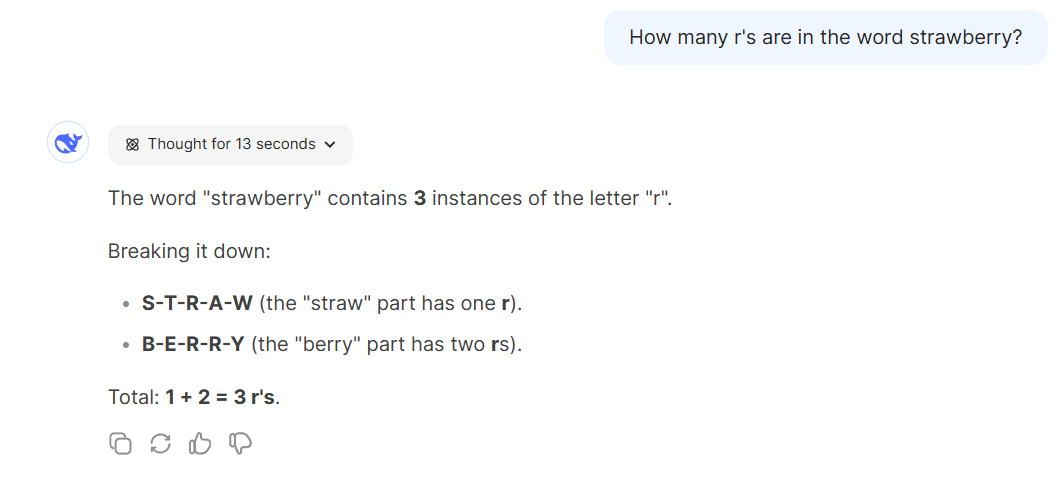 DeepSeek R1 accurately identifies three "r"s in the word "strawberry."
DeepSeek R1 Limitations: Current Challenges
While **DeepSeek R1** showcases impressive capabilities, it also faces certain limitations that cannot be overlooked:
Privacy Concerns
As a newer entity in the AI space, consumer trust remains a challenge. With concerns surrounding data handling, many potential users express caution, especially in regions where stringent regulations apply.
Lack of Integrated Web Search
Unlike many contemporaries, DeepSeek R1 does not feature integrated web search, requiring users to manually select the option for real-time data updates. This potential drawback can limit its efficiency in dynamic environments.
Comparing DeepSeek R1 to ChatGPT
When drawing comparisons between DeepSeek R1 and **ChatGPT**, one must recognize that both platforms possess unique strengths. DeepSeek R1 excels in logic and math problem-solving, while ChatGPT offers robust content generation and integrated web search capabilities. The choice ultimately hinges on user needs.
Practical Usage Tips for DeepSeek R1
To optimize your experience with DeepSeek R1, here are some actionable tips:
- Optimize for Efficiency: Set the temperature between 0.5 and 0.7 to achieve a balance between creativity and reliability.
- Leverage Extended Context: Utilize R1’s vast context length for comprehensive tasks such as research or documentation.
- Implement Serving Frameworks: Using recommended frameworks like vLLM can enhance performance.
- Integrate with Development Environments: Developers should incorporate R1 into IDEs for tasks like code completion.
- Automate Routine Tasks: Identify repetitive tasks that can benefit from R1’s problem-solving capabilities.
Final Thoughts: Is DeepSeek R1 Worth Trying?
Determining the value of DeepSeek R1 depends on your specific use cases. For solving complex queries, this model stands out prominently. However, users seeking tools for content creation or real-time market analysis may find more value in other platforms.
Curious to explore how AI can transform your operations? Stay connected for more insights and consider trying DeepSeek R1 for your problem-solving needs!
Frequently Asked Questions
Q: What is DeepSeek R1’s primary use case?
A: DeepSeek R1 excels in decision-making through advanced data analysis, uniquely handling large datasets for actionable insights.
Q: How does DeepSeek R1 measure up against models like GPT-4?
A: DeepSeek R1 specializes in data analytics and predictions, offering unique advantages over more general models focused solely on language generation.
Q: Which industries can benefit the most from DeepSeek R1?
A: Sectors like finance, healthcare, retail, and logistics can derive immense value from DeepSeek R1’s analytical capabilities.
Feel inspired to harness the potential of DeepSeek R1? Engage with us to discover how AI can elevate your experience!