Chai Discovery: Revolutionizing AI Drug Development from OpenAI Collaborations to Eli Lilly Partnerships
The journey of **drug discovery** is often a winding road, filled with complexities and challenges that can stretch for years. Traditional methods, such as **high-throughput screening**, often yield less-than-stellar results while incurring hefty costs. Yet, a new wave of **biotech innovators** is stepping in, harnessing the power of **AI and advanced data technologies** to revolutionize and expedite this critical process.
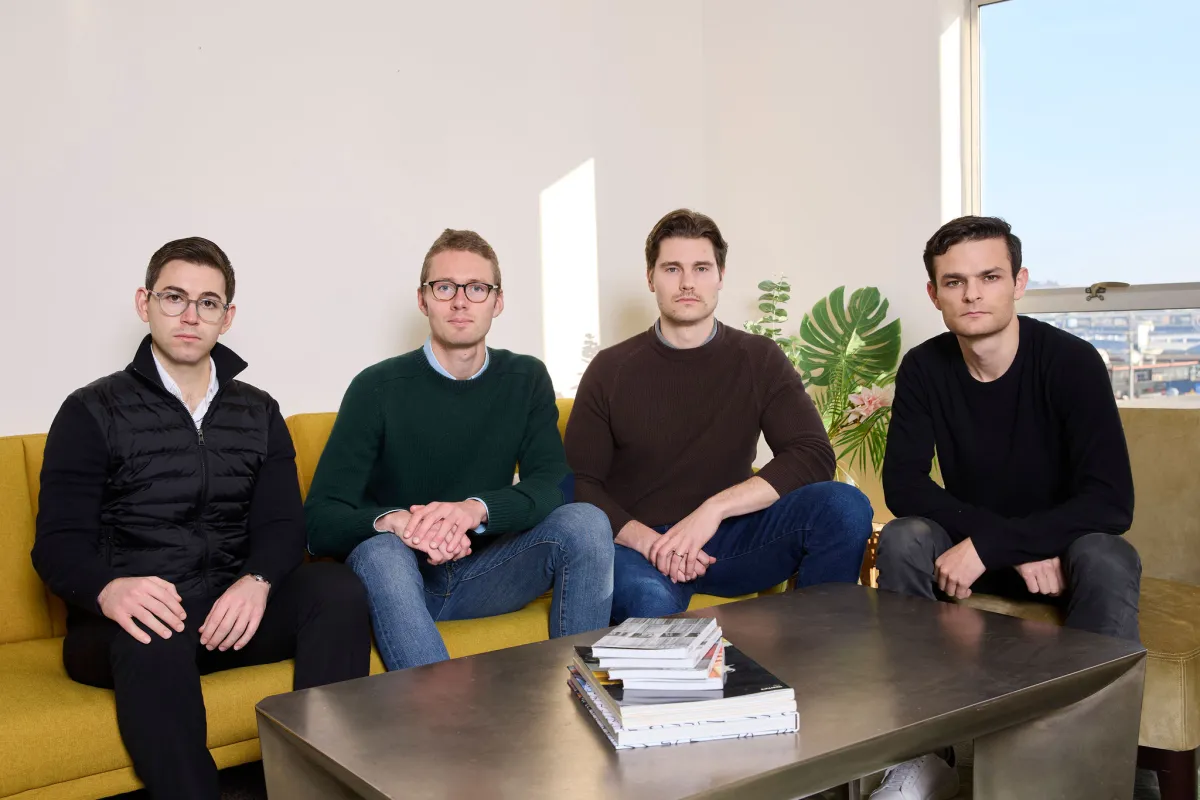
Among these pioneers is **Chai Discovery**, an ambitious **AI startup** launched in 2024. In just over a year, its enterprising founders have attracted hundreds of millions in funding and garnered the support of influential Silicon Valley investors, marking it as a leader in this burgeoning sector. Just last December, Chai successfully completed its **Series B funding**, securing an impressive $130 million and a staggering valuation of $1.3 billion.
Strategic Partnerships and Innovations
In an exciting development, Chai recently announced a collaboration with pharmaceutical powerhouse **Eli Lilly**. This partnership will see Eli Lilly utilizing Chai’s cutting-edge software for new medicine development. At the core of this venture is Chai’s algorithm, **Chai-2**, designed specifically for the creation of antibodies—crucial proteins essential for combating various diseases. The company envisions becoming a comprehensive “**computer-aided design suite**” for molecular development.
The timing of this announcement is noteworthy; it coincides with Eli Lilly’s own partnership with **Nvidia** aimed at establishing a **$1 billion AI drug discovery lab** in San Francisco. This “co-innovation lab” seeks to merge big data, computing power, and scientific expertise to accelerate the pace of new medicine creation.
The Industry Landscape
As with any emerging technology, **AI in drug discovery** has its share of skeptics. Some seasoned professionals express doubts, citing the inherent difficulties in traditional drug development processes and questioning the transformative potential of these technologies. Yet, for every doubter, there are ample proponents championing the innovation.
**Elena Viboch**, managing director at **General Catalyst**—one of Chai’s significant investors—has voiced strong confidence in Chai’s potential. She believes that biopharma companies that swiftly partner with innovators like Chai are likely to be the first to translate discoveries into **clinical trials**. “We foresee that by 2026, partnering with us will lead to groundbreaking medicines entering trials by late 2027,” she stated emphatically.
**Aliza Apple**, leading Lilly’s **TuneLab program** which integrates AI to enhance drug discovery, shares a similar outlook. “By combining our efforts with Chai’s generative design models, we aim to redefine how AI can innovate molecular design from the ground up, all with the ultimate goal of accelerating patient-centric medicine development,” she remarked.
The Origins of Chai Discovery
Although Chai was officially founded a mere two years ago, its roots trace back to discussions six years earlier among its co-founders and OpenAI CEO **Sam Altman**. One co-founder, **Josh Meier**, had a stint at OpenAI in 2018 on the research and engineering team. Post-departure, Altman reached out to Meier’s college friend, **Jack Dent**, inquiring about a potential venture focused on **proteomics**—the study of proteins.
Despite the exciting opportunity, Meier hesitated, feeling that the technology wasn’t sufficiently advanced yet. He was also committed to joining **Facebook’s research team**, where he played a pivotal role in creating the **ESM1**, the first transformer model for protein language—an important groundwork for Chai’s current projects.
Achieving Momentum
Fast forward to 2024, Meier and Dent felt equipped to re-engage Altman and launch Chai. OpenAI became one of Chai’s initial seed investors, and the founders operated out of its San Francisco offices—a generous gesture from the AI titan.
Fast forward just over a year, and with a gleaming partnership with Eli Lilly now in place, Dent attributes Chai’s rapid growth to assembling an exceptionally talented team. “We focused on exploring the limits of what these models can achieve. Every line of code is homegrown—no off-the-shelf models for us,” he noted.
General Catalyst’s Viboch echoed this sentiment, asserting that there are “no inherent barriers” to deploying these models in drug discovery. While companies will still need to navigate testing and clinical trials, she believes that adopting such technologies will dramatically speed up discovery timelines and unlock **previously difficult** classes of medicines.
As the biopharma landscape evolves, it’s imperative to stay informed about the breakthrough innovations paving the way for a healthier future. We invite you to explore how the union of technology and **biotechnology** can transform not just the industry, but also lives around the globe.
Join us in celebrating the future of health. Stay ahead of the curve with Malibu Elixir—where beauty meets innovation. Your journey towards enhanced well-being starts here!