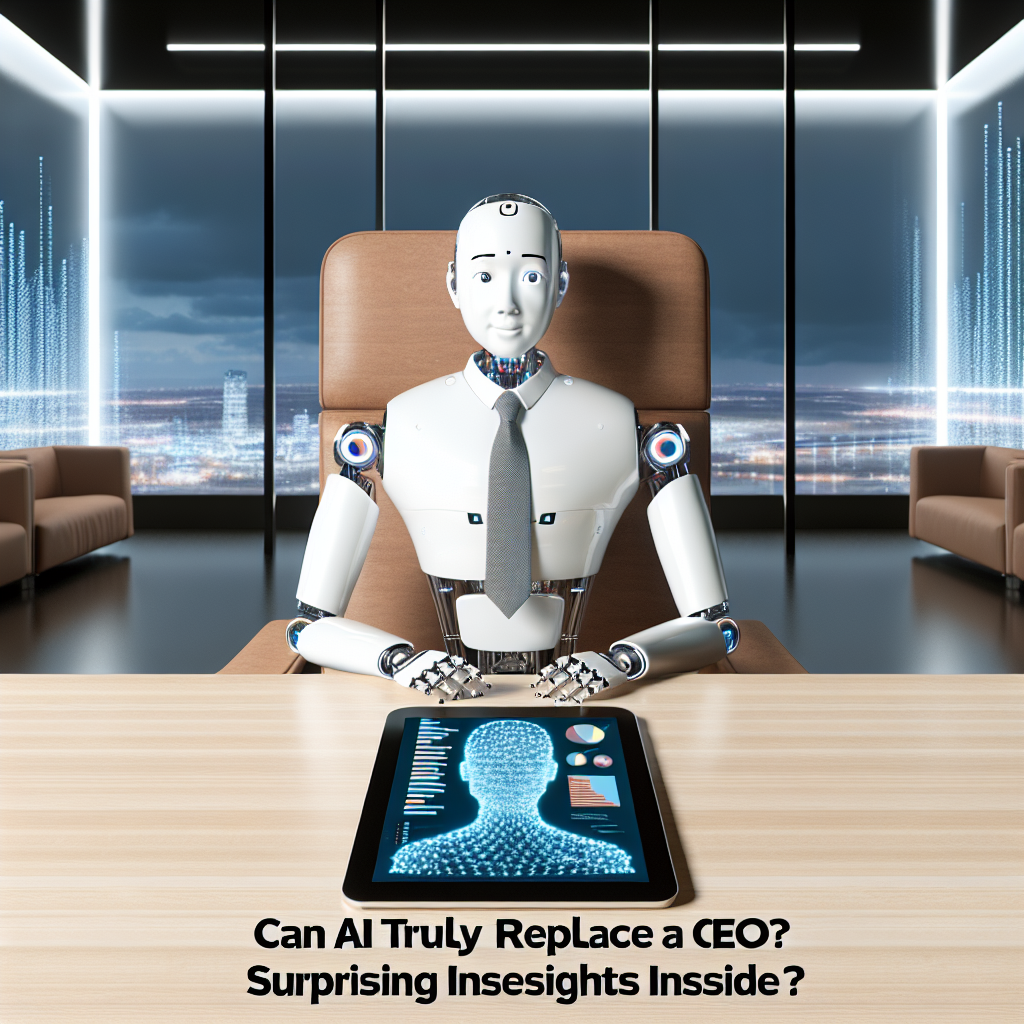
Can AI Truly Replace a CEO? Surprising Insights Inside
Understanding the Role of AI in Business Leadership
Artificial Intelligence (AI) is transforming the landscape of business leadership. As its capabilities expand, CEOs and their organizations must reconsider what it means to lead in this new era. Embracing AI not only aids in operational efficiency but also offers innovative ways to enhance decision-making processes.
The Importance of AI Readiness for CEOs
The current business climate demands that CEOs recognize the importance of AI. It’s no longer about whether AI can perform tasks traditionally held by human professionals; the pressing question is how well leaders can integrate AI into their workflows. Companies that prioritize AI training and implementation report greater efficiency, often at a lower cost. For those hesitant to adopt this technology, it might be time to reconsider their approach and actively engage with AI tools.
Demands and Expectations from Business Leaders
According to recent surveys, a significant number of CEOs consider AI a top priority for their organizations. However, the gap between acknowledgement and actual implementation reveals a challenge. Many leaders express a desire for AI integration but remain unsure how to begin. This disconnect highlights the need for comprehensive AI education and relevant applications tailored to industry-specific needs.
Utilizing AI as a Thought Partner
One insightful application of AI is its use as a thought partner for business leaders. By allowing AI to analyze data and generate insights, CEOs can make informed decisions more quickly. For instance, leveraging AI to summarize board meeting discussions or draft strategic plans can save time and enhance productivity. Engaging with AI in this manner not only streamlines processes but also exposes leaders to insights they may not have previously considered.
Overcoming Resistance to AI Adoption
Resistance to AI often stems from fear of the unknown. Business leaders must address the anxiety surrounding AI’s capabilities and data security. Creating a culture that encourages experimentation and dialogue about AI can mitigate these concerns. Employees should be encouraged to explore AI’s potential, knowing that initial failures are part of the learning process. Gradually building comfort with AI tools can lead to widespread adoption across the organization.
The Need for AI Proficiency in Teams
For a successful AI integration, teams must develop proficiency in using these tools effectively. Providing training and resources for employees can help break down barriers to adoption. As individual team members become adept at using AI, the organization as a whole will benefit. This emphasis on skills enhancement will foster an innovative environment where AI becomes an integral part of everyday operations.
Conclusion: Taking the First Steps Toward AI Integration
As businesses navigate the evolving landscape of AI, leaders must take proactive steps to incorporate this technology into their practices. Start by encouraging dialogue about AI’s potential, promoting hands-on experimentation, and distributing resources that enhance AI proficiency. By doing so, organizations will position themselves to thrive in a future increasingly shaped by artificial intelligence.
For further insights on how to integrate AI in your business strategy, consider looking into resources like the Harvard Business Review’s articles on AI and McKinsey’s insights on AI adoption.
If you found this information helpful, consider sharing it with your network or explore more articles on effectively leveraging AI in business.