Asia Pacific Data Centers Evolve Amid Growing AI Demands, Highlights Vertiv Insights
As the beauty and wellness landscape continues to evolve, there’s a compelling undercurrent driving the adoption of artificial intelligence (AI) across various sectors, particularly in the Asia Pacific region. With the rapid advancements in technology, the demand for data centers is elevating standards, pushing traditional facilities to their limits. This transformation isn’t just about upgrades; it’s fundamentally changing how data centers are conceived, optimized, and operationalized. Let’s dive into how this shift is shaping our future.
Explosive Market Growth is Setting the Pace
The AI data center market is on an exhilarating trajectory, with projections soaring from $236 billion in 2025 to an astonishing $934 billion by 2030. This explosion is fueled by the swift incorporation of AI technologies in sectors such as finance, healthcare, and manufacturing, which thrive on high-performance computing environments. These industries utilize dense GPU clusters that consume significantly more energy and require advanced cooling solutions compared to traditional servers.
In the Asia Pacific, this demand is further intensified by substantial government investments in digitalization and the rollout of 5G, propelling cloud-native and generative AI applications. The result? An unprecedented surge in computing needs that companies must be prepared to meet.
Paul Churchill, Vice President of Vertiv Asia, emphasizes that addressing this demand requires innovative and adaptable infrastructure strategies. “Infrastructure leaders must transcend simple upgrades. A truly future-ready strategy embraces AI-optimized infrastructure that merges high-capacity power systems with advanced thermal management,” he explains.
Cooling and Power Challenges Are Rising
As power densities escalate—climbing from 40 kW to 130 kW and potentially reaching 250 kW by 2030—issues surrounding cooling and power delivery have become more pronounced. Traditional air cooling methods are quickly becoming inadequate.
To tackle these challenges, Vertiv is pioneering hybrid cooling systems that combine direct-to-chip liquid cooling with air-based solutions. These systems adjust to varying workloads, optimizing energy consumption while maintaining reliability. “Our coolant distribution units allow for direct-to-chip liquid cooling, ensuring both performance and serviceability in high-density environments,” notes Churchill.
Power delivery is also evolving to meet the complexities of fluctuating AI workloads. Vertiv is refining its rack power distribution and busway systems to handle higher voltages while enhancing load balancing, ensuring that operators can efficiently manage their resources.
Data Centers Are Being Redesigned for AI
The emergence of liquid-cooled GPU pods and 1 MW racks—from industry leaders like AMD, Microsoft, Google, and Meta—marks a significant architectural shift in data center design. Instead of retrofitting old facilities, new data centers are being strategically tailored to accommodate AI demands.
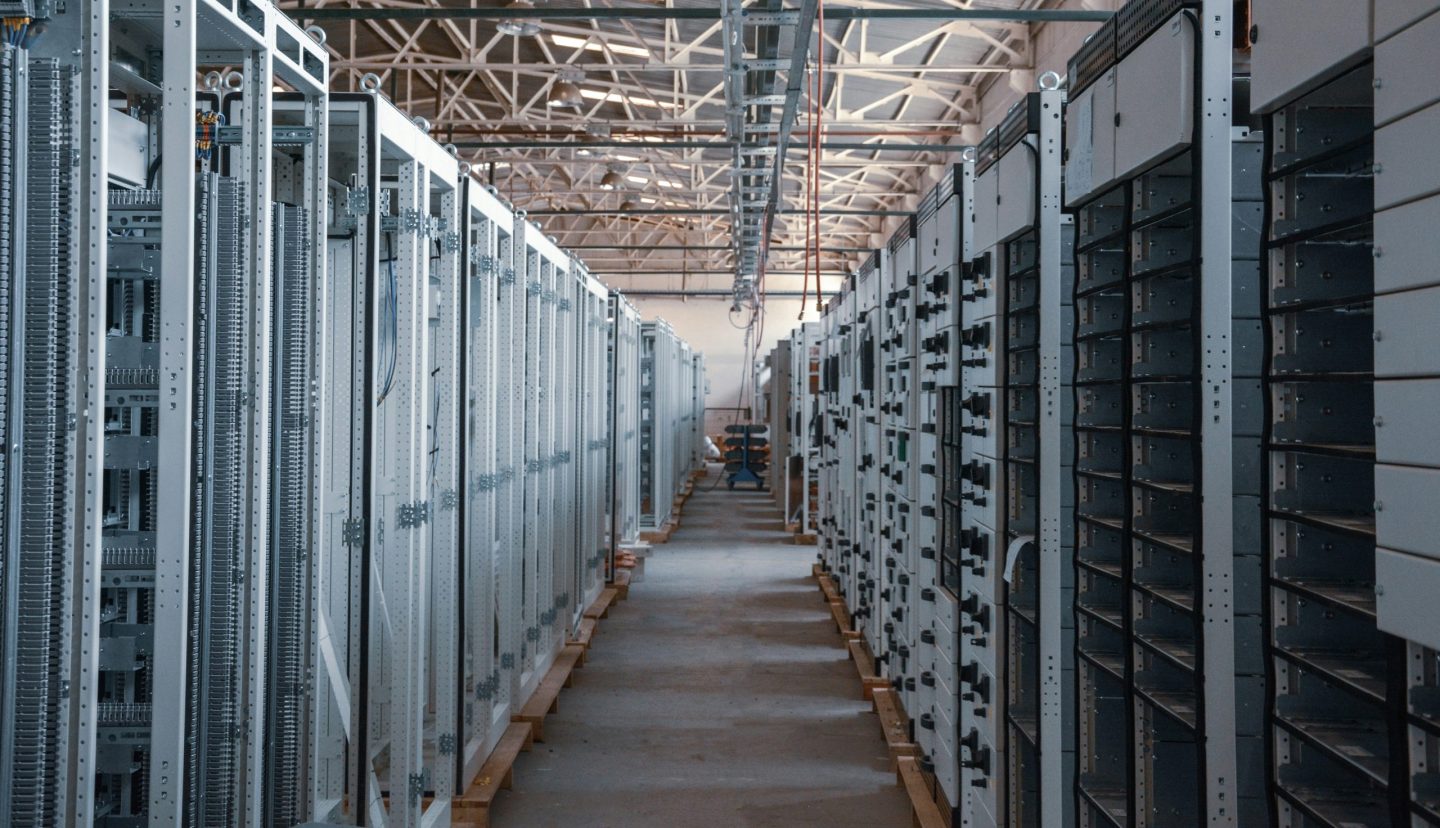
According to Churchill, “The future of data center architecture is hybrid, necessitating designs built around liquid flow.” This encompasses innovative floor layouts, advanced coolant distribution systems, and sophisticated power infrastructures. Next-generation facilities will seamlessly integrate cooling, power, and monitoring capabilities—from the chip level to the grid—making them indispensable for Asia Pacific, where hyperscale campuses are rapidly proliferating.
From Incremental Upgrades to AI Factory Data Centers
By 2030, Asia Pacific is projected to outstrip the U.S. in data center capacity, surpassing 24 GW of commissioned power. To manage this growth effectively, enterprises are departing from ad hoc upgrades and embracing full-stack AI factory data centers.
Churchill outlines a phased approach for this transition. The first step involves integrated planning that harmonizes power, cooling, and IT management, simplifying deployment and laying a robust foundation for expansion. Following that, adopting modular and prefabricated systems allows companies to incrementally increase capacity without significant disruptions. “Modules tested in a factory setting can be integrated alongside existing infrastructure, enabling a smooth transition to AI-ready systems,” he states.
Sustainability is another crucial consideration, with an emphasis on lithium-ion energy storage and high-voltage distribution systems to enhance efficiency.
DC Power Gains New Relevance for AI Data Centers
Vertiv has recently unveiled PowerDirect Rack, a revolutionary DC power shelf engineered for AI and high-performance computing. Transitioning to DC power can significantly reduce energy loss by minimizing the conversion steps required between the grid and the server. This approach aligns seamlessly with the growing use of renewable energy and battery storage systems, becoming particularly vital in energy-constrained markets like Vietnam and the Philippines.
Churchill highlights that “DC power is not merely an efficiency tactic; it’s a comprehensive strategy for facilitating sustainable scalability.”
Sustainability is Becoming a Central Priority
With AI technology driving up energy consumption, data center operators are increasingly faced with stringent regulations and fluctuating grid constraints, particularly in Southeast Asia. Vertiv is actively collaborating with these operators to incorporate alternative energy sources—like lithium-ion batteries and hybrid power systems—to reduce grid dependency and enhance resilience.
Innovative cooling solutions, such as hybrid liquid cooling systems, are also gaining traction, aiming to lower both energy and water usage compared to outdated methods. “Our focus is on providing infrastructure that meets high-performance criteria while aligning with environmental, social, and governance (ESG) objectives,” Churchill asserts, underlining the commitment to responsible growth.
Modular Solutions Support Rapid Expansion
Emerging economies in Asia Pacific face unique challenges, including limited land, unreliable power sources, and a scarcity of skilled personnel. In this context, modular and prefabricated data center systems present a viable solution.
These prefabricated modules can reduce deployment times by up to 50%, enhancing energy efficiency and scalability. With their compact design and energy-efficient operation, modular systems enable operators to build AI-ready capacity more swiftly and with reduced risk—an essential advantage as the digital landscape within the region continues to grow.
Preparing for a Demanding Future
The surge of AI is fundamentally transforming the construction and operation of data centers throughout Asia Pacific. As workloads intensify and sustainability pressures increase, outdated infrastructure will no longer suffice. The transition toward AI factory data centers, featuring cutting-edge cooling, DC power, and modular designs, reflects a paradigm shift in how the region is gearing up for the next era of computing.
Embracing these advancements will not just shape the future of technology; it will contribute to a more sustainable and powerful tomorrow. Join the movement, empower change, and let’s drive toward a future where innovation meets responsibility.