Alibaba Launches RynnBrain: An Open-Source AI Robot Model Revolutionizing Physical Robotics
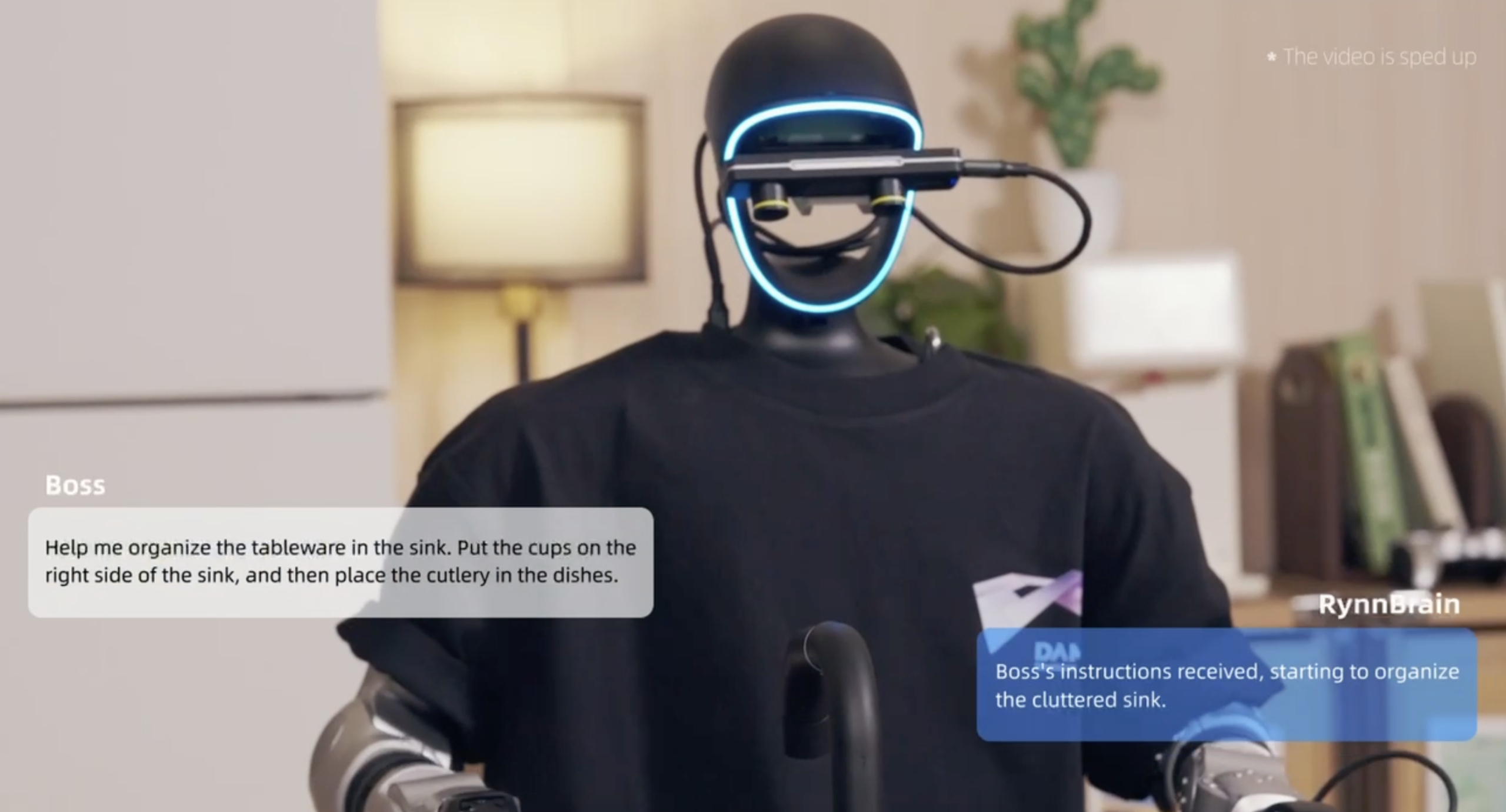
Alibaba is making waves in the realm of artificial intelligence with its latest innovation: RynnBrain. This open-source model is a game-changer, designed not merely for chatbots, but to empower robots with the ability to perceive their surroundings and complete complex physical tasks. As the demand for intelligent automation grows, particularly in light of aging populations and labor shortages, RynnBrain positions Alibaba at the forefront of a rapidly evolving industry.
The Rise of Physical AI
China’s bold leap into physical AI marks a pivotal moment. As the world faces increasing workforce challenges, machines that can work alongside or even replace human labor are becoming essential. By introducing RynnBrain, Alibaba joins tech giants like Nvidia, Google DeepMind, and Tesla, which are all vying for what Nvidia CEO Jensen Huang predicts could be a multitrillion-dollar market.
An Open-Source Approach
What’s particularly intriguing about Alibaba’s strategy is its commitment to open-source technology. By making RynnBrain accessible to developers, the company hopes to expedite the adoption of advanced robotic capabilities. This mirrors its previous success with the Qwen family of language models, which are among the most sophisticated AI systems in China.
Through engaging video demonstrations from Alibaba’s DAMO Academy, we see RynnBrain-powered robots adeptly identify fruit and place it into baskets—a seemingly simple task that in reality demands advanced AI for object recognition and precise movement.
Understanding Vision-Language-Action Models
RynnBrain exemplifies a category of models known as Vision-Language-Action (VLA). These systems marry computer vision, natural language processing, and motor control, enabling robots to accurately interpret their environment and take appropriate actions. Unlike traditional robots that merely follow pre-programmed commands, RynnBrain allows machines to learn from experiences and adapt in real time. This evolution signifies a monumental shift from automation to true autonomous decision-making.
Market Trends and Economic Necessity
The timing of this innovation is significant. A report by Deloitte highlights that physical AI is moving from research phases into industrial applications. This shift is not merely driven by technological advancements but is largely a response to economic realities.
With rising demands in production and logistics outpacing available labor, industries must innovate rapidly. The OECD’s projections suggest that working-age populations in developed nations will begin to stagnate or decline, a trend already felt in parts of East Asia, notably in China, Japan, and South Korea.
The Future of Humanoid Robots
When it comes to humanoid robots—those designed to function like humans—China is emerging as a leader. Deloitte’s insights indicate that companies are prepared to increase production rapidly, potentially resulting in two million humanoid robots in the workplace by 2035, a figure that could skyrocket to 300 million by 2050.
Addressing the Governance Gap
However, the rapid advancement in physical AI comes with its challenges. A recent analysis from the World Economic Forum emphasizes that as AI begins to take on operational roles, the emphasis shifts from mere performance to the governance of these systems.
In contrast to software applications, where failures can often be corrected post-hoc, mistakes in physical environments can lead to significant disruptions. An AI-powered robot that mishandles a task can halt production, raise safety concerns, and complicate liability issues.
To ensure safe deployment, the WEF outlines three critical governance layers:
- Executive Governance: Establishing risk appetites and non-negotiable rules.
- System Governance: Embedding constraints into operations through stop rules and change controls.
- Frontline Governance: Empowering workers to intervene and override AI decisions when necessary.
The Asymmetry in US-China Competition
This creates a nuanced dynamic in the competition between the US and China. With China’s accelerated deployment cycles, the country is likely to benefit from rapid learning curves. Yet, the governance frameworks successful in controlled environments may not transfer easily to more unpredictable public spaces.
Current Applications and Broader Implications
Today, we see early deployments of physical AI concentrated in warehousing and logistics, driven by acute labor market pressures. Amazon has rolled out its millionth robot as part of a diverse fleet that enhances its fulfillment network’s efficiency. Similarly, BMW is experimenting with humanoid robots at its South Carolina factory, tackling intricate tasks that traditional industrial robots struggle with.
Beyond industry, the applications are expanding. Healthcare is witnessing developments in AI-driven robotic surgery and intelligent patient care assistants. Urban areas, such as Cincinnati, are utilizing AI-powered drones for structural inspections, while Detroit is implementing autonomous shuttle services for those in need.
The Evolving Landscape of AI
As competition heats up, with South Korea investing $692 million in national AI semiconductor initiatives, it underscores the necessity of not just software capabilities but also robust domestic manufacturing for AI deployment.
Leading companies are each betting on the convergence of AI technologies with physical manipulation to open new avenues for automation. From NVIDIA’s various models under the “Cosmos” branding to Google’s Gemini Robotics-ER 1.5 and Tesla’s Optimus humanoid, the landscape is shifting dramatically.
As advancements in simulation environments and ecosystem learning expedite deployment, the focus is transitioning from merely adopting physical AI to effectively governing it at scale. For China, the path forward will ultimately decide whether its first-mover advantage in robotics will translate into sustained industrial leadership or serve as a cautionary tale about scaling too swiftly without the necessary governance infrastructure.
For those inspired by this journey into the world of physical AI, why not explore how you can harness these advancements in your own life? Embrace the future with confidence. Let’s pioneer a beautiful tomorrow together!