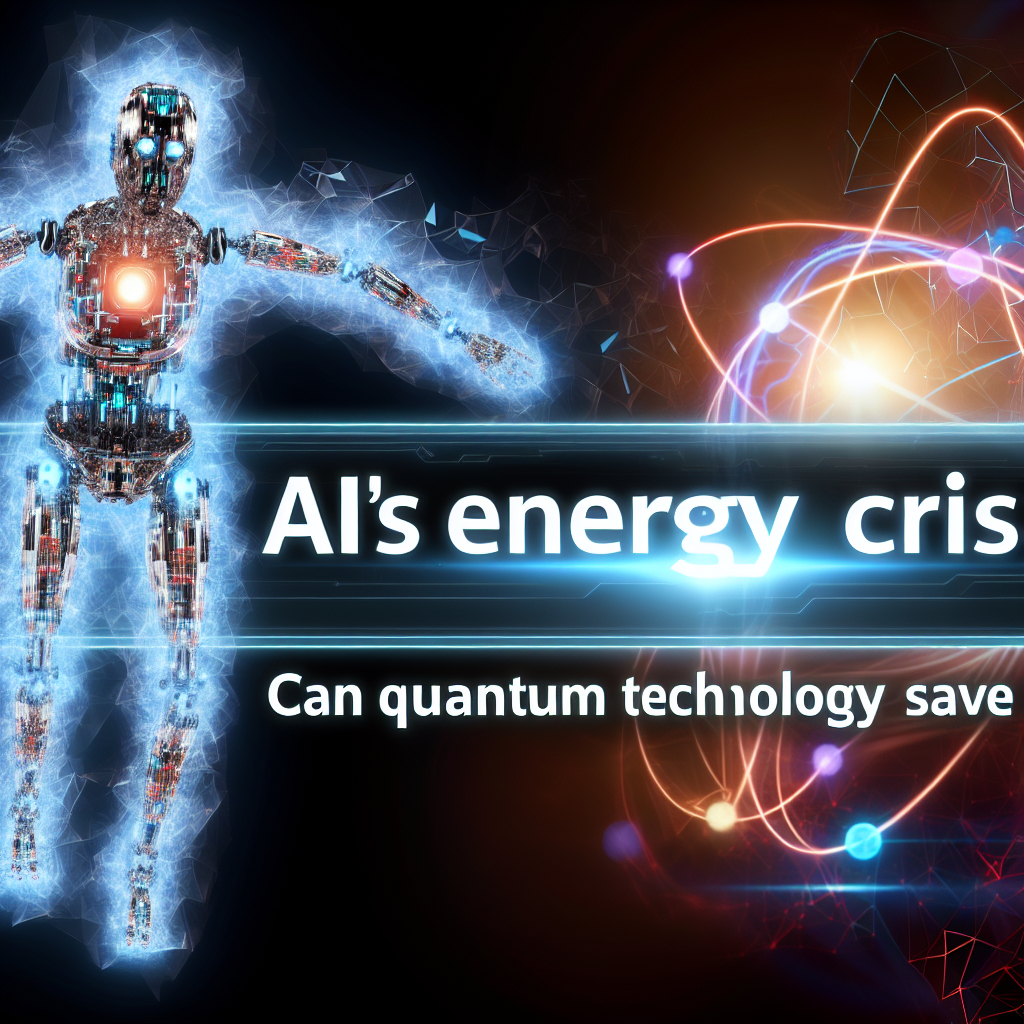
AI’s Energy Crisis: Can Quantum Technology Save Us?
Understanding the Energy Crisis of Generative AI and the Promise of Quantum Computing
Artificial intelligence (AI) is transforming the way we live and work, but it’s not without its challenges, particularly regarding energy consumption. As businesses increasingly adopt generative AI technologies, the demand for energy has surged, raising important questions about sustainability. In this blog post, we’ll explore how quantum computing could provide much-needed solutions to the energy crisis faced by generative AI.
The Energy Demand of Generative AI
Generative AI applications, which include various machine learning models, require significant computational resources. Recent studies indicate that the energy demand for data centers could double in just a few years. This surge is primarily due to the energy-intensive nature of training large language models (LLMs) and other AI applications. Traditional computing approaches struggle to keep up with this rising demand, highlighting an urgent need for more efficient solutions.
Quantum Computing: A Game Changer?
Enter quantum computing. Unlike traditional computers that rely on bits (0s and 1s), quantum computers utilize quantum bits or qubits, which can represent and compute multiple states simultaneously. This capability allows quantum computers to tackle complex problems much more efficiently than their classical counterparts. For instance, it has been estimated that a quantum chip with 64 qubits could perform calculations that would require over 2.5 billion traditional GPUs.
This drastic reduction in resource consumption represents a promising avenue for addressing the energy crisis. If quantum computing can handle the demands of generative AI tasks more efficiently, it could significantly lower energy costs and consumption.
Applications of Quantum Computing in AI
While still in its early stages, quantum computing has shown great promise in various applications relevant to AI. Key areas where quantum computing could excel include:
- Optimization Problems: Quantum computers can analyze complex systems to find optimal solutions much faster than traditional computers.
- Machine Learning: Certain quantum algorithms have the potential to outperform classical methods by producing better models with less data.
- Chemical Simulations: Quantum computers can simulate molecular interactions more effectively, which is crucial for drug discovery and material science.
By utilizing quantum resources, businesses can potentially redefine their approach to generative AI, leading to both energy savings and improved operational efficiency.
The Road Ahead for Quantum Computing
We are still in the infancy of quantum computing, parallel to the early days of traditional computing during the 1970s. Companies are now beginning to identify viable applications and find ways to implement quantum computing in practical settings. Additionally, major players like Microsoft and Google have made significant investments in quantum technology, signaling a growing recognition of its importance.
However, as with any technology, challenges remain. The development of practical quantum applications and overcoming engineering hurdles are crucial steps that will determine how quickly quantum computing can be adopted across industries.
Conclusion
The increasing demand for generative AI juxtaposed with our growing energy needs highlights a critical turning point for businesses and technologists alike. As we strive for sustainable solutions, quantum computing offers a viable path forward. By embracing quantum technology, organizations may not only improve their energy efficiency but also unlock new possibilities in AI innovation.
For more insights into the future of technology and AI, consider checking out IBM’s Quantum Computing Resource and Google AI’s Quantum Computing Overview.
Are you ready to embrace the quantum future? Let us know how you envision integrating quantum computing into your AI strategy!