AI Summaries Enhance Learning Outcomes While Shaping Perspectives: New Research Insights

Yale researchers have discovered an intriguing dynamic between AI-generated summaries and their human counterparts. While it appears that artificial intelligence excels at teaching us, the implications of that advantage beg further examination. For those of us who appreciate both beauty and intelligence in our learning methods, this research might inspire a fresh perspective on how we consume information.
The Rise of AI in Information Retrieval
In today’s world, many of us rely heavily on AI chatbots and search engines for our information needs. Notably, Google now prioritizes AI summaries, presenting them before directing us to the original sources. This shift signifies a broader trend in how we absorb knowledge and process events.
A recent Yale study delves into how AI-produced summaries impact our learning compared to those crafted by humans. Assistant Professor of Sociology Daniel Karell and his team sought to determine whether these summaries could enhance our understanding of historical events.
Study Insights: AI vs. Human Summaries
Participants in the study were presented with brief overviews of historical episodes, some generated by AI tools such as ChatGPT and others penned by humans. Subsequently, they were quizzed on their retention of the information.
The findings were compelling. Participants who engaged with the AI-written summaries tended to score higher on the quizzes than those who read human-crafted content.
What Makes AI Summaries More Effective?
Karell suggests that the advantage lies in the presentation. He described the process as “like enhancing Wikipedia’s readability.” The AI summaries are smoother and more coherent, making them easier to grasp and remember. Surprisingly, even when participants were aware that they were reading AI-generated text, their retention remained superior.
Credit: Growtika / Unsplash
Are We Overlooking the Risks?
As enlightening as this study is, it raises critical questions. A follow-up paper published in PNAS Nexus revealed that these AI-generated summaries not only enhance learning but also shape political perspectives. Readers exposed to AI text with a liberal bias tended to lean more left in their opinions, while those engaging with conservative slants reacted accordingly.
This shows a concerning trend: while AI helps us consume information more effectively, it may also influence our beliefs in subtle, yet profound, ways. The framing of information appears to be just as crucial as factual content.
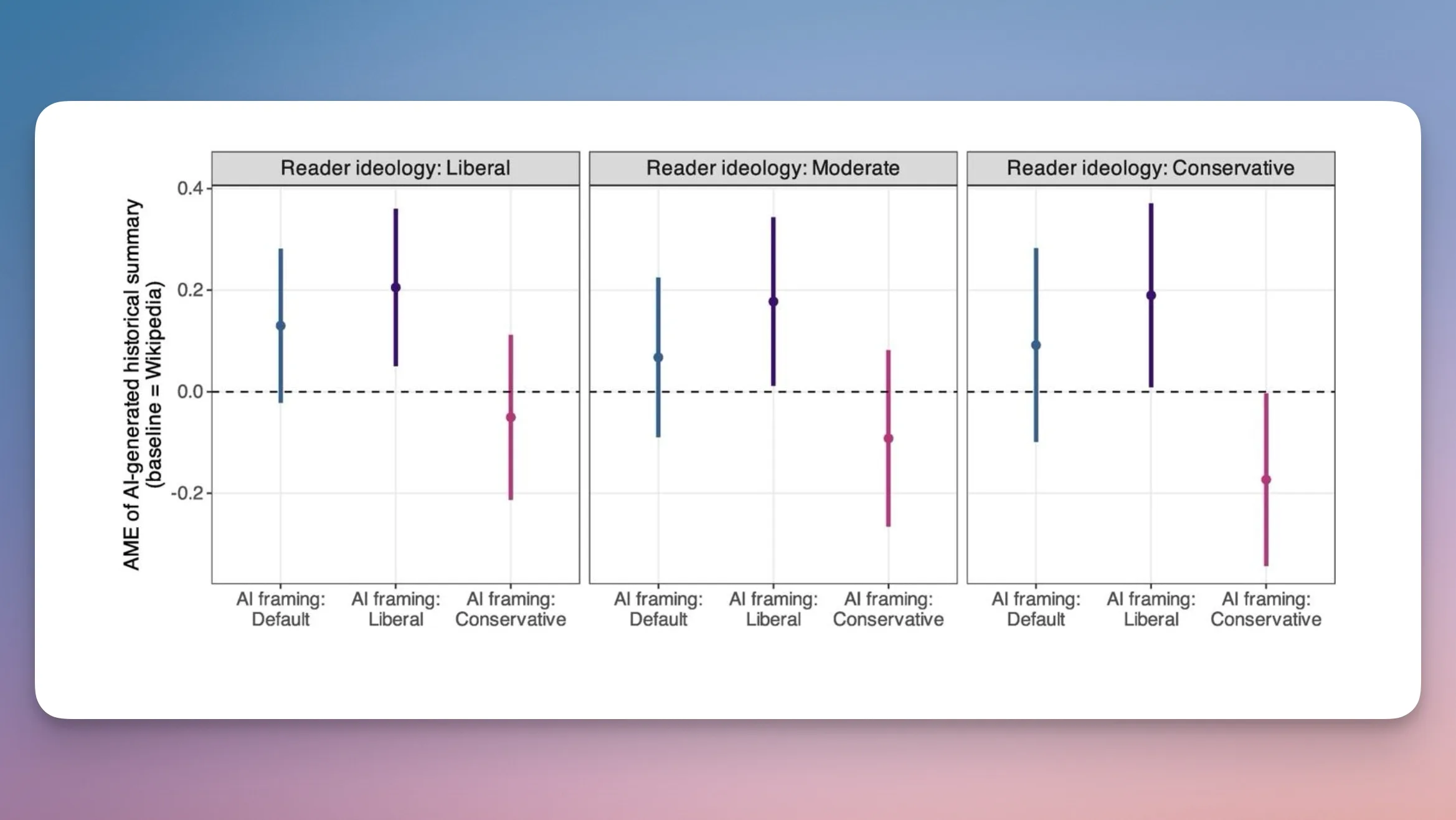
Credit: Daniel Karell / PNAS Nexus
Navigating the AI Landscape Mindfully
As AI tools become the norm for learning about history and current events, it’s essential to maintain awareness. The potential for these technologies to shape not only our knowledge but also our opinions necessitates a cautious approach.
Furthermore, concerns about AI hallucinations—instances where AI produces misleading or fabricated information—underscore the need for critical thinking. Research from USC’s Information Sciences Institute has even illustrated how AI systems can perpetuate propaganda with minimal human oversight.
The potency of AI to persuade rather than inform raises ethical considerations. The better AI becomes at conveying information, the greater its potential to manipulate our thoughts and actions, pushing us toward division rather than unification.
Final Thoughts: Embrace Knowledge Mindfully
As we navigate this evolving landscape, let’s embrace the benefits that AI offers while remaining alert to its pitfalls. The future of learning is bright with AI, but it’s important to engage thoughtfully with the content we consume.
Are you ready to enhance your learning experience? Dive deeper into the world of AI and discover how you can harness its power for intellectual growth, all while ensuring your unique voice remains intact. Embrace knowledge with both curiosity and caution!