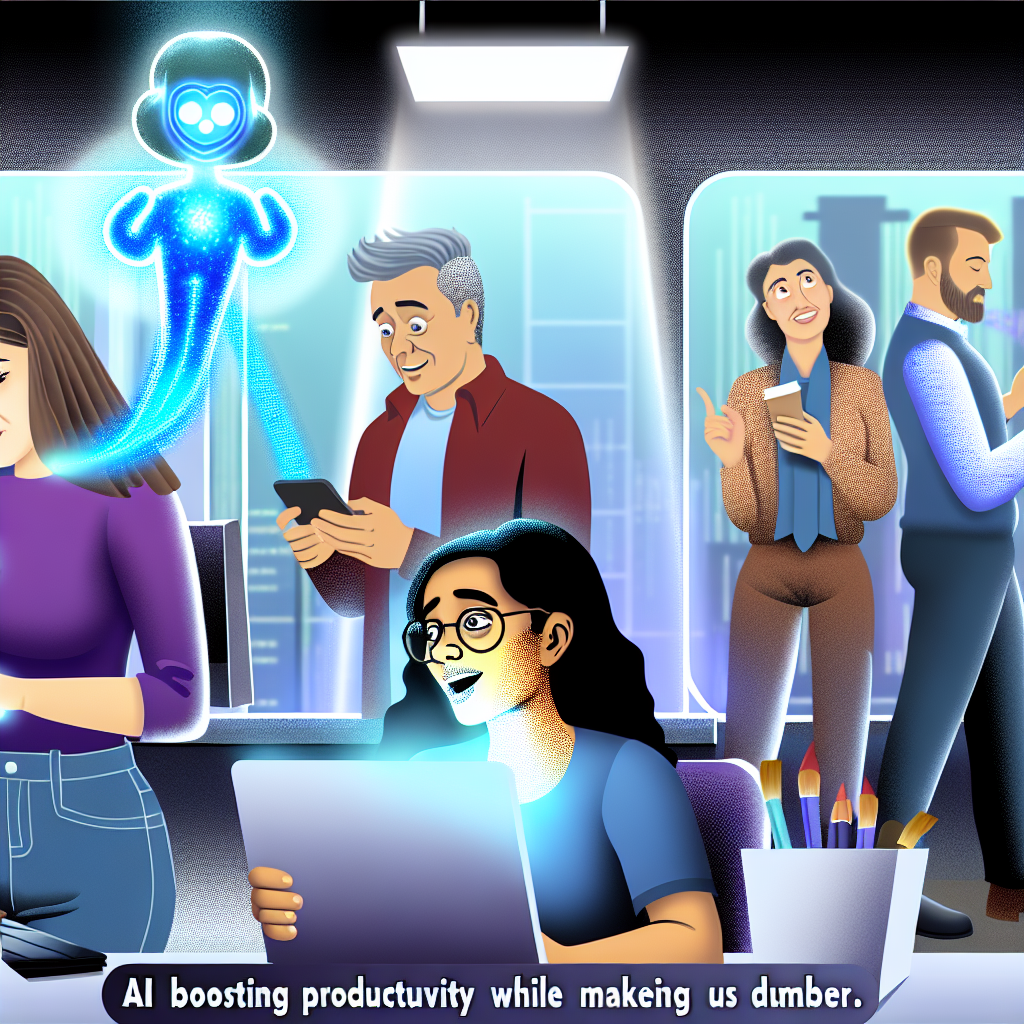
AI: Boosting Productivity While Making Us Dumber
The Balance Between AI Usage and Critical Thinking
As artificial intelligence (AI) continues to advance, many professionals grapple with a pressing concern: is the convenience of generative AI making us less intelligent? This post explores the implications of relying heavily on AI for knowledge work while providing insights on how to use this technology wisely without compromising critical thinking skills.
The Productivity Paradox
AI offers remarkable benefits in productivity, especially in tasks that are repetitive or mundane. For example, professionals can complete complex data analyses and reporting in a fraction of the time it would traditionally take. However, the convenience can come at a cost. By bypassing traditional methods of problem-solving, individuals risk becoming overly reliant on AI tools, which can lead to a decline in essential cognitive skills.
Understanding AI’s Role in Knowledge Work
Generative AI can dramatically improve efficiency, especially in information retrieval and data processing. Tools that automate tasks, such as writing reports or debugging code, allow professionals to allocate their time to higher-level strategic thinking. Yet, this also raises a critical question: are we sacrificing our ability to engage in deep thinking?
The key lies in using AI as an assistive tool rather than a crutch. It’s crucial to strike a balance that allows for enhanced productivity while still engaging our brains actively in the learning process.
Strategies for Maintaining Critical Thinking
-
First Iteration Ownership:
Always complete the initial draft or analysis yourself before consulting AI. This practice ensures you retain important skills and insights, allowing AI to augment, rather than replace, your contributions. -
Identify Repetitive Tasks:
Focus AI usage on repetitive or low-skill tasks where it shines. This lets you focus your cognitive resources on more complex challenges, enhancing your overall productivity and critical thinking capacity. -
Create Guardrails:
Treat AI output as a draft rather than a finished product. Review and validate AI-generated information to ensure accuracy and relevance. This practice maintains the integrity of your work while allowing AI to serve as a supportive tool. - Active Learning:
Engage with the material conceptually rather than simply passing it off to AI. Take notes, summarize information, and discuss findings with peers to reinforce your understanding and retention.
The Future of Knowledge Work
As AI integrates deeper into our workflows, the pressing issue becomes whether it will aid or replace human intelligence. Businesses should not only focus on AI’s capabilities but also emphasize developing their teams’ critical thinking skills. By leveraging AI wisely, professionals can elevate their roles and adapt to an evolving landscape.
Conclusion
While the allure of AI is significant, it is critical that professionals approach its use thoughtfully. By engaging actively in our work and reserving AI for repetitive tasks, we can ensure that we continue to grow in our roles while benefiting from the efficiencies that AI offers.
For additional insights and resources on leveraging AI effectively in your career, consider exploring credible sources like Harvard Business Review or McKinsey & Company.
If you found this article helpful, please share it with others who may benefit from learning about the balance between AI use and maintaining intelligence!